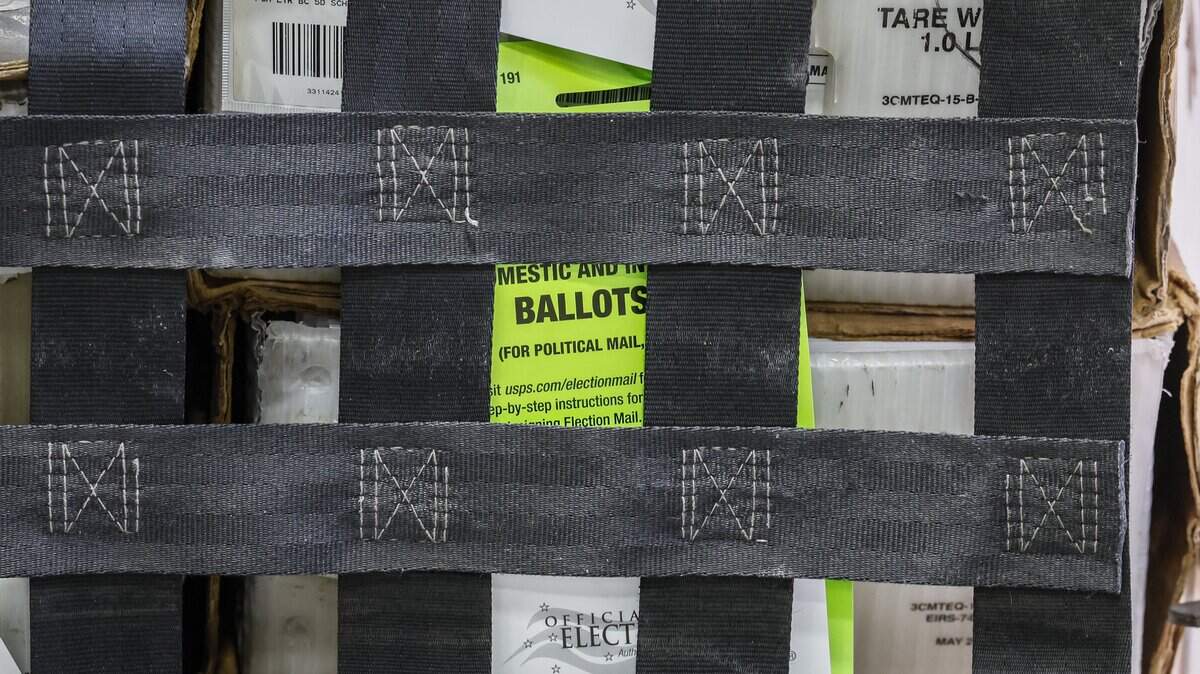
Election month: The first votes in Florida’s midterm election have arrived
County supervisors of elections are starting to receive the first of what is expected to be around 8 million ballots cast in Florida for the November general election.
Read more Nearly 80% of Venezuelans in poll reject oil deal with the United States
Around 150 mail ballots have been returned from the nearly 200,000 sent out last week to Floridians in the military and currently overseas, according to figures posted Monday by the Division of Elections.
“I encourage voters who are voting by mail to track their ballot and sign up for notifications, so they know when we mail their ballot out and when we receive it back in our office,” Hillsborough County Supervisor of Elections Craig Latimer said Friday in a released statement. “Most mail takes about a week to reach its destination.”
One of 67 county elections offices in Florida, Latimer’s office sent out 2,721 General Election ballots to absent military and overseas voters, while announcing plans to send out more than 146,000 ballots to domestic voters on October 1.
READ MORE: Voters need to know this: There’s a deadline for mail ballots in South Florida
As has been the case the past few elections as President Donald Trump repeatedly questions the vote-by-mail process — despite using that method himself in Florida elections — Democrats have returned more ballots. But it is early in the process, with 63 ballots submitted by registered Democrats to 39 by Republicans and 26 by individuals without a party affiliation.
Democrats have also been sent more than half the ballots already sent, with the Broward County elections office accounting for nearly three-quarters of those ballots.
Republicans who currently have a 1.55 million advantage in registered voters over the Democrats, typically make up the difference with the in-person early voting.
In prior midterm elections, 7.8 million Floridians voted in 2022 and 8.3 million in 2018.
About 35% of the 2022 votes were cast by mail and 29% through in-person early voting. Four years earlier, mailed ballots accounted for 31% of the voting and early voting was nearly 33%.
Read more Black luxury real estate agents make big deals in Miami. But there aren’t many
The start of the pre-Election Day voting comes as representatives for Common Cause said Florida voters shouldn’t anticipate changes to the voting process from the prior election cycle as the organization continues to take legal action against legislative changes made earlier this year to the election process.
“We are here to tell Florida voters that actually nothing has changed for voting in Florida,” Common Cause Florida Executive Director Amy Keith said during a conference call last Thursday. “In 2026, the rules are exactly the same as they were in 2024.”
The new law (HB 991), which takes effect after the 2026 election, is Florida’s version of the proposed federal Safeguard American Voter Eligibility (SAVE) America Act, which remains stalled in the U.S. Senate.
The law requires citizenship paperwork and a photo ID, such as a Florida driver’s license, U.S. Passport or concealed carry permit, when an individual registers to vote and before they vote at the ballot box. Also, a voter must provide a passport or birth certificate to register or remain on the voter rolls. But those provisions don’t take effect until after the November election.
Common Cause is joined in the lawsuit by the League of Women Voters of Florida, Florida Rising, Florida Immigrant Coalition, Hispanic Federation, and UnidosUS.
Filed in the federal U.S. District Court for the Southern District of Florida, the lawsuit contends the latest election changes by Florida violate the First and Fourteenth Amendments of the U.S. Constitution, and create unnecessary barriers to voting by requiring prospective voters provide “evidence of citizenship.”
It also claims the documentation requirement will make voting harder for naturalized citizens, low-income voters, married women who’ve changed their name, nonwhite voters, students, voters with disabilities, transgender people, and seniors who may not have easy access to the needed documents.
The Common Cause conference call was to announce the launch of an election protection program intended to mobilize thousands of trained volunteers across the nation to help voters concerned about potential impediments to casting ballots.
“We want every Florida voter to know that the best way to protect their vote is to double-check their voter registration status before the registration deadline and by voting early, whether that’s by mail or in person,” Keith said.
Read more Black luxury real estate agents make big deals in Miami. But there aren’t many
The last day to register to vote in the Nov. 3 election is Oct. 5.











Post Comment