Mystery boat leaves behind illegal 500-foot gill net near Sanibel Island
Someone has been using illegal fishing nets to pull fish and other marine wildlife from the Gulf in Southwest Florida waters as biologists and wildlife officials removed a 500-foot gill net from the sea Sept. 16.
Read more Pennsylvania measles cases near 800 as outbreak grows
Gill nets became popular here generations ago as these nets will catch massive numbers of mullet, a common fish that fed many pioneering families in the 1900s.
But the bycatch was problematic as these nets would also entrap protected sea turtles, tarpon, snook and even dolphins.
“The net was identified as a monofilament gill net, also referred to as an entanglement net,” said Florida Fish and Wildlife Conservation Commission, or FWC, spokesman Bradley Johnson. “The use of gill or entangling nets is prohibited in Florida waters and was made illegal by constitutional amendment in 1995.”
Johnson said these types of nets do not discriminate and can kill just about any critter found in the Gulf.
“These types of nets can indiscriminately entangle and injure or kill marine life, including fish, sea turtles and marine mammals,” he said. “Florida law specifically prohibits the use of gill or entangling nets of any size, and nets constructed wholly or partially of monofilament are generally considered entangling nets unless specifically authorized by FWC rule.”
Johnson said FWC doesn’t know how long the net had been in the water, but he said it looked as though it was placed in the water recently.
Over the years, local fisheries collapsed at a time when Florida’s recreational fishing industry was showing its potential.
Mullet roe was a valuable commodity, one of the few things that could be produced and sold in Southwest Florida.
“Gill nets are any net constructed entirely or partially of monofilament material other than a cast net or a landing dip net,” a National Oceanic and Atmospheric Administration, or NOAA, report says. “They are typically vertical sections of net that are stretched out on a rope suspended by a float and typically work by ‘gilling’ the fish and entangling them within the mesh. With the exception of very small fish that escape through the mesh, the majority of marine life that becomes entangled in the net die. This type of net can be especially devastating for sea turtles and marine mammals.”
Gill net ban was one of Florida’s most controversial wildlife moves
Fishermen of the time were also after sea trout, sheepshead, Spanish mackerel and bluefish, according the NOAA report.
Read more Exclusive-Fed’s Musalem says more rate hikes likely needed to quell inflation
“Because of the shallow-water habitat and schooling tendencies of these species, the use of gill and trammel nets before the net ban was a very efficient harvest method,” the NOAA report says. “Elimination of these gear types was intended to reduce fishing pressure on the targeted species, as well as those species thought to be harvested as unintended bycatch.”
The net was especially concerning for wildlife advocates and scientists on Sanibel Island, a community known for green planning and environmental sensitivity.
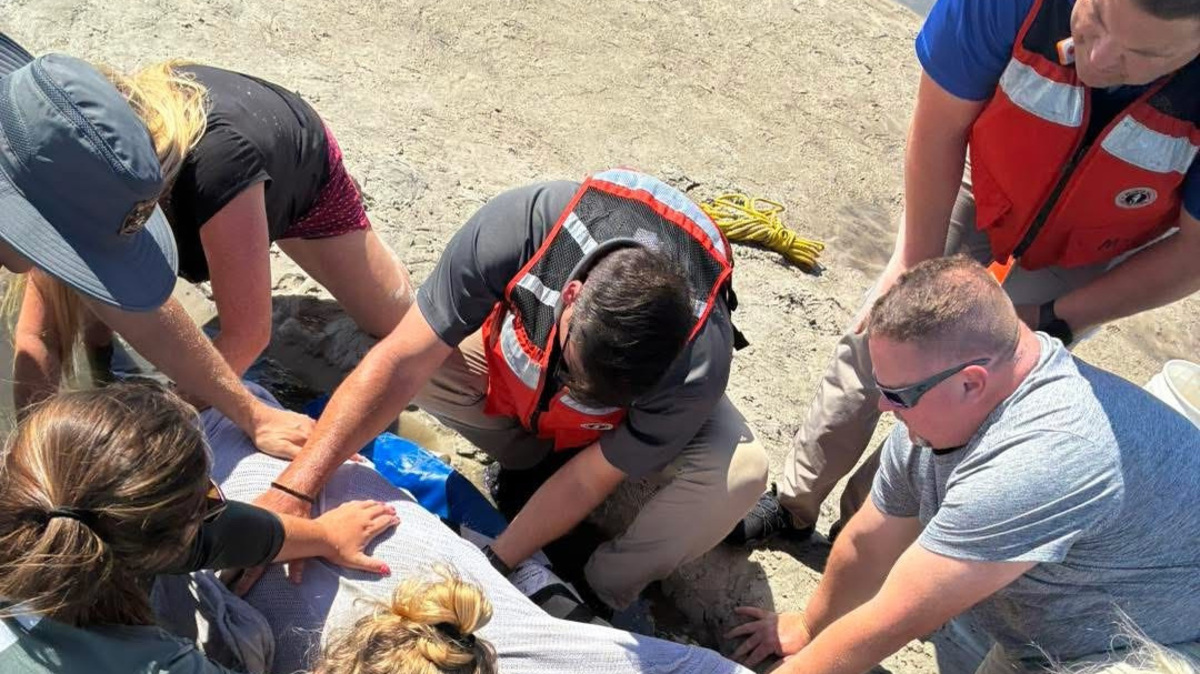
“It was an enormous net, and seeing the wildlife caught in it was heartbreaking,” said Kelly Sloan, coastal wildlife director at the Sanibel-Captiva Conservation Foundation, or SCCF on the day the net was removed. “In addition to the live manatee, we found a dead bonnethead shark, several rays, including some that were still alive and were able to be released, and numerous fish.”
Gill net usage is a third-degree felony, which could bring up to five years imprisonment and/or a $5,000 fine.
“The net ban is probably the most contentious fisheries management measure implemented in Florida,” the NOAA report says. “The elimination of the use of entangling nets, as well as the limits placed on other forms of nets, has had a dramatic impact on the nature of near-shore commercial fisheries in Florida.”
Chad Gillis is an environment reporter and can be reached by email at [email protected].
Please support local community journalism and stay informed about Southwest Florida news by subscribing to The News-Press and Naples Daily News; download the free News-Press or Naples Daily News app, and sign up for daily briefing email newsletter, food & dining and growth & development newsletters here and here.
This article originally appeared on Fort Myers News-Press: Mystery boat leaves behind illegal 500-foot gill net near Sanibel Island
Reporting by Chad Gillis, Fort Myers News-Press & Naples Daily News / Fort Myers News-Press
Read more California governor signs broad data center oversight bill package
USA TODAY Network via Reuters Connect
Copyright Reuters or USA Today Network via Reuters Connect
This story was originally published September 21, 2026 at 2:32 PM.












Post Comment