Flock cameras: New Hampshire laws could be model for Florida
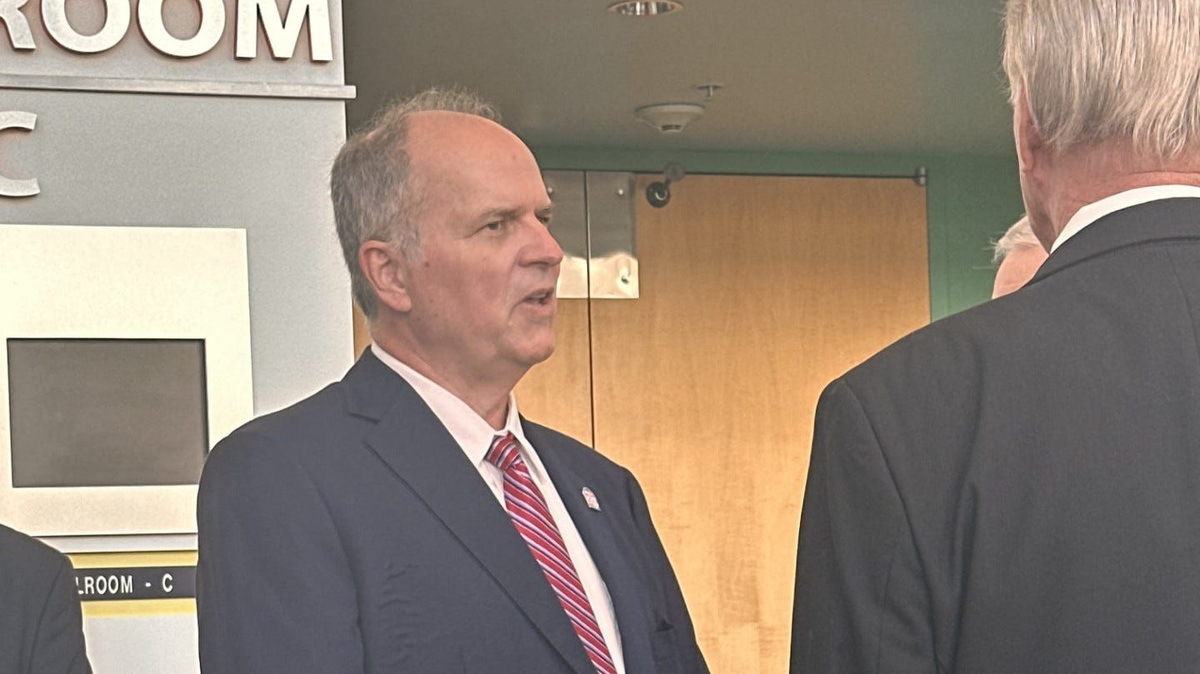
As Flock cameras go dark on Florida’s state highways and law enforcement works to turn them back on, the state of New Hampshire could end up serving as a model for their regulations, according to State Rep. Bill Partington.
Read more Meet the band: Closebye shares what drives their sound
Partington, R-Ormond Beach, said he supports law enforcement but has concerns about the cameras.
“It’s like Big Brother, almost like Orwellian, George Orwell, ‘1984.’ That’s what everybody’s concerned about, and rightfully so, because these readers apparently can create massive databases that potentially track the movements of everybody – not just criminal elements – and so law-abiding Floridians who aren’t suspected of committing any kind of crime, their rights get violated in the process.”
The proliferation of automatic license plate readers nationwide has led to a growing backlash, which has even included Florida Gov. Ron DeSantis, a strong supporter of law enforcement. DeSantis warned about Florida becoming a digital surveillance state and cautioned about the possible ways data could be stored and used.
The News-Journal reached out to other area politicians, but they either didn’t respond or were unable to schedule an interview before press time.
Partington said county sheriffs are working on proposals to regulate camera use, something he looks forward to seeing.
New Hampshire offers framework on Flock cameras
Partington pointed to New Hampshire’s regulations on automatic license plate readers as a “framework” for Florida.
New Hampshire requires that data collected by automatic license plate readers be deleted within three minutes, unless the information matches a crime police are investigating, Partington said. If there’s a match on a carjacking, for example, it stays in the system, but if there is no match, the data is deleted in three minutes.
“That seems to have worked pretty well and been identified as a good guardrail to have in place,” Partington said.
At least 19 law enforcement officers and employees in five states have been arrested, fired, placed on leave or under investigation over a two-month period for using Flock Safety’s network of automatic license plate readers for “potentially improper or illegal purposes,” according to a USA Today story published Aug. 28. And a former Orange City police officer used license plate readers to track an ex-girlfriend, according to a previous News-Journal story.
A law is also needed to address rogue uses of license plate reader information, Partington said.
“The other thing I think may need to happen is to make it a felony to misuse the information and have a minimum mandatory penalty attached to it, just to stress how serious the concern is and the liberty interest is that if somebody’s violating an innocent resident’s right, then there’s a very serious criminal penalty for that,” he said.
Florida attorney: ‘Don’t Flock me, bro’
Pat McGeehan, a former homicide detective who is now a criminal defense attorney, has posted about license plate readers regularly on social media. McGeehan also has some ideas on how Flock and similar license plate readers could be regulated.
For one, McGeehan said access to the data collected by the cameras must be regulated and restricted. He said only law enforcement officers at a certain command level should have access.
Like Partington, McGeehan also called for a law dealing specifically with misuse of license plate readers.
“I think they need to make it a third-degree felony for misuse,” McGeehan said.
Another problem is how long law enforcement can keep the data.
“I think they need to deal with the retention because all these departments are saying, ‘Oh, we only keep the information for 30 days.'”
But McGeehan said he is aware of one case in which it was kept for months. A special team within the Florida Highway Patrol on May 6, 2026, started an investigation into a triple-fatal, hit-and-run crash on Oct. 4, 2025, on Interstate 4 in Volusia County, which killed Flagler County Deputy Administrator Jorge Salinas and his wife, Nancy.
During that review, FHP investigators generated a report from Vigilant license plate readers on a maroon Dodge Durango from May 20, 2025, to April 27, 2026, according to an arrest affidavit. The investigation led to the arrest of Alisa Lee Montalvo, 47, of Deltona.
But license plate readers were also involved in another way in that case. A different group of FHP personnel focused on a license plate reader photo of a black Dodge Durango, which led to the arrest of Lindsey Isaacs, an innocent woman living in Palm Coast at the time. Isaacs had done nothing wrong and was not at all involved in the crash, but she spent 13 days in the Volusia County Branch Jail on charges that could have kept her in prison for life.
FHP arrested Isaacs even though her Durango showed no signs of being involved in a crash.
Read more Major expansion announcement from Latitude Margaritaville Watersound
McGeehan was her defense attorney and said the license plate reader photo played a big role in the wrongful arrest of his client.
“It was huge,” he said.
McGeehan ended the interview with what has become a common sentiment: “Don’t Flock me, bro.”
The status of license plate readers in Florida
In late August, the state Department of Transportation revoked the permits for Flock and other license plate readers along state highways, giving law enforcement 30 days to remove them.
The AI-powered cameras record and track license plate numbers, storing them in a database that law enforcement and others can tap into and search.
But wait – there’s more. Police can also search the database for a vehicle’s characteristics, like the color or model, any decals or dents, roof racks or tool racks, according to Flock Safety’s website.
How long is the information kept? It depends. Flock Safety states it cut its default retention limit from 30 to seven days, unless the information is part of a criminal investigation. Flock Safety’s website also states its customers own and control the data. The website also states that “Every community will continue to choose the retention period that fits its public safety strategy.”
While Flock is the name in the news, there are other providers of automatic license plate readers, such as Motorola Solutions and Axon.
Cops say the automatic license plate readers are important tools that help them catch criminals, solve violent crimes, find missing people, locate stolen vehicles, and save lives. Critics say the license plate readers are surveillance tools that allow the government to violate people’s privacy rights as it builds massive databases that can store the information indefinitely.
Flagler, Volusia sheriffs hope solution can be reached on Flock cameras
After the state revoked the permits, Flagler County Sheriff Rick Staly said he would comply with the state DOT’s permit revocation and suspended the use of the cameras. In a statement, Staly said his office is working with other law enforcement officials and state leaders to address concerns about the automatic license plate readers, calling the cameras “force-multipliers” when fighting crime.
The News-Journal asked Staly for an interview regarding the regulations or laws he believes are necessary to allay the public’s concerns about license plate readers. Staly referred the News-Journal to his public information office. His director of public information, Tonya Woodworth, then referred the News-Journal to his statement, in which Staly said in part that agencies must put in place “safeguards” against misuse of the cameras and said he was working with other law enforcement agencies to address concerns.
Staly is vice president of the Florida Sheriff’s Association and is “in line” to become president of the association in July 2027, according to the Flagler Sheriff’s Office website.
Volusia Sheriff Mike Chitwood said in a statement that his agency would stop using the automatic license plate readers. But Chitwood said he hoped that lawmakers could come up with regulations that could protect people’s rights while preserving the cameras, which he said are a valuable tool for law enforcement.
Partington agreed that both interests could meet in the middle.
“Public safety and individual liberty don’t have to be mutually exclusive,” Partington said. “I think we can give law enforcement some effective technology without creating, you know, a permanent surveillance system that tracks innocent citizens.”
Some cops continue using license plate readers on non-state roads
Some law enforcement agencies, such as the Polk County Sheriff’s Office and the Bunnell Police Department, have said they will stop using the cameras on state roads but continue to use them on non-state roads.
“They’re putting themselves in a situation where they’re potentially violating the rights of innocent residents who haven’t committed any crimes, and yet they’re being tracked as though the government has some interest in them, and that’s really the big issue,” Partington said.
– Frank Fernandez covers courts and criminal justice in Volusia and Flagler counties for The Daytona Beach News-Journal.
This article originally appeared on The Daytona Beach News-Journal: Flock cameras: New Hampshire laws could be model for Florida
Reporting by Frank Fernandez, Daytona Beach News-Journal / The Daytona Beach News-Journal
Read more US halts flights at busy East Coast airports, says fiber line cut at construction site
USA TODAY Network via Reuters Connect
Copyright Reuters or USA Today Network via Reuters Connect
This story was originally published September 21, 2026 at 1:29 PM.










Post Comment