FSU needs to do more to promote Honors in the Major
Applying to a master’s program can feel extremely daunting, particularly because there is nowhere near the same level of guidance available to students that exists during the undergraduate application process.
Read more Gluten-free mixes, flour recalled. See the affected products
In high school, guidance counselors and teachers often build college essay writing and application preparation into the curriculum. However, as an undergraduate student, one is expected to seek out that guidance themselves, often relying on relationships they have developed with professors. For students who have not had the opportunity to develop those mentorships, that can create a significant disadvantage.
Last spring, I approached my poetry professor, Dr. David Kirby, for general advice about applying to MFA programs in poetry. He gave me the basic rundown: apply to a diverse range of schools, research the professors in each program, and make sure my application accurately represents who I am as a writer.
Then he suggested something I had never seriously considered: Honors in the Major. Throughout my time at FSU, I had heard occasional mentions of the program, but I never fully understood what completing an Honors in the Major project actually involved.
I assumed a thesis had to be a strictly research-based project, and because I am a creative writing student, I did not think my interests aligned with the program. Dr. Kirby explained that my thesis could instead be a collection of poetry.
The problem is not that FSU lacks opportunities for students to pursue ambitious academic work; it is that many students may not know those opportunities exist until they happen to find the right professor.
For a program that can provide students with mentorship, research experience, and the opportunity to pursue a project directly connected to their academic interests, Honors in the Major deserves more intentional student outreach from the university.
Direct student outreach
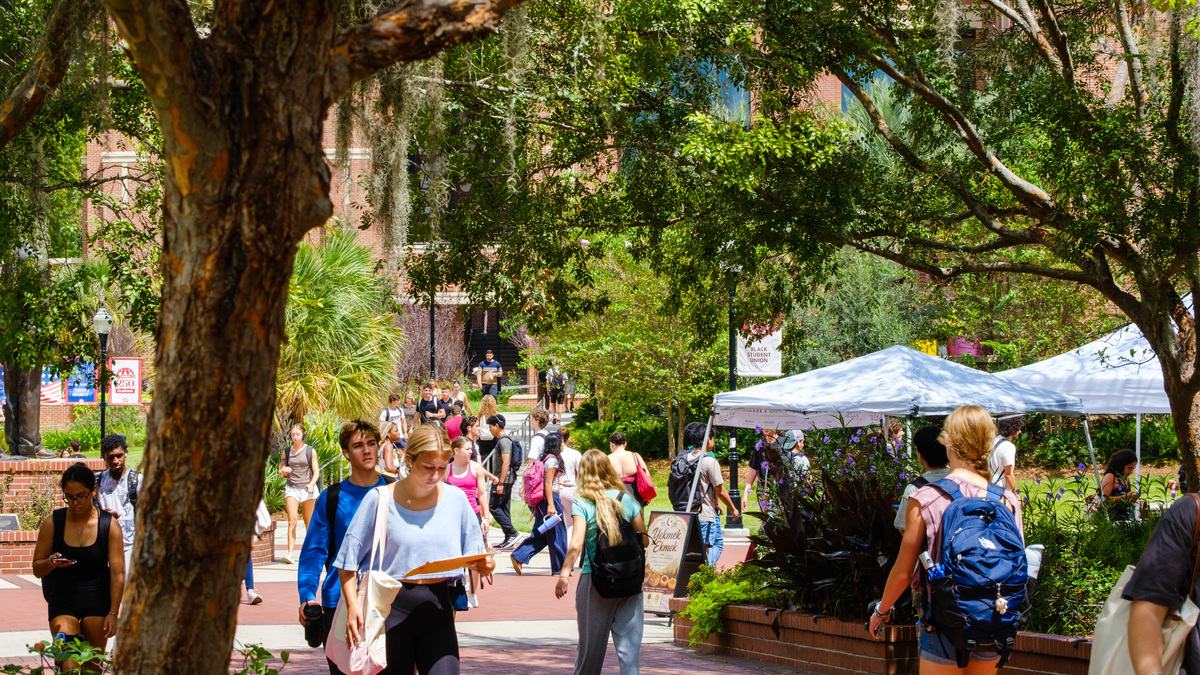
Market Wednesday and involvement fairs are some of the main ways students discover extracurricular opportunities at FSU. Honors in the Major could use these same spaces to reach students, particularly freshmen, before they have already settled into a narrow idea of what their undergraduate experience is meant to look like.
Student ambassadors could explain the program and showcase projects they have completed or are currently developing. Showing students a completed thesis could make the process feel far less intimidating than expecting it to entail the same workload as a doctoral thesis.
Personally, speaking with students who had already completed their projects made the process feel much more manageable. I began to understand that I would not be working completely on my own, but rather with the guidance of a faculty mentor. This allowed me the freedom to develop a project around the work I was already interested in.
I could build on my work from classes and develop it into a larger collection, which makes it feel much more manageable than creating a new idea entirely.
FSU could even compensate current Honors in the Major students to serve as ambassadors. These students would be able to speak from personal experience about what the process actually looks like, while helping other students find professors whose interests align with their own.
Promotion of the program
FSU should also take a more active role in promoting Honors in the Major through its existing communications and recruitment efforts.
Social media is one of the primary ways college students receive information. Sharing testimonials from students who have completed Honors in the Major could demonstrate the program’s possibilities in a way that a general description or video on a university website cannot.
Read more Smart ring maker Oura, shareholders look to raise up to $2.2 billion in US IPO
Students could see the actual projects their peers created and learn how different the experience can look depending on the major.
University tours are another opportunity. Prospective students are routinely shown the features that make FSU unique. Honors in the Major should be a critical enticing part of that conversation.
Undergraduate theses are a great tool for students to explore what a master’s program may entail and can help students when applying for those programs. Therefore, ensuring students know that opportunity is accessible to them may ease the burden of applying for graduate programs during their senior year.
If FSU wants to stand out from other schools, they need to ensure prospective students understand what makes the university different.
Benefits of Honors in the Major
One of the greatest strengths of Honors in the Major is that each project is uniquely its own. For some students, that might mean conducting traditional academic research. For others, it can mean creating art, writing poetry, or developing a theatrical production.
“I love the Honors in the Major program. It’s such a great opportunity to develop a working relationship with faculty, a unique writer’s voice, and a history in research,” FSU theatre major Jordan Kosanske said to the FSView.
Kosanske’s project focused on his theatre degree and involved creating a devised piece with a group of actors. Rather than following a traditional research model, he used the program to develop a new approach to storytelling while incorporating research into the creative process.
His experience demonstrates what makes the program valuable – Honors in the Major can aid a student’s academic interests rather than forcing every student into the same formula.
For me, that meant realizing that a poetry collection could be a thesis. For another student, it could be a theatrical production. For someone else, it might be a research project.
The university does not need to create an entirely new program to give more students these opportunities. It needs to make sure students know the program already exists.
Too often, access to Honors in the Major seems to depend on whether a student happens to have a professor who tells them about it. For such a beneficial and unique program, that should not be the default method of outreach.
Savannah Burke is a Theater and Creative Writing major at Florida State University and a Staff Writer for the Views section of the FSView & Florida Flambeau, the student-run, independent online news service for the FSU community. Email our staff at [email protected].
This article originally appeared on FSU News: FSU needs to do more to promote Honors in the Major
Read more Leon County offering up to $50K incentive for big tourism events
Reporting by Savannah Burke, Staff Writer, FSView / FSU News
USA TODAY Network via Reuters Connect
Copyright Reuters or USA Today Network via Reuters Connect
This story was originally published September 21, 2026 at 9:01 AM.










Post Comment