Kelly: Dolphins vow to stay committed to running the ball | Opinion
There is this belief, a theory that people can speak things into existence with the power of the tongue.
Read more Retro smash burger joint opening soon in Broward. Check the details
The concept centers on our mouth, that the words spoken can either plant seeds that sprout life or poison that creates death.
Jeff Hafley hopes his declaration that he’s building a physical team — one that can lean on its rushing attack — comes to life this season.
While the Miami Dolphins’ head coach has vowed to build a physical team, that wasn’t how his squad played during Sunday’s 27-13 season-opening loss to the Las Vegas Raiders, which was a game where Miami gained 74 rushing yards on 18 attempts.
Six of them were scrambles from quarterback Malik Willis.
Hafley, who is in his first season as Miami’s coach, reiterated he’s committed to fixing that on Wednesday.
“We’ve played one game. I want to run the football,” Hafley said moments before holding a west coast-based practice in Napa Valley. “We have to run the football! That’s all there is to it.”
But is it really that easy?
Based on the four seasons Hafley spent coaching Boston College, there’s little reason to doubt his commitment.
During his tenure as the Eagles coach from 2020 to 2023, Hafley’s teams averaged 36 carries a game and produced 166 rushing yards per contest. In his last season leading Boston College the Eagles averaged 198.8 rushing yards per game, which came off 42.1 carries per game.
That history is why it’s irresponsible to conclude what we witnessed against the Raiders is Miami’s new reality.
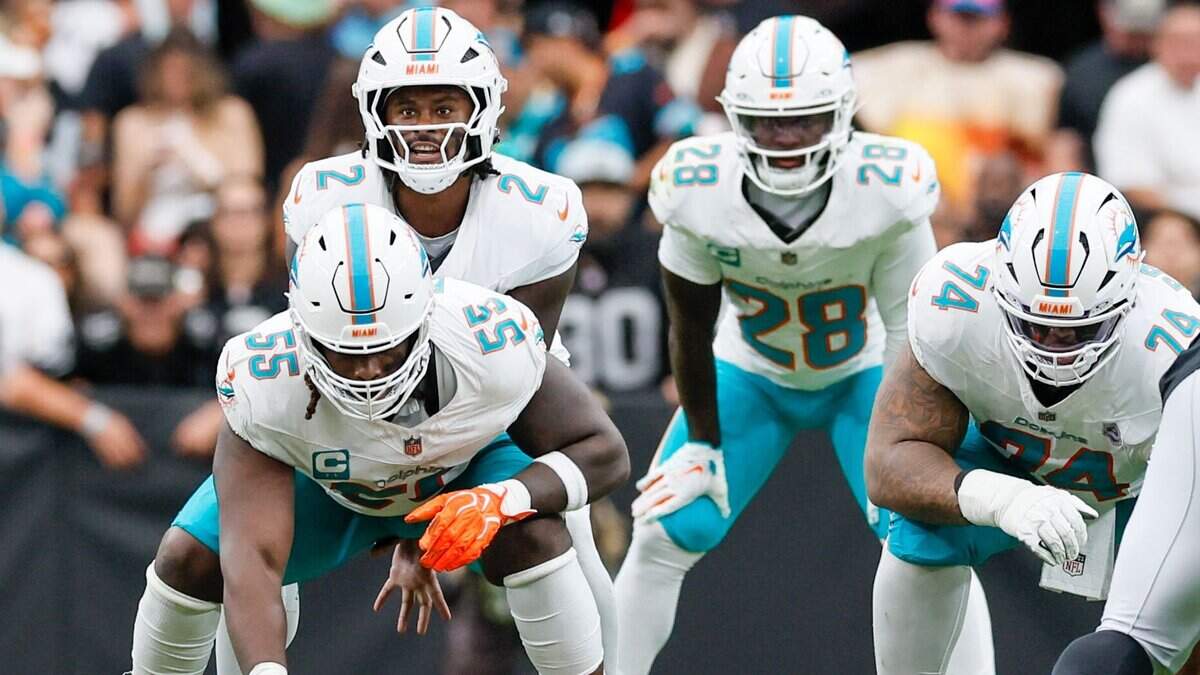
“We had 11 runs and you just got to get more reps in as the game goes on, and get more runs under your belt for it to kinda just blow open,” center Aaron Brewer said. “ Blow that gate open.”
Brewer’s referring to big runs, which often alter how defenses play Miami.
At the moment, because the Dolphins have a first-year starting quarterback Willis, and the passing game features three rookie receivers, Miami’s opponents likely plan to stack the box with eight defenders, forcing Miami to stray from handing the ball off to De’Von Achane.
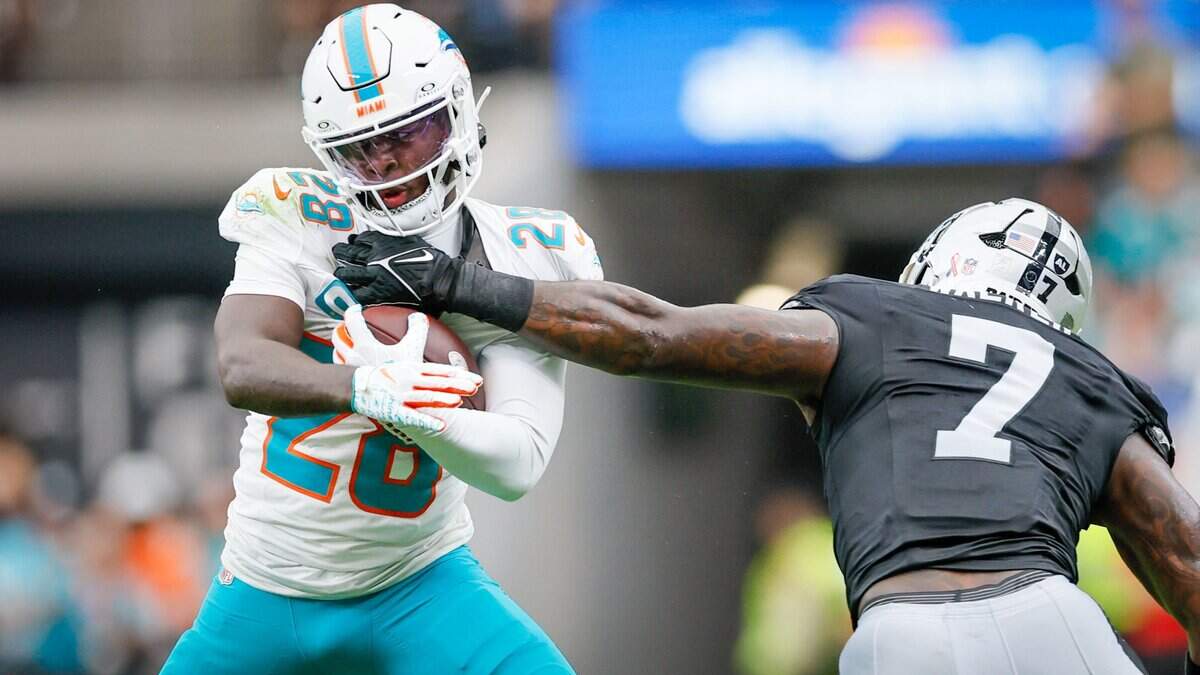
Achane finished the Raiders loss with 36 rushing yards on 11 carries. Trailing by two scores for most of the game’s second half didn’t help.
Read more Retro smash burger joint opening soon in Broward. Check the details
“In preseason you don’t show a lot. In Week 1 everybody was feeling each other out, and [the Raiders] just executed better than we did,” said Achane, who has averaged 5.6 yards per carry throughout his previous 45 games. “We could have executed better in the red zone, and I feel like it would have changed the game’s outcome.”
Achane had received 11 or fewer rushing attempts 22 times in the 45 games he has played, so it’s not uncommon for him to have a low amount of rushing attempts.
But in many of those situations Achane was sharing the backfield with another tailback [mostly Raheem Mostert] or two, and was still involved in the passing game, catching passes out the backfield.
That wasn’t the case Sunday, and that was the problem.
The Dolphins averaged 4.1 yards per attempt, which is tied with the Washington Commanders and Buffalo Bills for fourth in the league after the first week.
Five teams had fewer rushing yards in Game 1. Two teams — Tennessee Titans and Denver Broncos — had fewer carries than Miami.
While Hafley says he believes in taking what defenses give the Dolphins, he’s committed to Miami building a sustained rushing attack, one that the offense and defense can lean on.
“The running game is important to everything. You start there, [with] the defenses trying to stop the run. That’s where football starts,” Willis said. “Play pass comes off of it, and drop back comes up situationally and [then] you want to offset that.”
That means without an effective rushing attack, an offense can suffocate. Especially a young one.
Challenging down and distances, like a third-and-7, is when opposing defenses can bring extra rushers to get after the quarterback. If it’s third-and-5, a running play could enter the play-calling equation, and something like a draw could potentially convert the first down, keeping the drive alive.
Last week the Dolphins failed in that area, and a byproduct of that was Miami’s 2-for-10 third-down conversion rate.
“I think that we got to do a better job executing what we’re being asked to do,” Willis said. “[Offensive coordinator] Bobby [Slowik] has a great scheme, and he does it the right way. He teaches us the right way. We just got to execute.”
Read more Retro smash burger joint opening soon in Broward. Check the details







Post Comment