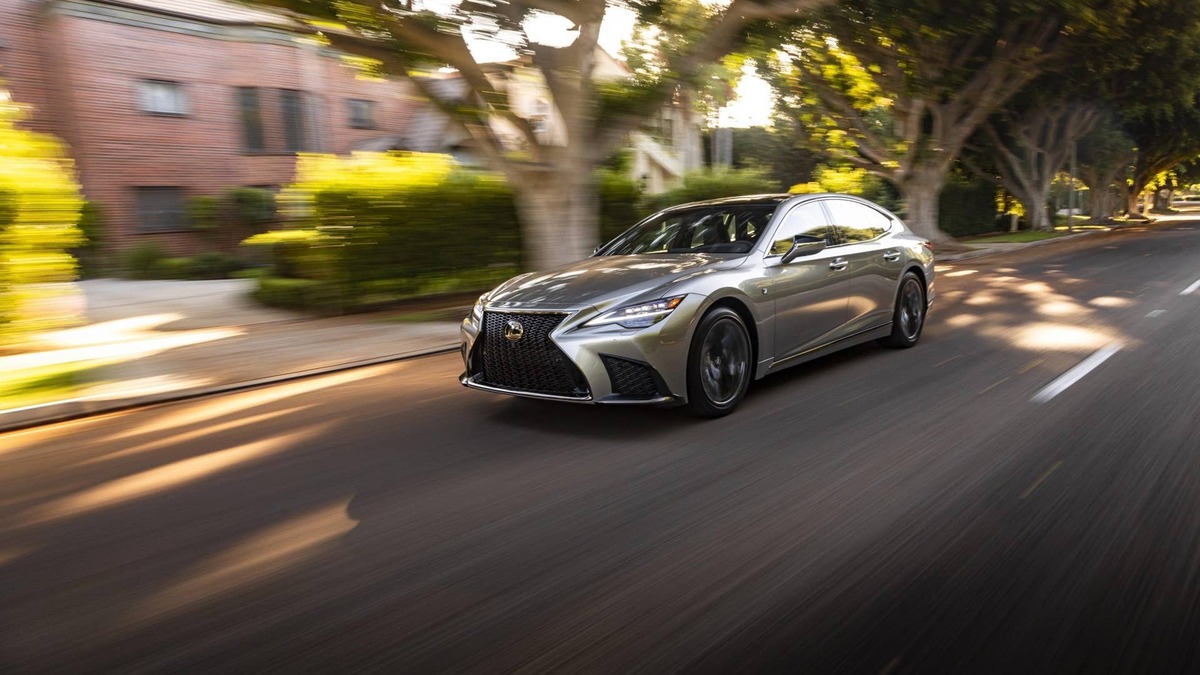
We Compared the 2026 Genesis G90 and Lexus LS. One Comes Out Ahead
Both of these have replaced V8s with twin-turbocharged sixes, both come standard with all-wheel drive, and both sit in a segment the market has largely abandoned for SUVs. Genesis undercuts Lexus by $5,085 and answers with 9.8 cubic feet more passenger volume, Nappa leather as standard and a warranty running four years longer on the powertrain. Lexus answers with 41 more horsepower, nearly a second to 60 mph, and a depreciation rate 9.5 points better. Over five years that last figure decides it.
Read more Middle East, Ukraine just dealt another blow to your wallet
What’s New for 2026
Lexus narrowed the LS to a single configuration, the LS 500 AWD Heritage Edition, which is the sort of naming that signals the end of a generation rather than the start of one. The 3.4-liter twin-turbocharged V6 produces 416 horsepower and 442 lb-ft from 1,600 rpm through a 10-speed automatic, with standard all-wheel drive and a Torsen limited-slip rear differential. It reaches 60 mph in near 4.6 seconds, and pricing starts at $99,280.
Genesis offers the G90 in three configurations. The base 3.5T AWD produces 375 horsepower and 391 lb-ft from 1,300 rpm through an eight-speed automatic with Predictive Shift, reaching 60 mph in near 5.5 seconds. For $10,300 more the E-Supercharger version adds a 48-volt mild-hybrid system for 409 horsepower and 405 lb-ft, along with multi-chamber air suspension and rear-wheel steering. Pricing starts at $94,195.
Specs and Pricing
Genesis G90
- Price: From $94,195, with the base 3.5T AWD from $92,700
- Engine: 3.5-liter twin-turbocharged V6, 375 hp, 391 lb-ft from 1,300 rpm
- Available powertrain: E-Supercharger with 48-volt mild hybrid, 409 hp, 405 lb-ft, plus air suspension and rear-wheel steering for $10,300
- Transmission: 8-speed automatic with Predictive Shift
- Drivetrain: All-wheel drive standard
- EPA city / highway: 18 / 26 mpg
- 0 to 60 mph: 5.5 sec, est., or 5.1 with the E-Supercharger
- Passenger volume: 109.2 cu ft
- Rear legroom: 37.8 in
- Length: 207.7 in
- Standard materials: Nappa leather, real wood trim, microfiber suede headliner
- Basic warranty: 5 years or 60,000 miles
- Powertrain warranty: 10 years or 100,000 miles
- Five-year depreciation: 58.2%
Lexus LS
- Price: From $99,280 for the LS 500 AWD Heritage Edition, the only configuration
- Engine: 3.4-liter twin-turbocharged V6, 416 hp, 442 lb-ft from 1,600 rpm
- Transmission: 10-speed automatic
- Drivetrain: All-wheel drive standard with a Torsen limited-slip rear differential
- EPA city / highway: 18 / 27 mpg
- 0 to 60 mph: 4.6 sec, est.
- Passenger volume: 99.4 cu ft
- Length: 206.1 in
- Basic warranty: 4 years or 50,000 miles
- Powertrain warranty: 6 years or 70,000 miles
- Five-year depreciation: 48.7%
Genesis offers three configurations against one, which is the structural difference in these ranges. The G90 lineup spans the 3.5T and two E-Supercharger versions, and the LS range has been reduced to the Heritage Edition.
Genesis runs the same warranty argument one class down, where the G70 finishes ahead of the BMW 3 Series on five-year cost.
Powertrains and Driving
Lexus wins output and acceleration and Genesis wins torque delivery, which is a narrower split than the horsepower figures suggest. The LS produces 416 horsepower and 442 lb-ft against the G90’s 375 and 391, gaps of 41 horsepower and 51 lb-ft. It reaches 60 mph in near 4.6 seconds against the Genesis at 5.5, which is nearly a full second.
Genesis delivers its torque earlier. The G90’s 391 lb-ft arrives at 1,300 rpm against the LS’s 442 at 1,600, and holds to near 6,500 rpm. Lexus holds its higher figure to 6,600, so the Lexus is stronger across the range and the Genesis is stronger off the line.
The E-Supercharger closes part of the gap. For $10,300 it adds a 48-volt mild-hybrid system taking output to 409 horsepower and 405 lb-ft and cutting 0 to 60 to near 5.1 seconds, still behind the Lexus but considerably closer. That option brings hardware Lexus does not offer at any price. Multi-chamber air suspension and rear-wheel steering come with the E-Supercharger versions, and the LS has no equivalent in its single 2026 configuration.
Both use twin-turbocharged sixes on premium fuel with all-wheel drive standard, so the fundamentals are closely matched.
Real-World Fuel Economy
The two are within a mile per gallon and the cycles nearly tie. The LS returns 18 mpg city and 27 mpg highway, working out near 22 mpg combined. The G90 returns 18 and 26, near 21 combined. City economy is identical at 18 mpg and the entire gap sits on the highway.
Over 60,000 miles the difference amounts to 130 gallons, or $520 at $4.00 a gallon, which is $104 a year and irrelevant at this price point. Both require premium fuel, so neither carries a grade advantage.
The G90’s E-Supercharger adds a 48-volt mild-hybrid system, which improves responsiveness more than economy, so a buyer choosing it for efficiency is choosing it for the wrong reason. Neither car is efficient by any broader standard and neither is bought for that, which is why this section settles quickly.
Design and Presence
Both are restrained flagship sedans and neither is trying to shout. The G90 is the longer and taller vehicle at 207.7 inches and 58.7 inches against 206.1 and 57.5, and independent assessment ranks it an equal to the Mercedes-Benz S-Class on presence, which is unusual praise for a brand this young.
The LS is the more familiar shape and carries Lexus design language that has evolved gradually rather than dramatically. Its Heritage Edition naming and single-configuration status give it the air of a farewell rather than a continuation.
Outward visibility is comparable in both and neither is compromised. The segment context matters here. Both remain world-class luxury sedans in a market that has moved to SUVs, and neither has seen a major update in some years.
Cabins and Technology
Genesis wins standard materials and Lexus wins the reliability record behind them. The G90 fits Nappa leather, real wood trim and a microfiber suede headliner as standard, which means a base G90 arrives with materials that cost extra elsewhere. A 12.3-inch infotainment screen and a 15-speaker audio system are also standard, alongside LED headlamps.
Independent comparison describes the G90 as the more comfort-focused of the two with superior rear-seat luxury, which is where a flagship sedan is judged most harshly.
Lexus counters with assembly and long-term record rather than with content. The LS scores higher on reliability assessments, which in this segment reflects accumulated evidence rather than a single year. Rear legroom measures 37.8 inches in the G90, and its passenger volume advantage of 9.8 cubic feet is covered below.
Practicality and Space
Genesis wins interior volume comprehensively and the margin is substantial. The G90 offers 109.2 cubic feet of passenger volume against the LS’s 99.4, a difference of 9.8 cubic feet, and independent assessment gives it more front head room, front shoulder room, front legroom, rear head room and rear shoulder room. That is five separate measurements.
Rear legroom at 37.8 inches supports the comfort-focused positioning, and for a flagship sedan frequently used with a passenger in the back, that is the measurement that matters most.
Payload favors Genesis at 1,257 lbs against 1,150, which is a specification few buyers at this price will check. Both seat five and both are conventional four-door sedans. The LS is the marginally shorter vehicle at 206.1 inches, which delivers no interior benefit and makes the packaging difference more pronounced rather than less.
Safety and Driver Assistance
Both fit comprehensive standard driver-assistance suites appropriate to flagship sedans, covering automatic emergency braking, adaptive cruise control, blind-spot monitoring and lane keeping. Neither is short on equipment and neither buys a decisive advantage on standard content.
The E-Supercharger G90’s rear-wheel steering is safety-adjacent rather than a rating, improving low-speed maneuverability and high-speed stability, and the LS offers no equivalent in its single configuration.
Read more September Fed rate-hike odds surge as Warsh faces inflation-weary markets
Both perform well in independent crash testing and a buyer should not choose between them on published results. The practical difference is warranty coverage rather than crash performance, which the section below addresses.
Resale and Cost of Ownership
Lexus wins this section decisively and Genesis answers with coverage rather than cost. The LS surrenders 48.7% of its value across five years and the G90 58.2%, so Lexus retains 9.5 points more. Applied to their prices the G90 sheds $54,821 and the LS $48,349, a difference of $6,472 despite the Genesis costing $5,085 less to buy.
That reverses the purchase comparison entirely. Genesis saves money at the dealership and loses more of it afterward. Independent assessment also gives Lexus the advantage on reliability, which is consistent across the brand and reflects accumulated service data rather than a single model year.
Genesis counters with warranty terms that are the strongest in the segment. Five years or 60,000 miles basic and ten years or 100,000 miles on the powertrain against Lexus’s four and 50,000 and six and 70,000 is one additional year bumper to bumper and four additional years plus 30,000 miles on the driveline.
Depreciation is the largest single line in either ownership column, and the point at which the curve flattens decides whether selling at year three or holding longer is the less expensive move.
What Five Years Actually Costs
Assumes 12,000 miles a year over five years, 60,000 miles total, premium fuel at $4.00 a gallon, base powertrains on both, and repairs at a flagship sedan reference of $1,200 a year applied equally.
Lexus LS
- Purchase price: $99,280
- Fuel over 60,000 miles at 22 mpg: $10,909
- Depreciation over five years at 48.7%: $48,349
- Repairs and maintenance at $1,200 a year: $6,000
- Five-year cost to own: $65,258
Genesis G90
- Purchase price: $94,195
- Fuel over 60,000 miles at 21 mpg: $11,429
- Depreciation over five years at 58.2%: $54,821
- Repairs and maintenance at $1,200 a year: $6,000
- Five-year cost to own: $72,250
The LS costs $6,992 less to own across five years despite costing $5,085 more to buy. Depreciation accounts for $6,472 and fuel for $520, and both run the same direction. Genesis’s $5,085 discount at the dealership is more than absorbed by what happens at resale, which is the central financial fact of this comparison. Its ten-year powertrain warranty sits outside the table and covers 30,000 miles Lexus leaves exposed.
Which Version to Buy
On the Lexus side there is one configuration, the LS 500 AWD Heritage Edition at $99,280, so the decision is whether to buy the car rather than which version of it. That single-configuration status and the Heritage naming both suggest this generation is concluding, which should make dealers negotiable and will pressure resale beyond what the 48.7% figure already implies.
On the Genesis side, the base 3.5T AWD at $92,700 delivers the full standard materials package including Nappa leather, wood and the suede headliner, so the entry car carries the luxury argument. The E-Supercharger at $10,300 more is the version worth considering for anyone who wants the chassis hardware, since multi-chamber air suspension and rear-wheel steering come with it and Lexus offers neither.
Buyers weighing long-term ownership should note Genesis covers the powertrain for ten years or 100,000 miles, which is four additional years and 30,000 additional miles beyond what Lexus provides.
Scorecard
- Design and presence: G90. Ranked an equal to the S-Class on presence, and the longer and taller vehicle
- Cabins and technology: G90. Nappa leather, real wood and a suede headliner standard, plus superior rear-seat luxury
- Powertrains and driving: LS. 416 hp and 442 lb-ft against 375 and 391, with 4.6 sec, est. to 60 mph against 5.5
- Practicality and space: G90. 109.2 cubic feet of passenger volume against 99.4, leading on five separate measurements
- Real-world fuel economy: LS. 27 mpg highway against 26, with city economy tied at 18
- Capability: G90. Air suspension and rear-wheel steering available where Lexus offers neither
- Resale and cost of ownership: LS. $6,992 less across five years, and 48.7% depreciation against 58.2%
G90 4, LS 3.
So Which Comes Out Ahead?
The LS, and the scorecard goes the other way, which is worth stating rather than adjusting. Genesis wins design, cabin materials, interior space and available chassis hardware, and those are four genuine advantages in a segment where comfort is the product.
Ownership decides it. The LS costs $6,992 less across five years despite a $5,085 higher sticker, because it sheds 48.7% of its value against the G90’s 58.2%. That 9.5-point gap amounts to $6,472, which more than absorbs the Genesis discount at the dealership and leaves Lexus ahead. Independent assessment also rates the LS higher on reliability, which in a flagship sedan is worth more than a feature list.
Performance reinforces it. Four hundred sixteen horsepower and 442 lb-ft against 375 and 391 produces 4.6 seconds to 60 mph against 5.5, which is nearly a full second and the widest dynamic gap between them.
Genesis has a serious case and it rests on what the car gives you rather than what it costs. Nappa leather, real wood trim and a microfiber suede headliner are standard where rivals charge, passenger volume is 9.8 cubic feet greater with advantages in five separate measurements, rear legroom reaches 37.8 inches, and independent assessment ranks the G90 an equal to the Mercedes-Benz S-Class on presence. The warranty runs ten years or 100,000 miles on the powertrain against Lexus’s six and 70,000.
Three buyer profiles should take the G90. Anyone who will sit in the back regularly or be driven, since superior rear-seat luxury and 9.8 more cubic feet is exactly what a flagship sedan is bought for. Anyone keeping the car past 70,000 miles, because that is where Lexus coverage ends and Genesis continues for another four years. And anyone who wants air suspension and rear-wheel steering, since the E-Supercharger versions offer both and the LS offers neither at any price.
One note applies to the Lexus. Its 2026 range consists of a single LS 500 AWD Heritage Edition, and that naming alongside a one-configuration lineup indicates a generation concluding. That should improve negotiating room now and pressure resale later.
Take the Genesis G90 for the cabin, the rear seat and double the powertrain coverage. Take the Lexus LS for 41 more horsepower, a second quicker to 60 and a five-year cost $6,992 lower.
Alternatives to Consider
The Mercedes-Benz S-Class remains the segment benchmark at a considerably higher price. The BMW 7 Series offers a 750e plug-in hybrid with 483 horsepower and up to 36 miles of electric range. The Audi A8 completes the German trio with quattro standard. And the Genesis G80 delivers much of the G90’s approach for substantially less money.
Frequently Asked Questions
Which is more affordable?
The G90, by $5,085 at $94,195 against $99,280. Across five years the LS costs $6,992 less to own because it sheds 9.5 points less of its value.
Which is more powerful?
The LS, with 416 hp and 442 lb-ft against the G90’s 375 and 391. It reaches 60 mph in 4.6 sec, est. against the Genesis at 5.5.
Which is roomier?
The G90, with 109.2 cubic feet of passenger volume against 99.4 and advantages in five separate interior measurements including rear head and shoulder room.
Which has the better warranty?
The G90, at five years or 60,000 miles basic and ten years or 100,000 on the powertrain, against Lexus’s four and 50,000 and six and 70,000.
Read more Bomb threat made at Florida hospital, police give ‘all clear’ after search
Copyright 2026 The Arena Group, Inc. All Rights Reserved
This story was originally published September 12, 2026 at 6:00 PM.










Post Comment