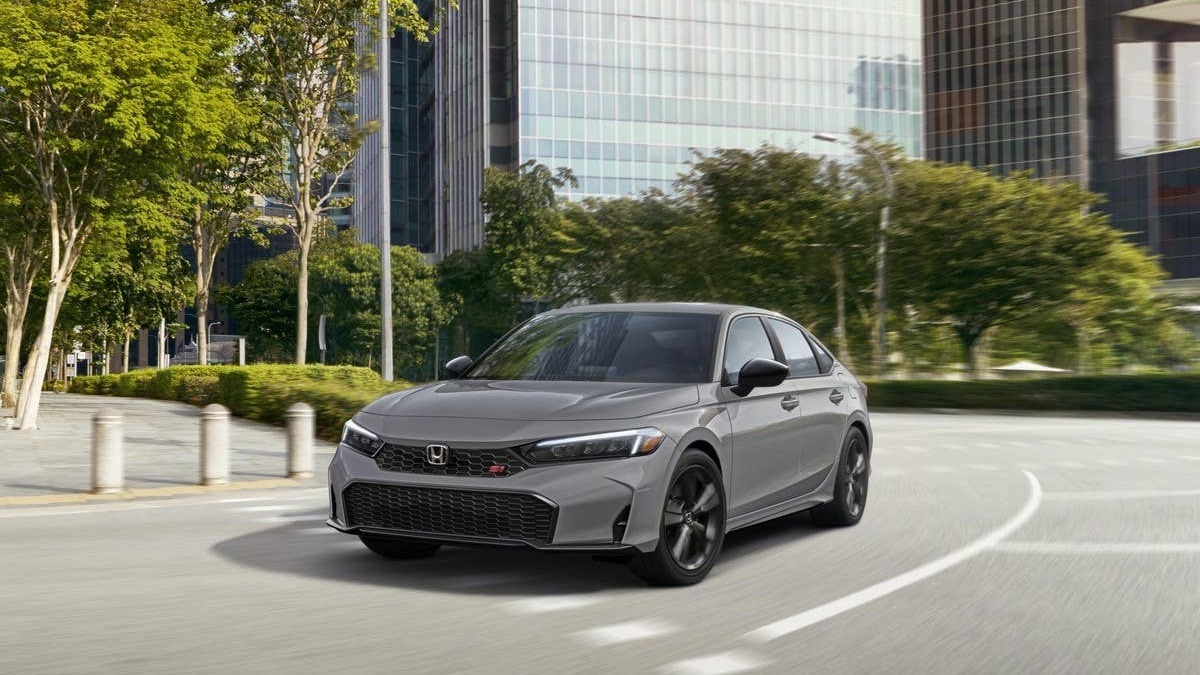
We Compared the 2026 Volkswagen Golf GTI and Honda Civic Si. One Comes Out Ahead
Something significant happened to this comparison for 2026 and it has nothing to do with horsepower. Volkswagen discontinued the manual transmission in the Golf GTI, so the car that spent fifty years as the enthusiast’s default is now sold exclusively with a seven-speed DSG. The Civic Si is sold exclusively with a six-speed manual. That single divergence reframes everything else, because the GTI’s 241 hp and 273 lb-ft against the Si’s 200 and 192 is a decisive win on paper, and for a substantial share of buyers in this segment the paper stopped mattering the moment the clutch pedal disappeared.
Read more Amendment 3 sounds good, but is devastating in practice | Opinion
What’s New for 2026
Volkswagen’s change is the one enthusiasts will argue over for years. The manual gearbox is gone from the GTI, leaving the seven-speed DSG with paddle shifters as the only transmission. The 2.0-liter TSI carries over at 241 hp and 273 lb-ft, reaching 60 mph in close to 6 seconds, and the cabin keeps its 12.9-inch floating touchscreen with navigation and a fully digital cockpit. Multimode DCC adaptive chassis control remains available. Pricing starts at $35,865.
Honda left the Si alone and that is now a selling point. The Civic sedan, hatchback and Si all enter 2026 unchanged, with prices for most variants rising at least $345. The Si stays sedan-only with the 1.5-liter turbo at 200 hp and 192 lb-ft, the six-speed manual, the standard helical limited-slip differential and the three-mode drive system. Pricing is $31,495 before a $1,195 destination charge, and the car earned a place on a major 10Best list for 2026.
Specs and Pricing
2026 Honda Civic Si
- Price: $31,495 before a $1,195 destination charge
- Engine: 1.5-liter turbocharged four
- Output: 200 hp, 192 lb-ft from 1,800 to 5,000 rpm
- Transmission: 6-speed manual only
- Differential: helical limited-slip, standard
- EPA city/highway/combined: 27/37/31 mpg
- Fuel grade: premium recommended
- Body: sedan only
- Trunk: 14.1 cu ft
- Touchscreen: 9 in
- Audio: Bose premium system
2026 Volkswagen Golf GTI
- Starting price: $35,865
- Engine: 2.0-liter TSI turbocharged four
- Output: 241 hp at 5,000 rpm, 273 lb-ft at 1,750 rpm
- Transmission: 7-speed DSG with paddle shifters, no manual offered
- EPA city/highway/combined: 24/32/27 mpg
- 0-60 mph: 6.0 sec, est.
- Body: hatchback
- Touchscreen: 12.9 in floating display with navigation
- Chassis: Multimode DCC adaptive chassis control available
Destination is $1,195 at Honda and additional at Volkswagen. Honda sells the Si as a single specification with no trim ladder, so the $31,495 car is the only Si there is. Volkswagen’s GTI range climbs from $35,865 through equipment grades to an Autobahn at the top, all sharing the same engine and transmission.
The gap at the entry point is $4,370 before destination, and it is a gap between a complete car and a base one. Performance compacts are also more exposed to depreciation than their price suggests, and the steepest losses in the performance market run past 55% across five years.
Powertrains and Driving
Output belongs to Volkswagen and the margin is not subtle. The 2.0-liter TSI makes 241 hp and 273 lb-ft against the Si’s 200 hp and 192 lb-ft, a difference of 41 hp and 81 lb-ft, and it reaches 60 mph in close to 6 seconds. In a straight line the GTI wins and there is no argument to be had.
Honda’s 1.5-liter answers on delivery rather than peak. It holds 192 lb-ft from 1,800 to 5,000 rpm, which is a wide, flat band and means passing power arrives without wringing the engine out. Combined with a lighter curb weight, a standard helical limited-slip differential and a six-speed manual with short, precise throws, the Si is the more nimble car on a winding road even though it loses the drag race. Steering response and shift feel are where it earns its reputation.
The transmission difference is the story of this section. A DSG shifts faster than any human and the GTI’s is among the better ones. It also removes the act of driving that a substantial share of buyers in this segment are paying for. Honda now sells the only manual in this comparison, and there is no version of the GTI that answers it.
Real-World Fuel Economy
The Si wins comfortably and it wins on both cycles. It is rated 27 mpg city, 37 mpg highway and 31 mpg combined against the GTI’s 24/32/27, a 4-mpg combined advantage and a 5-mpg highway advantage, while making 41 fewer horsepower from a smaller engine.
Observed figures suggest the EPA numbers are conservative on the Honda. Independent testing recorded 34.6 mpg on a mixed evaluation route against a 31-mpg rating, which is 3.6 mpg above the sticker and unusual in a performance car. The Si also beats its most direct rivals by at least 3 mpg combined.
Both engines want premium fuel, so there is no grade advantage on either side. Honda recommends 91 octane or higher to reach and protect the advertised 200 hp rather than requiring it.
Design and Presence
Volkswagen’s shape is the more useful and the more understated. Fifty years of GTI has produced a hatchback that looks like a Golf with intent rather than a Golf with body kit, and the plaid or leather seat options and red brake calipers are the whole visual vocabulary. It is a car that does not announce itself and never has.
Honda’s Si is the sportier-looking of the two and the less practical. Restricting it to a sedan for 2026 was a packaging decision rather than a styling one, and buyers who want a hot Honda hatchback have to move up to the Type R. The current Civic’s styling is deliberately restrained, which suits the Si better than it suits the base car.
Cabins and Technology
Volkswagen wins on screen and loses on execution debates. The GTI fits a 12.9-inch floating touchscreen with navigation alongside a fully digital cockpit, which is 3.9 inches larger than the Si’s 9-inch display and the more impressive installation of the two. Connectivity options are broader.
Honda’s cabin is the simpler one and includes a Bose premium audio system with Apple CarPlay and Android Auto. What the Si does that the GTI does not is put physical controls where physical controls belong, which matters in a car meant to be driven quickly. Neither interior is luxurious and both are well built for the price.
Practicality and Space
The body styles decide this. A GTI is a hatchback with folding rear seats and a large opening, and a Civic Si is a sedan with a 14.1-cubic-foot trunk and a fixed aperture. For anything bulky, the Volkswagen is simply the more useful car, and that has always been part of the GTI’s argument.
Rear-seat space is close and both seat four adults without complaint. If your requirement is a single car that carries bikes, furniture or luggage occasionally, the hatchback answers it and the sedan does not. Running costs beyond fuel are modest on both, and neither is expensive to insure by performance-car standards.
Safety and Driver Assistance
Honda Sensing is standard on the Si with collision mitigation braking, road departure mitigation, lane keeping assist and adaptive cruise control, fitted rather than optional. Volkswagen equips the GTI with its own suite including forward collision warning and lane assist, with the more capable systems climbing the trim ladder.
Read more Montgomery Police Department recruits sign as MPD bolsters ranks
Neither car has published 2026 IIHS or NHTSA results at the time of writing, which is normal for compact performance variants. Both are built on platforms with strong crash records in their mainstream forms.
Resale and Cost of Ownership
Honda’s reputation for retention in the compact class is among the strongest in the market and the Si benefits from it, while GTI resale has historically been solid without matching it. No matched five-year depreciation figure exists for these two specifically, so the comparison rests on what can be measured.
Fuel is the running cost that separates them and it compounds the purchase gap rather than offsetting it. Over 60,000 miles the Si burns 287 fewer gallons than the GTI, worth $1,147. Reliability records in this part of Honda’s range are strong, and the same pattern holds one segment up where Honda and Toyota separate by $12 a year in repair costs.
What Five Years Actually Costs
Figures assume 12,000 miles a year over five years, 60,000 miles total, and fuel at $4.00 a gallon regardless of grade. Prices are MSRP before destination, since Volkswagen’s charge is not stated in the sources consulted here. Depreciation and repairs are excluded because no matched five-year estimate exists for both.
2026 Honda Civic Si
- Purchase price before destination: $31,495
- Fuel over 60,000 miles at 31 mpg: $7,742
- Five-year purchase and fuel: $39,237
2026 Volkswagen Golf GTI
- Purchase price: $35,865
- Fuel over 60,000 miles at 27 mpg: $8,889
- Five-year purchase and fuel: $44,754
- Gap: $5,517 to Honda
Purchase price supplies $4,370 and fuel the remaining $1,147, so both columns point the same way. The figure worth noting is what the GTI’s 41 extra horsepower costs across five years: $5,517, or $1,379 per year, or close to $135 for each additional horsepower over the life of the comparison. Whether that is good value depends entirely on how often you use it.
Which Version to Buy
Honda’s answer is straightforward because there is only one Si. At $31,495 it comes with the manual, the helical limited-slip differential, the three-mode drive system and the Bose audio as standard, and there is no trim above or below it. The only meaningful decision is paint, where premium colors add $455.
Volkswagen’s answer is the base GTI at $35,865, because every trim shares the same 241-hp engine and the same DSG, so climbing the range buys equipment rather than performance. The Autobahn adds leather and technology at a price that pushes the gap to the Si past $10,000. If the adaptive chassis control matters to you, that is the option worth having.
Scorecard
- Design and presence: Volkswagen. A hatchback body with fifty years of GTI iconography, against a sedan-only Si.
- Cabins and technology: Volkswagen. A 12.9-inch floating touchscreen and digital cockpit against a 9-inch display.
- Powertrains and driving: Volkswagen. 241 hp and 273 lb-ft with 6.0 sec, est. to 60 mph, against 200 hp and 192 lb-ft.
- Practicality and space: Volkswagen. A hatchback with folding rear seats against a 14.1-cubic-foot sedan trunk.
- Real-world fuel economy: Honda. 31 mpg combined against 27, with 34.6 mpg recorded in independent testing.
- Capability: Honda. A standard helical limited-slip differential and the only manual gearbox in the comparison.
- Resale and cost of ownership: Honda. $5,517 less across five years and 287 fewer gallons burned.
Tally: Volkswagen 4, Honda 3.
So Which Comes Out Ahead?
The Civic Si, and the tally says otherwise, so that needs stating. Volkswagen takes four of seven categories on measurable evidence and loses the comparison because the three Honda wins are the three that decide whether this is a car you want to own rather than a car you want to admire from a distance. Five years and 60,000 miles run $39,237 against $44,754, a $5,517 gap. The Si returns 31 mpg combined against 27 and recorded 34.6 mpg in testing. And it is the only one of these two you can buy with three pedals.
What the GTI does better is genuinely substantial. It makes 41 more horsepower and 81 more lb-ft, reaches 60 mph in close to 6 seconds, fits a 12.9-inch touchscreen against a 9-inch one, offers adaptive chassis control the Honda has no equivalent for, and its hatchback body is more useful than the Si’s sedan trunk every single week. In a straight line and in a parking garage, the Volkswagen is the better tool.
Three situations justify the GTI anyway. If you do not want to shift gears yourself, the argument that decides this comparison evaporates entirely and the GTI is the quicker, better-equipped car. If you need to carry bulky items, a hatchback is not something a limited-slip differential compensates for. And if outright pace matters, 41 hp is 41 hp.
Take the Civic Si if the driving experience is why you are shopping this segment, because it costs $4,370 less, returns 4 mpg more and still has the manual gearbox Volkswagen just deleted. Take the GTI if you would rather have the power, the screen and the hatchback, and treat $5,517 across five years as the price of the automatic.
Alternatives to Consider
The Hyundai Elantra N delivers 276 hp with an available manual, undercutting the GTI on price while beating it on power. The Subaru WRX offers standard all-wheel drive and a six-speed manual for buyers who need traction the front-drive pair cannot match. The Toyota GR Corolla brings 300 hp and all-wheel drive with a manual, at a price above both. And the Honda Civic Type R is where Si buyers go for a hatchback body and 315 hp, if the budget stretches that far.
Frequently Asked Questions
Which is more affordable, the GTI or the Civic Si?
The Si, at $31,495 before destination against $35,865 for a GTI, a difference of $4,370. Over five years the gap grows to $5,517.
Which is more powerful?
The GTI, at 241 hp and 273 lb-ft against the Si’s 200 hp and 192 lb-ft. It reaches 60 mph in close to 6 seconds.
Can you still get a manual GTI?
No. Volkswagen discontinued the manual for 2026, leaving a 7-speed DSG as the only option. The Civic Si is sold exclusively with a 6-speed manual.
Which is more fuel efficient?
The Si, at 31 mpg combined against 27 for the GTI. Testing has recorded 34.6 mpg from the Honda, and both engines want premium fuel.
Read more New restaurants, LaCoste sentencing, Kyle Rittenhouse in top news
Copyright 2026 The Arena Group, Inc. All Rights Reserved
This story was originally published September 6, 2026 at 5:00 AM.











Post Comment