We Compared the 2026 Cadillac Escalade vs. Jeep Grand Wagoneer: One Makes a Stronger Case for Your $92,000
There is an awkward fact to establish before comparing anything. A $92,000 budget does not buy a 2026 Escalade. The least expensive one, the renamed base trim, costs $93,995 including a $2,895 destination charge, which puts it $1,995 outside the number in the headline. The same $92,000 buys almost any Grand Wagoneer in the range, since Jeep restructured the lineup for 2026 and dropped the entry price to close to $63,995 delivered. So this is a comparison between a vehicle you can buy at this budget and one you cannot, and the question that follows is whether the Cadillac is worth finding the extra money for.
Read more Milei finds unity in pushback against Falkland Islands oil project
What’s New for 2026
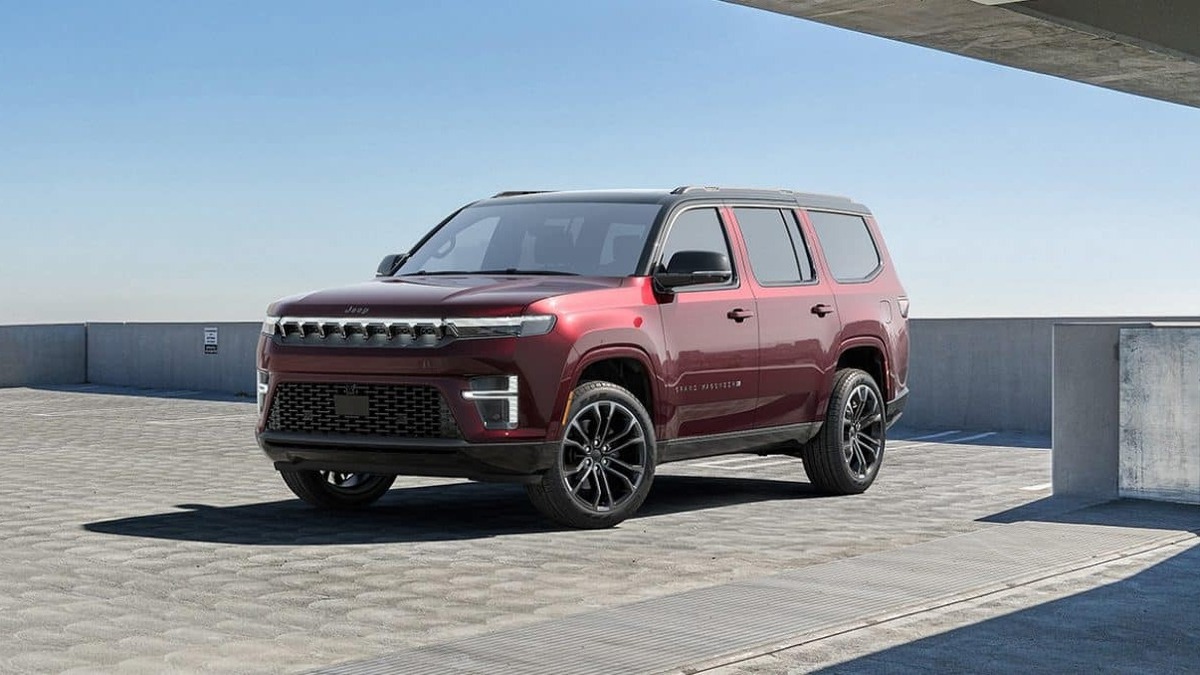
Jeep’s year is the more consequential by a wide margin. The standard Wagoneer was discontinued entirely, leaving the Grand Wagoneer to absorb its market position, which produced a dramatic price drop and a proportional increase in value. Series I, II and III designations are gone, replaced by Grand Wagoneer, Upland, Limited Altitude, Limited Reserve Altitude, Summit, Obsidian and Summit Reserve Obsidian. A mid-cycle facelift brings a slimmer illuminated seven-slot grille, sleeker LED headlights and a trapezoidal bumper, with all exterior chrome removed in favor of modern finishes. Wheels now span 18 to 22 inches, and a range-extending REEV model is arriving as the first application of that technology in an American SUV.
Cadillac’s changes are largely administrative and they cause confusion. Every trim was renamed to align with the electric Escalade IQ: the old base Luxury is now simply Escalade or 1SA, the old Premium Luxury is now Luxury, Premium Luxury Platinum became Platinum Luxury and Sport Platinum became Platinum Sport. A December destination increase took that charge to $2,895. Two new paints arrive, Vibrant White Tricoat and, exclusive to the V-Series, Magnus Metal Frost. The 6.2-liter V8 and 10-speed automatic carry over unchanged.
Specs and Pricing
2026 Jeep Grand Wagoneer
- Price with destination: close to $63,995
- Engine: 3.0-liter Hurricane twin-turbocharged inline-six
- Output: 420 hp standard, with a 510-hp high-output version on upper trims
- Transmission: 8-speed automatic
- Drivetrain: rear-wheel drive standard, four-wheel drive with a heavy-duty two-speed transfer case available
- EPA city/highway/combined: 17/24/19 mpg with rear-wheel drive
- Maximum towing: 10,000 lbs
- Payload: 1,400 to 1,500 lbs depending on configuration
- Seating: up to eight
- Basic warranty: 3 years or 36,000 miles
- Powertrain warranty: 5 years or 60,000 miles
2026 Cadillac Escalade
- Price with destination: $93,995
- Engine: 6.2-liter naturally aspirated V8
- Output: 420 hp, 460 lb-ft
- Transmission: 10-speed automatic
- Drivetrain: rear-wheel drive standard, four-wheel drive $3,000
- EPA combined: close to 17 mpg, based on the 2025 rating of 15/19/17
- Maximum towing: close to 8,100 lbs properly equipped
- Cargo behind third row: 25.5 cu ft, or 41.5 in the long-wheelbase ESV
- Seating: seven or eight
- Central display: 38-inch curved OLED
- Basic warranty: 4 years or 50,000 miles
Destination is $2,895 at Cadillac and close to $2,795 at Jeep, both unusually steep. Cadillac’s six trims run from the $93,995 base through Luxury at $102,100 and Sport at $102,700 to the Platinum pair above $119,900 and a $170,595 V-Series, with the ESV body adding close to $3,000 across the range. Jeep’s seven trims start near $63,995 and climb through an Upland tested at $76,650 to a Summit Obsidian at $94,310, with an L body adding close to $3,000 for more cargo volume.
What $92,000 reaches is therefore the top half of the Grand Wagoneer range and no Escalade at all. Depreciation in the luxury SUV segment runs past 55% across five years, which makes a $30,000 difference in entry price compound rather than settle.
Powertrains and Driving
Base output is identical at 420 hp, which is the first surprise. Cadillac gets there with a naturally aspirated 6.2-liter V8 making 460 lb-ft, and Jeep with a 3.0-liter twin-turbocharged inline-six. Upper Grand Wagoneer trims move to a high-output version of the Hurricane rated at 510 hp, which no Escalade below the supercharged V-Series can answer.
Character separates them more than the numbers. The Cadillac’s V8 is unhurried and quiet, keeping revs low and delivering torque in a way that suits a three-ton vehicle gliding down a highway. Jeep’s turbocharged six is the more urgent engine and the more modern one, and its eight-speed shifts more quickly than Cadillac’s ten-speed needs to.
Four-wheel drive is where the philosophies diverge. Cadillac charges $3,000 for a system built for traction. Jeep offers a heavy-duty two-speed transfer case with multiple terrain settings, which is genuine off-road hardware rather than bad-weather insurance, and it is consistent with what the badge implies.
Real-World Fuel Economy
Jeep wins and by more than the ratings alone suggest. The Grand Wagoneer returns 17 mpg city, 24 mpg highway and 19 mpg combined with rear-wheel drive. The EPA has not rated the 2026 Escalade, but the 2025 car returned 15/19/17 and current listings show 14 city and 18 highway, so 17 combined is the working figure.
That is a 2-mpg combined advantage to Jeep and a 5-mpg highway advantage, which is the larger of the two and the one that matters on the long trips these vehicles are bought for. A turbocharged six moving three tons is simply a more efficient proposition than a naturally aspirated 6.2-liter V8, and the eight-speed gearing helps.
Observed figures support it. Testing of an Upland on all-terrain tires recorded 18.3 mpg in mixed driving and close to 17 mpg off pavement, which is stronger than almost every full-size SUV and beaten only by the diesel versions of the Tahoe and Yukon.
Design and Presence
The Escalade remains the most recognizable object in this segment and that is worth something real in a category bought partly for presence. Standard 22-inch alloy wheels, chrome roof rails and acoustic glass come on the base car, and the shape has been the default answer to “large American luxury SUV” for twenty-five years.
Jeep spent 2026 moving away from exactly that. The refresh removed all exterior chrome, slimmed the illuminated seven-slot grille and introduced a trapezoidal bumper drawing on the electric Wagoneer S, with wheels from 18 to 22 inches. It is the more contemporary design and the less imposing one, and whether that is a gain depends entirely on what you want a vehicle this size to say.
Cabins and Technology
Cadillac wins this decisively and it is the strongest part of its case. Every Escalade carries a 38-inch curved OLED display spanning the dash, a 19-speaker AKG system, navigation with augmented reality, eight USB ports, wireless charging and wireless smartphone mirroring. Platinum trims move to a 38-speaker AKG setup with two 12.6-inch second-row screens, and Super Cruise hands-free driving is available.
Jeep’s interior is where the price drop shows. Independent reviewers have been direct that quality lags the competition, describing wood trim that looks inexpensive and glossy touch-sensitive surfaces that smudge. The equipment count is high and the execution is not, which is the trade Jeep made to reach $63,995. Upper trims answer with Nappa leather, 20-way massaging front seats, quad-zone climate and articulating comfort displays, but they are answering from behind.
Practicality and Space
Cadillac publishes the stronger cargo figures. The Escalade holds 25.5 cubic feet behind its third row, and the long-wheelbase ESV takes that to 41.5, which is the largest number either company offers. Seating is seven with standard second-row captain’s chairs or eight with the available bench, and the third row seats three.
Jeep counters with up to eight seats as standard practice and an L body that adds close to a foot of length for more cargo and better third-row usability. Both companies sell a long version and both charge close to $3,000 for it, so the decision structure is identical. Electric three-rows clear 104.7 cubic feet with both rows folded, which neither of these matches despite their size.
Payload runs 1,400 to 1,500 lbs on the Grand Wagoneer depending on configuration, which is modest for a vehicle this large and a consequence of its own mass.
Read more Missouri asks US Supreme Court to restore GOP-backed voting map
Safety and Driver Assistance
Cadillac’s standard suite covers the expected ground and Super Cruise sits above it as one of the two most capable hands-free highway systems on sale. The base trim also includes a hands-free power liftgate, remote start and a universal home remote, with driver-assistance upgrades arriving on the Luxury trim.
Jeep fits its own suite across the range, with an advanced assistance package and a fully autonomous parking system on Summit Obsidian trims. Neither vehicle is a crash-test leader by passenger-car standards, and both are extremely heavy, which changes the physics of any collision involving something smaller.
Resale and Cost of Ownership
Warranty favors Cadillac. Basic coverage runs 4 years or 50,000 miles against Jeep’s 3 years or 36,000 miles, and Jeep’s 5-year, 60,000-mile powertrain term is unremarkable for the price. Neither includes complimentary scheduled maintenance, which several competitors do.
No matched five-year depreciation figure exists for these two, and the Grand Wagoneer’s situation is genuinely unpredictable because its price dropped so sharply for 2026 that prior-year data does not transfer. What can be said is that a $30,000 lower entry price is $30,000 less exposed to whatever the curve does. Insurance on vehicles at this weight and value sits at the very top of the market.
What Five Years Actually Costs
Figures assume 12,000 miles a year over five years, 60,000 miles total, fuel at $4.00 a gallon regardless of grade, and rear-wheel drive on both. Depreciation and repairs are excluded because no matched estimate exists, so treat the totals as purchase price plus fuel.
2026 Jeep Grand Wagoneer
- Purchase price with destination: close to $63,995
- Fuel over 60,000 miles at 19 mpg: $12,632
- Five-year purchase and fuel: $76,627
2026 Jeep Grand Wagoneer Upland, as tested
- Purchase price: $76,650
- Fuel over 60,000 miles at 19 mpg: $12,632
- Five-year purchase and fuel: $89,282
2026 Cadillac Escalade
- Purchase price with destination: $93,995
- Fuel over 60,000 miles at 17 mpg: $14,118
- Five-year purchase and fuel: $108,113
- Gap, base Grand Wagoneer against the Escalade: $31,486 to Jeep
- Gap, Upland against the Escalade: $18,831 to Jeep
Purchase price supplies $30,000 of the first gap and fuel the remaining $1,486, so this is a price comparison rather than an efficiency one. The number that reframes it is the second: even a well-equipped Upland at $76,650, which is $15,350 inside the budget, finishes $18,831 ahead of an Escalade that sits $1,995 outside it. Cadillac’s better warranty and stronger interior have to be worth close to $19,000 for the comparison to turn.
Which Version to Buy
Jeep’s answer at $92,000 is the Summit tier, which brings Nappa leather, 20-way massaging front seats, quad-zone climate and the articulating comfort displays while leaving room inside the budget. The Summit Obsidian at $94,310 clears $92,000 by $2,310, so the Summit below it is the sensible stopping point. The Upland at $76,650 is the value pick and the one that leaves the most money unspent.
Cadillac’s answer is that there isn’t one at this budget. The base Escalade is $1,995 over, and independent reviewers recommend the Luxury trim above it at $102,100 because the base car does not include genuine leather upholstery. To buy the Escalade most people would want, the budget needs to move by $10,100.
Scorecard
- Design and presence: Cadillac. Standard 22-inch wheels and the most recognized shape in the segment, against a Jeep that removed all its exterior chrome.
- Cabins and technology: Cadillac. A 38-inch curved OLED display and 19-speaker AKG audio standard, against interior quality reviewers have criticized directly.
- Powertrains and driving: Jeep. 510 hp available on upper trims against 420 hp on every Escalade below the V-Series.
- Practicality and space: Cadillac. 25.5 cubic feet behind the third row and 41.5 in the ESV.
- Real-world fuel economy: Jeep. 19 mpg combined against close to 17, and 24 mpg highway against 19.
- Capability: Jeep. 10,000 lbs of towing against 8,100, with a heavy-duty two-speed transfer case available.
- Resale and cost of ownership: Jeep. $31,486 less across five years, despite the shorter basic warranty.
Tally: Jeep 4, Cadillac 3.
So Which Should You Buy at $92,000?
The Grand Wagoneer, and the budget settles it before the vehicles do. No 2026 Escalade costs less than $93,995 delivered, so at $92,000 the Cadillac is not a purchase you can complete. The Jeep starts $30,000 lower, returns 19 mpg combined against 17, tows 10,000 lbs against 8,100, and offers 510 hp on upper trims where the Escalade tops out at 420 below the V-Series. Five years and 60,000 miles run $76,627 against $108,113. Even a well-equipped Upland at $76,650 finishes $18,831 ahead.
What the Escalade does better is concentrated in the cabin and it is not trivial. The 38-inch curved OLED display is the most impressive screen in the class, the standard 19-speaker AKG system is genuinely good, Super Cruise is available, and the interior execution is a clear step above a Grand Wagoneer whose quality reviewers have criticized in print. Cargo behind the third row is 25.5 cubic feet, the warranty runs a year and 14,000 miles longer, and the badge carries a presence Jeep has spent 2026 deliberately walking away from.
Three situations justify stretching for the Cadillac. If the interior is why you are spending this much, the Grand Wagoneer will disappoint you every time you touch the wood trim. If you want Super Cruise, Jeep has no equivalent. And if you intend to keep the vehicle past 36,000 miles, Cadillac’s longer basic warranty is worth having on something this complex.
Buy the Grand Wagoneer if $92,000 is a genuine ceiling, because it is the only one of these two you can actually drive away in and it wins on fuel, towing and available power. Stretch to the Escalade if the cabin and the screen are the point, and understand that the Luxury trim reviewers recommend costs $102,100, which is $10,100 beyond the budget rather than $1,995.
Alternatives to Consider
The Lincoln Navigator is widely rated ahead of the Escalade on interior quality and dash execution at a similar price. The GMC Yukon Denali shares the Escalade’s mechanicals including a Duramax diesel option for meaningfully better economy. The Mercedes-Benz GLS delivers a more refined cabin than either at a higher price. And the Chevrolet Tahoe with the Duramax returns 24 mpg combined for buyers willing to give up the badge entirely.
Frequently Asked Questions
Can you buy an Escalade for $92,000?
No. The least expensive 2026 Escalade is $93,995 including its $2,895 destination charge, putting it $1,995 over. The Luxury trim reviewers recommend is $102,100.
Which is more fuel efficient?
The Grand Wagoneer, at 19 mpg combined against close to 17 for the Escalade. On the highway the gap widens to 24 mpg against 19.
Which one tows more?
The Grand Wagoneer, at up to 10,000 lbs against close to 8,100 for the Escalade. That is a higher rating than the Navigator or Sequoia manages as well.
Which has the better warranty?
Cadillac, at 4 years or 50,000 miles basic against Jeep’s 3 years or 36,000. Both cover the powertrain for 5 years or 60,000 miles and neither includes maintenance.
Read more Putin says US-Russia contacts beneficial as talks begin with Witkoff and Kushner
Copyright 2026 The Arena Group, Inc. All Rights Reserved
This story was originally published September 5, 2026 at 2:30 PM.











Post Comment