Immigration appeals board deals blow to Venezuelans seeking political asylum in U.S.
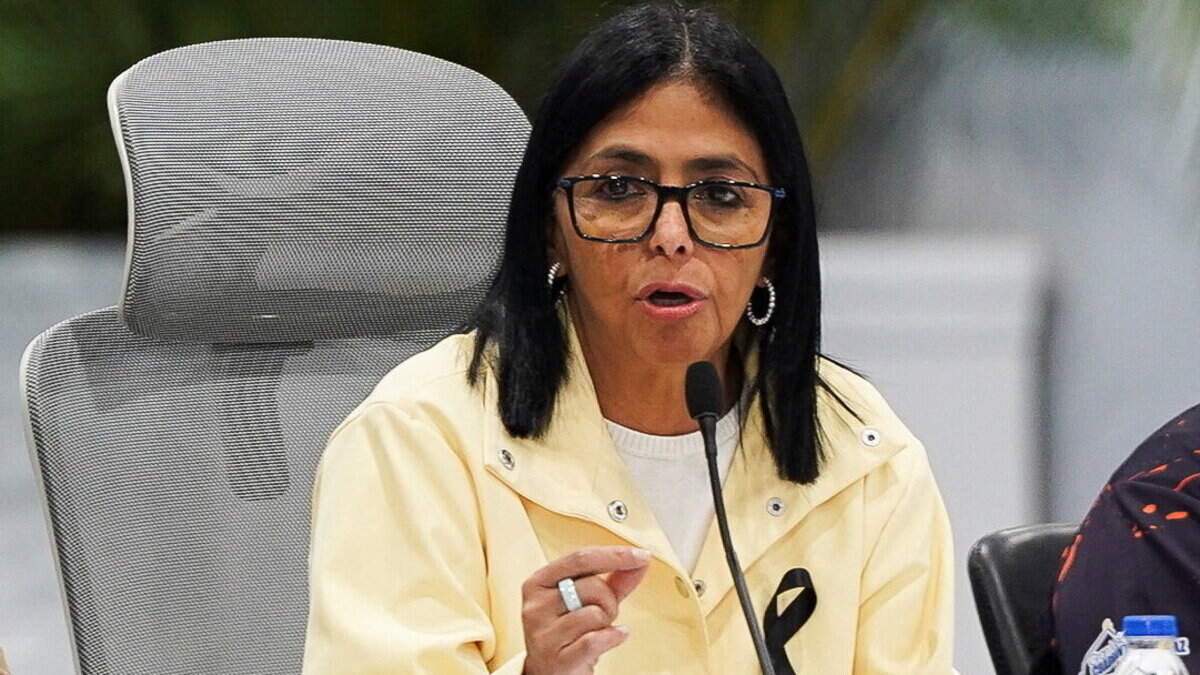
Venezuelan asylum seekers in the U.S. who faced persecution under the Nicolás Maduro regime will also have to prove potential harm under the current government in Caracas to win their cases, an immigration appeals board ruled Friday.
Read more Mensah dazzles in Hurricanes debut — and shows how he’ll elevate Miami offense
In a ruling released Friday afternoon, the Board of Immigration Appeals reversed the asylum protections for a Venezuelan woman in an April 2026 case in which an immigration judge ruled she had a credible case that she would be persecuted if returned to the South American country because of her past opposition to Maduro.
The appeal board, part of the Department of Justice, argued that the capture of Maduro by U.S. forces in January means that circumstances in Venezuela have changed — even though his vice president, Delcy Rodriguez, now runs the country and human-rights groups warn that the repressive regime remains intact. The country is also recovering from devastating back-to-back earthquakes in June that have so far killed over 6,000 people.
“The removal of the head of a national government is a very significant development and not merely another event occurring against an otherwise static political background,” the board ruled.
READ MORE: Human rights groups tell Congress Venezuela’s repressive regime remains intact
The board instructed immigration judges to evaluate Maduro’s ousting when assessing an asylum seeker’s fear of future persecution. They sent back the case down to the lower court because “the immigration judge did not sufficiently assess the effect of the changed country conditions” on the woman’s risk of future persecution.
The decision is a blow to many Venezuelans whose only chance to stay in the United States hinges on their asylum cases after the Trump administration limited other ways to stay in the United States. Trump eliminated deportation protections under Temporary Protected Status for over half-a-million Venezuelans and also put their immigrant applications on pause at U.S. Citizenship and Immigration Services, though a federal court lifted that freeze in June.
Although it is not clear how many Venezuelans currently have asylum applications in the U.S., more than 132,000 had pending cases in 2024, according to Syracuse University researchers at TRAC Immigration.
Obtaining political asylum is already becoming more difficult every day. Under President Donald Trump, the denial rate of asylum applications has skyrocketed to 94%, according to researchers at Syracuse University.
The case the appeals board ruled on focuses on a woman who entered the U.S. in 2014 on a student visa and was listed under her husband’s asylum case in 2015. The Department of Homeland Security moved to deport her, and she filed a separate asylum case in March 2026. The case does not list the woman’s name or say where she lives.
The woman and her husband participated in pro-democracy political groups in Venezuela and as a result were threatened, she argued, adding that her Venezuelan passport was annulled in October 2025 and that she had continued taking public stances on her social media accounts against Maduro’s regime. The judge in her asylum case said she “had not suffered past persecution but was credible and did establish a well-founded fear of future persecution on account of her political opinion.” The Department of Homeland Security appealed the case.
Read more Ten nuggets, thoughts, grades, snap count data, national reaction on UM’s offense
The appeals board said the woman’s claims were primarily based on opposing Maduro and that she had argued in the appeal that conditions have not really changed in Venezuela.
“Where the asserted fear of persecution arises from opposition to the government headed by that individual, the removal of the national leader from power and the transfer of executive authority alter the political circumstances against which the asserted fear must be evaluated,” the board said.
The appeals board argued that the influence of U.S.-Venezuela relations under the Trump administration should be considered. “There is further evidence of continued cooperation and progress toward reform based on the United States’ three-part plan to promote stabilization, economic recovery, and democratic transition in Venezuela,” the decision states.
Since Rodriguez took over as interim president of Venezuela following the capture of Maduro, the Trump administration announced a bilateral agreement granting the U.S. majority control of 65 billion plus barrels of the country’s oil reserves. Her government has also discussed holding national elections with the State Department, though those have not yet materialized in actual commitment.
South Florida immigration attorneys are divided on what the decision means, beyond that it will make it harder for Venezuelans to win asylum. Some told the Miami Herald that the ruling blocks the path to asylum and that the cases cannot be evaluated in a vacuum. They also criticized the appeals board for becoming a politicized body under Trump’s Justice Department.
The appeals board oversees immigration judges, who are not part of the federal judiciary, but instead work for the Department of Justice.
Magdalena Cuprys, a Miami-based immigration attorney, said the current regime in Venezuela “is the same government. The only thing that’s changed is that this government is willing to do business with the president and his friends.
“They’re going to say that Delcy Rodriguez has no proof of persecution and arbitrary detention because she’s been president for a few months. If Venezuela is so free, why can’t Maria Corina Machado go back and not hide?” said Cuprys, referring to one of the main opposition figures whose political party won the presidential election against Maduro last year, according to independent watchdogs.
Other lawyers said that Friday’s decision does not mean an automatic denial of the cases of Venezuelan asylum seekers, but recommended that people immediately update their cases with information about the current situation in the South American country and why they cannot return there under the current president.
The process “will be much more rigorous,” said John de La Vega, an immigration lawyer in Miami who is originally from Venezuela. “The decision lets us know that the capture of Maduro and changes in the U.S.-Venezuela relationships are a change in circumstances.”
Read more Milcent’s 3 TD passes lead Monarch to comeback win over Cardinal Gibbons
Miami Herald staff writer Ana Claudia Chacin contributed to this report.
This story was originally published September 4, 2026 at 7:38 PM.









Post Comment