Think your HOA is strict? Meet the rules of Indian Creek’s Billionaire Bunker
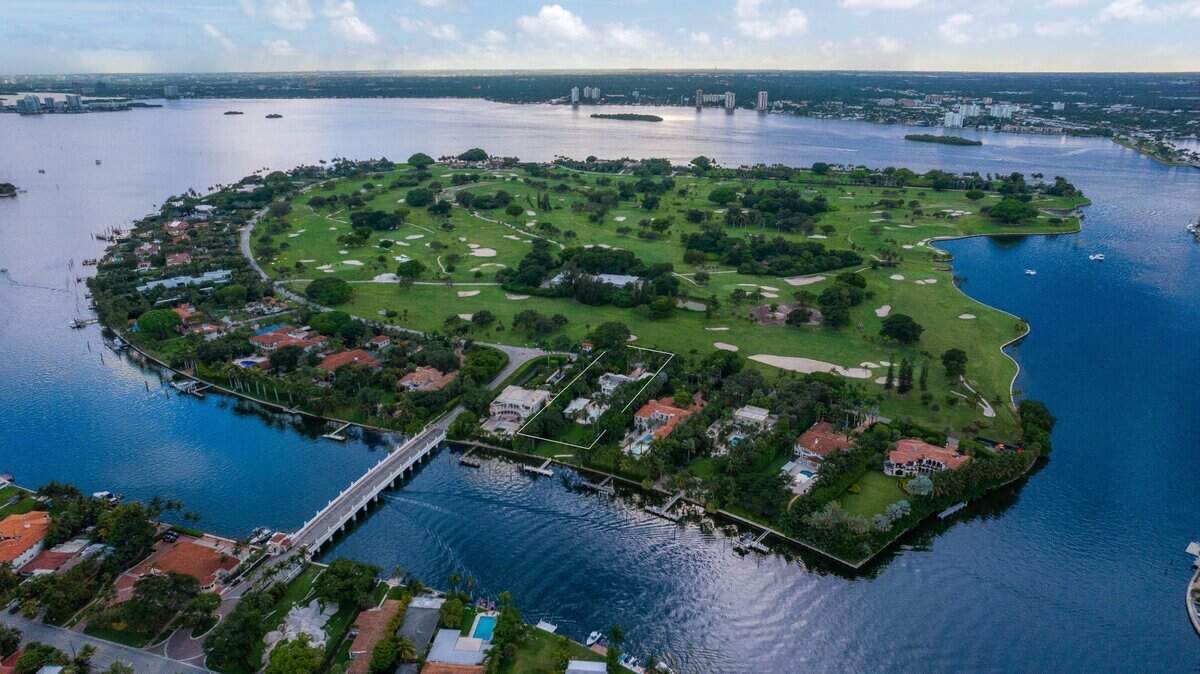
In Indian Creek Village, money can buy you a $100 million mansion, a sprawling waterfront compound and a front-row seat to one of the most exclusive enclaves in South Florida.
Read more Are Publix and Costco open on Labor Day? Garbage picked up? See holiday changes
But you still have to follow the rules created when the village first incorporated in 1939.
Welcome to Billionaire Bunker, where some of the world’s richest people live by a surprisingly detailed set of rules.
Indian Creek Village Manager Guillermo Olmedillo said this week that the village follows state and broader municipal laws, as well as the rules contained in its 103-page , also known as the Indian Creek Village Code.
There are limits on height. Limits on paving. Limits on walls. Limits on guest houses. Limits on pools. Limits on generators. Limits on docks. Even limits on the number of animals you can own.
The regulations spell out what property owners can build, where they can build it and how they can use their land, among more than 100 additional requirements.
And some of those rules are surprisingly specific. Take note, all you famous billionaire residents, including Jeff Bezos, Mark Zuckerberg, Tom Brady, Carl Icahn, Norman Braman, Ivanka Trump and her husband Jared Kushner.
MORE: Inside Billionaire Bunker: What the enclave was like before Bezos and Brady
The regulations govern everything from the size and height and paint of a house to fences, pools, driveways, generators, docks and accessory buildings. All are meant to keep the “quiet elegance” of the village.
For example, you can’t allow grass to grow more than six inches. All construction sites must be covered with a layer of sod to prevent “dust and unsightliness.” House paint colors are restricted. For-sale signs must only be made of “sealed wood, signboard or sheet metal.” But there’s more: They must be primed and painted with a minimum of two coats, using gloss letters on a matte background and gloss foreground.
Now, the rules that may be hardest to explain to a billionaire arriving home from the airport:
No helicopters or helipads allowed
The regulations say that “in no instance” can a landing or storage area for a helicopter or other aircraft be allowed as an accessory use. So much for landing directly in the backyard.
Your mansion has a minimum size
To qualify as a mansion on Indian Creek, size matters. The village doesn’t just tell homeowners how big their houses can be. It tells them how small they can be.
A residential principal building, together with its accessory buildings, must contain at least 5,000 square feet of gross floor area. At least 75% of that space must be under the roof of the main house.
So yes, Indian Creek effectively has a minimum mansion size.
You can’t pave paradise
Even Village billionaires need to leave some room for grass, whether they like it or not.
The regulations limit building coverage to 25% of the building site, which means at least 55% of the property must remain landscaped or pervious open space. And that calculation isn’t simply about the footprint of the house.
Driveways, sidewalks, parking areas, swimming pools, athletic courts, terraces and other hard surfaces count, too.
Mansions can’t crowd mansions
Here’s another rule. A principal residence in the village must be at least 100 feet from the rear, or waterside, property line.
Accessory buildings must be at least 50 feet from the water. The required front setback is 50 feet and side setbacks are 25 feet.
So even when your backyard is Biscayne Bay, you can’t simply push the mansion to the water’s edge.
Where the pool can go
A swimming pool can extend into the waterfront setback, but it can’t rise more than three feet above the established yard grade.
Read more Think your HOA is strict? Meet the rules of Indian Creek’s Billionaire Bunker
And there’s one hard rule: No swimming pools in the front yard.
Even your guest house has rules
A property can have up to two additional structures.
The regulations list possibilities including guest houses, caretaker residences, cabanas, gyms, libraries, pool houses, boat houses and detached garages.
But there’s a catch: Those buildings generally can’t be designed to function as independent residences, except if they are for household employees.
And under the residential building standards, an accessory building is limited to 800 square feet.
Privacy has a height limit
Indian Creek is famous for privacy. But even here, there are limits on how high you can build the wall around that privacy.
Front- and side-lot fences and walls can’t exceed seven feet above the approved finished grade of the main building.
They also must be set back 10 feet from the front property line, with landscaping required in that setback to screen the wall from view. So you can have the wall. Just not an enormous one.
Driveways have rules, too
Even the driveway needs to give the neighbors some elbow room. The regulations require every driveway to be at least 15 feet from a side property line.
Rules for hurricane generators
Indian Creek has a specific provision governing emergency electrical generators and HVAC structures.
A generator enclosure can’t exceed: 18 feet wide by 20 feet long by 12 feet high.
And it must be set back 100 feet from the front property line, 100 feet from the water, 25 feet from the side property line and 10 feet from the main building. Those setbacks cannot be varied.
You can’t create another lot
Want to turn one piece of Indian Creek property into two?
The regulations say “No further subdivision” is permitted.
The rules generally require a residential site to have at least 200 feet of water frontage on Biscayne Bay, with specific exceptions for some existing lots.
For an island with a famously limited number of residential properties, that’s a critical rule.
The waterfront isn’t entirely yours
Owning a waterfront mansion doesn’t mean you can do whatever you want at the water’s edge.
Boat houses, boat landings, docks, piers and mooring posts must be built according to plans approved by the village council and require a Miami-Dade County environmental permit.
No marketing from mansions allowed
The regulations also put limits on how homeowners can use their properties for events.
A homeowner can’t allow the property to be used by a third party for an event or gathering — including a party — intended to promote, sell or introduce a commercial service, product, celebrity or brand.
So throw a party if you want. Just don’t turn the mansion into a marketing event.
And then there are the animals
The regulations say domestic or other animals kept in groups such as packs, herds, litters, bevies or flocks larger than three are prohibited, unless the Village approves otherwise by resolution.
So the rule isn’t simply “three dogs.” It’s written broadly enough to cover groups of animals.
Taken together, the regulations offer a revealing look at Indian Creek. The bottom line is to protect the exclusive, high-end character of the village.
Read more Are Publix and Costco open on Labor Day? Garbage picked up? See holiday changes










Post Comment