A 21-year-old was gunned down in a nightclub. Family says cops know who did it
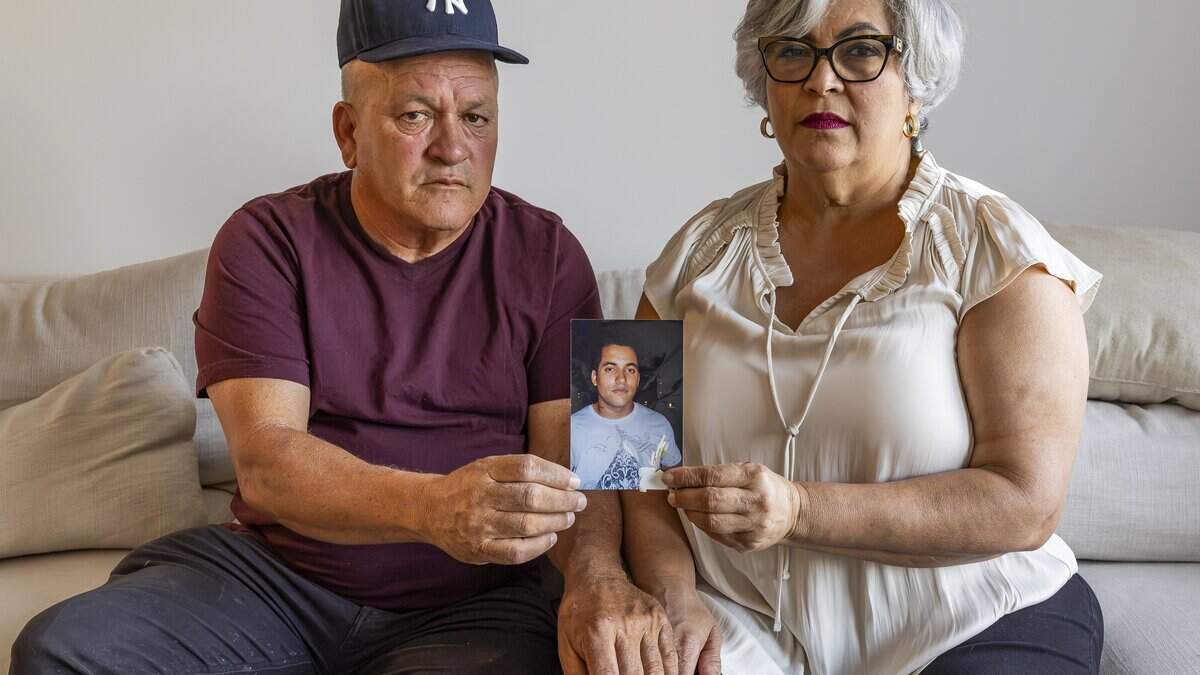
For years, the photo of Raudel Sanchez displayed on a white table in his parents’ living room had been tucked away in hiding.
Read more Playboy Mansion owner’s Miami Beach house among top Miami-Dade luxury contracts
Raudel’s mother, Vivian Texidor, couldn’t bring herself to show the photo of her son with his stern expression. “I couldn’t even look at a photo of him,” she said in Spanish, looking down at the dining-room table. “It was so hard, so hard.”
The photo of Raudel now stands with other family photos on the table, directly in front of the cream-colored couch inside her immaculate Hialeah apartment. The other photos show family members over the years, but in every photo of Raudel, he’s unchanged and frozen in time.
On Aug. 17, 2009, at just 21 years old, Raudel was shot in a bathroom at Club Mystique, a popular Latin nightclub, now gone, that was located beside a hotel near Miami International Airport.
It was nearly 4 a.m. The club was packed, and the music was blaring. And nobody, according to witnesses, heard the gunshot.
Minutes later, Miami-Dade police found Raudel dead outside the club, according to a brief incident report. The initial summary mistakenly said he was “stabbed.” The report also said he was “bleeding from the left side of the neck area,” but that no witnesses “heard or saw the incident occur.”
The brazen shooting generated almost no publicity despite the deadly assault happening in a crowded club. And in the 17 years since, no one has been arrested. It remains a mystery who shot him execution-style in the club’s bathroom — and why.
But police may already know, the Miami Herald has found. And the cold case may have been stalled because federal prosecutors told the Miami-Dade police to stand down: A key witness to the club shooting has been cooperating for years with the feds on a major migrant-smuggling case aimed at members of a Cuban-American criminal organization in South Florida, the Miami Herald has learned.
A Miami-Dade police detective told Raudel Sanchez’s father that prosecutors with the U.S. Attorney’s Office pressured him to put the homicide investigation on hold because of the importance of the cooperating witness in their federal racketeering case. The Miami Herald has been unable to confirm the father’s information independently because the detective wouldn’t talk with the Herald and the U.S. Attorney’s Office in Miami declined to comment.
Court records, however, reveal the cooperating witness, a member of the Cuban-American gang, has been assisting the feds since 2015. Multiple sources say the witness knew the alleged shooting suspect in the Club Mystique probe — and that both were there on the night of Raudel Sanchez’s slaying.
Raudel’s parents say they’re desperate for answers, bewildered by the lack of progress in the investigation into their son’s death.
“We want to know the truth,” Raudel’s father, Raunel A. Sanchez said. “We want to know who did it, and why he was killed. … It’s been 17 years. And they either don’t know or won’t say.”
Shooting at a club
A four-page police report and a four-paragraph Miami New Times article are all that are publicly available related to Raudel’s murder.
The shooting, according to the report, occurred around 3:40 a.m. Miami-Dade police arrived three minutes after being dispatched, and Detective Juan Segovia was assigned as investigator that same day.
The narrative on the handwritten report is brief and states that police were called because a man, later identified as Raudel, was stabbed. When they arrived, they found Raudel on the ground outside Club Mystique, 7250 NW 11th St, just south of Miami International Airport. It’s unclear from the limited police records and interviews with family members and others how Raudel managed to walk to the outside of the club after he was shot inside.
Raudel was shot in the chest, according to his death certificate.
Witnesses, according to the report, said they did not hear or see the incident. One of those witnesses was Melissa Cernada, Raudel’s girlfriend. Cernada did not respond to the Herald’s request for an interview.
That night, Raudel went out with his cousins, Cernada and a friend, according to his parents, and was killed when a person followed him into the bathroom.
The friend, who asked that the Herald not identify him out of fear of for his safety, said he suggested that Raudel, Cernada and he go to Club Mystique on the night of the killing. Although it was a Monday, the club was crowded. As he sipped a drink at the bar, the friend said Raudel and his girlfriend were dancing to loud salsa music. Then, the friend said dozens of customers suddenly rushed to the club’s rear exit — and he instinctively followed the crowd outside.
There, he said he saw Raudel lying on the pavement. But he said he had no idea that Raudel had been shot in the club’s bathroom or how he managed to walk outside after the shooting. Miami-Dade police arrived and set up a crime scene with yellow tape.
“I was very nervous,” said the friend, who knew Raudel’s father because they worked together. “I immediately called the dad. I had a very bad impression of the whole experience.”
A few months later, the friend said a detective questioned him. But he told police he had not witnessed the shooting or heard any shots because of the club’s loud music. “There has been all kinds of speculation, but it’s important they find out what happened for good,” he said.
Sanchez, the father, said employees of the club told him there hadn’t been a fight leading up to the shooting, indicating that the killer might have targeted his son.
“He didn’t deserve that death,” Texidor, the mother, said.
Bits and pieces, but no answers
In an interview with the Miami Herald, Sanchez said he has spoken once in a while with Segovia, the lead detective investigating his son’s killing — at the police department, in restaurants and by phone — over many years but has only learned bits and pieces, no definitive answers.
In 2025, Sanchez told Segovia that he believed a career criminal by the name of Raonel Valdez Valhuerdis killed his son — based on information that the father heard from a family friend. That friend told Sanchez he overheard Valdez Valhuerdis at a bar saying he gave a man a “timbrazo” at Club Mystique. “Timbrazo” means a loud ringing sound.
In late July, the father said, the detective told him that Valdez Valhuerdis was the main suspect in his son’s killing.
Segovia did not respond to numerous calls, voicemails and messages left by a Herald reporter seeking to ask him questions about the cold case.
Valdez Valhuerdis’ former defense attorney in a previous case declined to comment. Valdez Valhuerdis could not be reached for comments through an inquiry with the federal Bureau of Prisons.
Valdez Valhuerdis immigrated to the United States in 2005. He became involved in a Cuban-American crime organization and has been serving back-to-back state and federal prison sentences stemming from a $2.8 million gold-shipment heist in Coral Gables and a marijuana grow-house invasion in Miramar. Both armed robberies happened in the fall of 2012 — three years after Raudel Sanchez was fatally shot at Club Mystique.
During his 2018 sentencing in the home-invasion case, Valdez Valhuerdis told a federal judge that he came from a humble family in Cuba, had been a wrestling standout and didn’t recognize himself as a criminal in the United States.
“Your Honor, it’s very difficult for me to go through this situation,” Valdez Valhuerdis said. “And for me to understand how I was able to commit so many crimes, with a past that was so impeccable as the past that I had, and I was dedicated fully to sports before I came to this great country, a country to which I owe a huge apology.”
But federal prosecutor Vanessa Johannes took a starkly different view of him. “Since the defendant arrived here in 2005, not as a young child, not as a little baby, not as a little boy, but as a 28-year-old man, he has had no respect for our country and no respect for the citizens of this community,” she said.
Read more Miami Beach drops the price of parking to lure visitors during a slow stretch
Valdez Valhuerdis, 48, is scheduled to be released from a federal prison in Coleman, a city northwest of Orlando, in September 2030.
It’s not clear whether Segovia or other Miami-Dade investigators have attempted to question Valdez Valhuerdis in connection with Raudel’s murder.
Cold case dragged on for years
In the Herald interview, Sanchez, a cement-truck driver, said Segovia told him that the cold case has dragged on for so long because federal prosecutors put pressure on the Miami-Dade police to stand down in their investigation into Raudel’s killing.
The reason: For years, prosecutors have been using a cooperating witness in a federal racketeering case, dating back more than a decade, targeting migrant smuggling between Cuba, Mexico and South Florida. His name is Alfredo Kindelan Hernandez, and he is close to Valdez Valhuerdis.
Valdez Valhuerdis, Kindelan Hernandez and other members of the gang were believed to be at Club Mystique on the night of the shooting of Raudel Sanchez, according to sources familiar with the homicide investigation. They told the Herald federal prosecutors were aware of the link between the Miami-Dade and federal probes a decade ago.
Kindelan Hernandez has been a valuable government witness because he has insider information about the Cuban-American gang and its members. In 2015, he pleaded guilty to the kidnapping of a Cuban migrant for ransom in Mexico. In 2018, he pleaded guilty, along with Valdez Valhuerdis, to the Miramar home invasion and Coral Gables gold heist. As part of his plea deals, Kindelan Hernandez agreed to cooperate with authorities by providing information about the Cuban-American crime network and its migrant-smuggling operations in South Florida and Mexico.
Six gang members have been convicted on charges that include kidnapping, extortion and torture in a conspiracy to smuggle baseball players and other migrants to the United States, with the crimes dating back as far as 2009. The Miami-based organization, dubbed the “Cuban Mafia” by federal authorities, has collaborated with the Mexican cartel known as Los Zetas in smuggling, drug trafficking and killings.
Throughout his ongoing cooperation, Kindelan Hernandez, 50, has been held at the federal detention center next door to the U.S. Attorney’s Office in Miami, records show. In 2018, he was sentenced to 16-1/2 years, but it was later reduced to 10 years at the recommendation of federal prosecutors. Prosecutors cited his “agreement to cooperate with the investigation of organized criminal activity,” including helping “the government collect significant evidence and identify witnesses against multiple group members and associates.”
The U.S. Attorney’s Office declined to comment when asked about allegedly putting pressure on the Miami-Dade detective to stand down in the probe of Raudel’s killing to protect prosecutors’ cooperating witness in the federal racketeering case.
During Sanchez’s recent discussion with Segovia, the father was told the shooting of his son was not linked to drugs or any criminal activity tied to the Cuban-American network Segovia told the father that he believes the son’s killing was a one-off.
Joaquin Perez, a high-profile criminal-defense lawyer who has specialized in drug-trafficking cases for decades, came to know the Sanchez couple and their ordeal through a friend. Perez, who is representing a defendant in the federal racketeering case, said he’s trying to help the Sanchez family obtain answers from the police and prosecutors.
Perez said he emailed and spoke with Segovia over the past year. Perez said he also emailed the current federal prosecutor on the racketeering case, Brian Dobbins, and spoke with the former prosecutor, Ignacio Vazquez, about the homicide probe. Perez said he was told by Vazquez that the former prosecutor spoke with Segovia about the Miami-Dade homicide investigation into Raudel Sanchez’s killing.
“Having spoken with the long-suffering father, who continues to long for closure and justice, it is imperative that your office assist Detective Segovia in advancing this investigation,” Perez emailed Dobbins and Segovia on Aug. 28, 2025, but received no response. “This homicide was an act of brazen violence committed in a public place, in the heart of Miami-Dade County.”
“They have a responsibility to the parents to tell them who was responsible for the death of their son,” Perez told the Herald, saying that charging the killer of a young man at a club near Miami International Airport is “more important” than protecting a cooperating witness in the federal racketeering case.
‘Waiting for … justice’
Raudel was 10 years old when he moved with his parents from Cuba to Miami-Dade. Texidor remembers her son as an introverted homebody who loved working out at the gym and eating healthy foods, although he enjoyed having chocolate natilla as a sweet treat. He attended middle schools in Miami Springs and Sweetwater, but he never graduated from high school. He worked at a cement factory.
Raudel would, on occasion, go out to nightclubs with his cousins. But Texidor and Sanchez said their son was not a big drinker and never did drugs.
“He was a good kid,” Texidor said. “He wasn’t a criminal or one to be in the streets.”
Raudel, Texidor said, always said he wanted a sibling. And when he was 18 years old, he got what he had yearned for and became a doting brother to his sister, Sabrina Sanchez.
After Sabrina was born, Raudel tattooed her name on his neck in cursive lettering. Sabrina was 3 years old when Raudel was murdered.
Sabrina said she has avoided bringing up his death because it would cause Texidor to break down. But at every gathering with relatives, the old wounds reopen.
“It’s always a question,” Sabrina, 20, said. “It’s hard for everyone.”
Raudel’s parents say they’re exhausted and frustrated after waiting 17 years for answers.
Sanchez said he thought the family would know more by now. “We’re going to die and not really going to know what happened,” he said he told Detective Segovia.
“That’s what we’re waiting for, for justice,” he said. “And to know why they killed him.”
Visiting their son’s grave
Just after 10 a.m. on a Sunday, Sanchez and Texidor stopped at a flower cart just outside Caballero Rivero Woodlawn West. They parked their car, got out and walked, side by side, to Raudel’s grave.
When they arrived, they looked down at the grave and noted how the bronze headstone’s gold lettering had faded with time. The sound of a wind chime hanging from a nearby tree softly echoed as the Sanchezes, and a few others, laid flowers on their loved ones’ graves.
While cemetery visits are often difficult for Raunel Sanchez, this time, he rejoiced over the detective’s latest update: Sanchez said Segovia told him he was looking into pursuing charges in the case. Texidor, however, was more skeptical.
As the family awaits answers, Texidor has channeled her energy into her visits to Raudel’s resting place — always on a Sunday to avoid seeing other mourning families burying their loved ones.
“If I don’t come, I feel like I abandoned him,” Texidor said. “But I know he’s not there.”
Like the words written on Raudel’s headstone, Texidor said her son and his memory live on, not in his grave, but in their hearts.
Read more Feds arrest a Broward man accused of delivering stolen luxury cars










Post Comment