Miami commission votes to expedite homeless arrest process
The Miami City Commission passed an ordinance Thursday that will allow city police to more quickly arrest people camping on the streets, a major step toward formalizing a policy change that homeless advocates have decried as draconian and ineffective.
Read more FBI investigation of Argentine soccer entity escalates as grand jury meets in Miami
Proposed by Commissioner Rolando Escalona, whose district includes parts of Little Havana and Brickell, the new ordinance scraps the requirements that Miami police issue written warnings and give people who violate a ban on “camping” 24 hours to move their belongings before making an arrest. It also eliminates officers’ option to issue a citation in those circumstances.
Escalona has said his proposal, first made public earlier this month, intends to connect homeless people with resources while keeping the community safe and clean. Under the change, police can only make arrests if the officer has verified a shelter bed is available, offered it to the person, and the person has refused it.
An earlier version of the proposal drew backlash from community advocates because it didn’t require police to issue any warning — verbal or otherwise — or provide the person with time to pack their belongings.
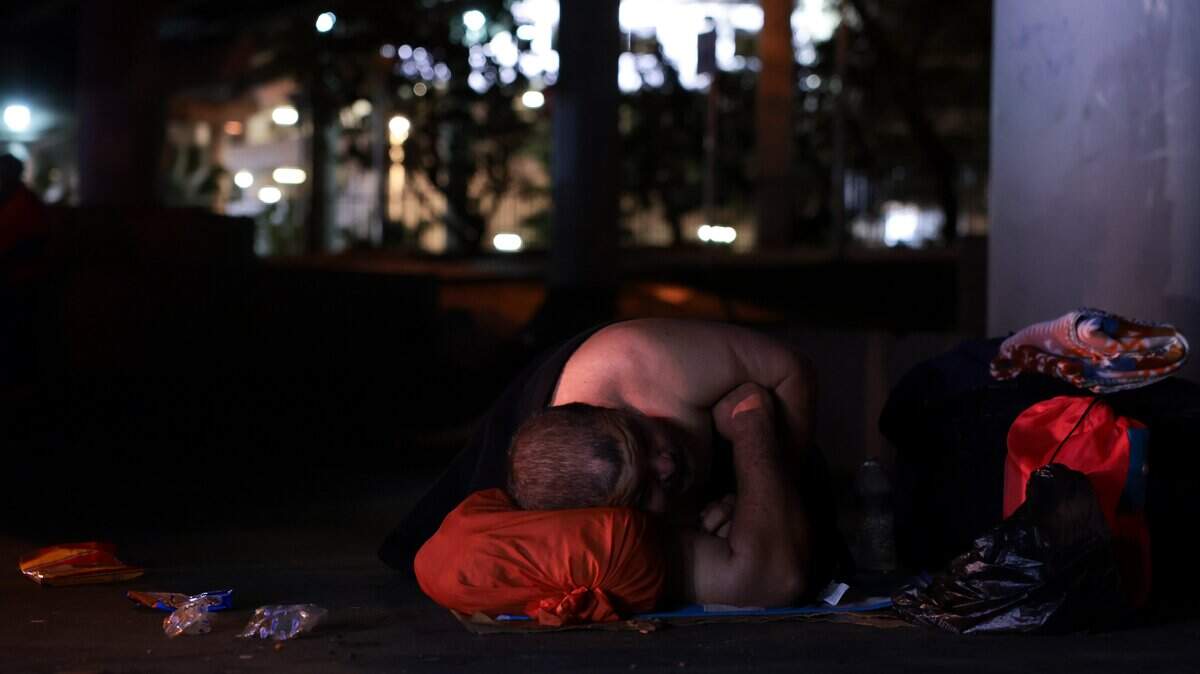
But after protests from homelessness advocates, portions of the original legislation were changed. Escalona’s final ordinance, passed 3-2 by the Commission, says cops must give campers a verbal warning and a “reasonable amount of time” for the person to clear their encampment — which the city defines as anyone sleeping on public property in a tent, under a piece of cardboard or blanket, or accumulating more possessions than could fit in a three-cubic-foot box.
What constitutes a “reasonable amount of time” is up to the intervening officer.
Commissioner Christine King — one of two commissioners to vote against Escalona’s legislation Thursday — posed that question to City Attorney George Wysong.
“It’s difficult to define the word ‘reasonable,’ as you know,” Wysong said, adding that it would depend on the amount of belongings the person has.
“It’s not a 24-hour period,” Wysong added. “It’s as quickly as they can remove themselves from the sidewalk and remove the obstruction at that time.”
Waiting on the Mayor
Despite the measure’s apparent facilitation of arrests, Escalona was quick to assert “we’re not taking anyone to jail.”
Advocates for the homeless are skeptical.
“It will expedite and escalate arrests. There is no question about that,” said David Peery, who directs the Miami Coalition to Advance Racial Equity. “In fact, that’s what it’s intended to do.”
The measure ultimately passed with support from Commissioners Escalona, Miguel Angel Gabela and Ralph Rosado.
Commissioner Damian Pardo joined King in opposing the measure, saying the issue presents “a slippery slope that I’m not comfortable with.”
Read more FBI investigation of Argentine soccer entity escalates as grand jury meets in Miami
It now goes to Mayor Eileen Higgins to either sign or veto. If Higgins doesn’t sign within 10 days, the ordinance automatically goes into effect. Higgins did not immediately respond to a request for comment.
Lingering Concerns
Despite scrapping the warning period, officers can’t go straight to arresting the homeless. Per the ordinance, Miami police officers must confirm if beds are available at the city’s emergency shelters. If none are open, they cannot make an arrest.
And on any given night, that might very well be the case. Bed space is limited, Ron Book, chairman of Miami-Dade’s homelessness agency, the Homeless Trust, told the Herald earlier this month. Though an 80-bed emergency shelter is set to open soon in Gladeview, more than 605 people sleep on Miami’s streets, according to the Trust’s most recent tally in January.
And even if a bed is available, not everyone who sleeps on the street wants to go to an emergency shelter.
A recent survey conducted by University of Miami researchers of people sleeping on Miami’s streets found that 28% of respondents likely wouldn’t accept a shelter bed if offered one, saying they feel unsafe or overly restricted in the shelters.
Read more: Why do some homeless people in Miami turn down shelter? It’s complicated
But now, refusal could result in arrest, a development Peery described as “devastating.” For one, he said, it’s costly, especially when compared to more stable forms of housing for the homeless.
Spread across its target daily inmate population of 4,700 people, Miami-Dade’s Department of Corrections’ annual budget comes out to $304 per inmate per day — or $111,284 annually. By contrast, placing people in permanent supportive housing units costs roughly $80 per person per day, according to Homeless Trust estimates.
But beyond the dollars and cents of jailing the destitute, Peery stressed that homelessness isn’t a criminal issue, but a housing and affordability problem, noting that people aged 65 and older, many of whom have health challenges, are the fastest growing homeless demographic in Miami.
Once an arrest is on someone’s record, he said, it becomes harder for them to find a job and rent an apartment — what’s necessary to get off the streets for good.
“Arrests are just a very expensive way to make homelessness worse,” said Peery.
This story was produced with financial support from supporters including The Green Family Foundation Trust and Ken O’Keefe, in partnership with Journalism Funding Partners. The Miami Herald maintains full editorial control of this work.
Read more Miami approves $3M sale of historic Brickell cottage to billionaire Ken Griffin










Post Comment