Where’s the community input in redevelopment of Miami Seaquarium? | Opinion
Waterfront worries
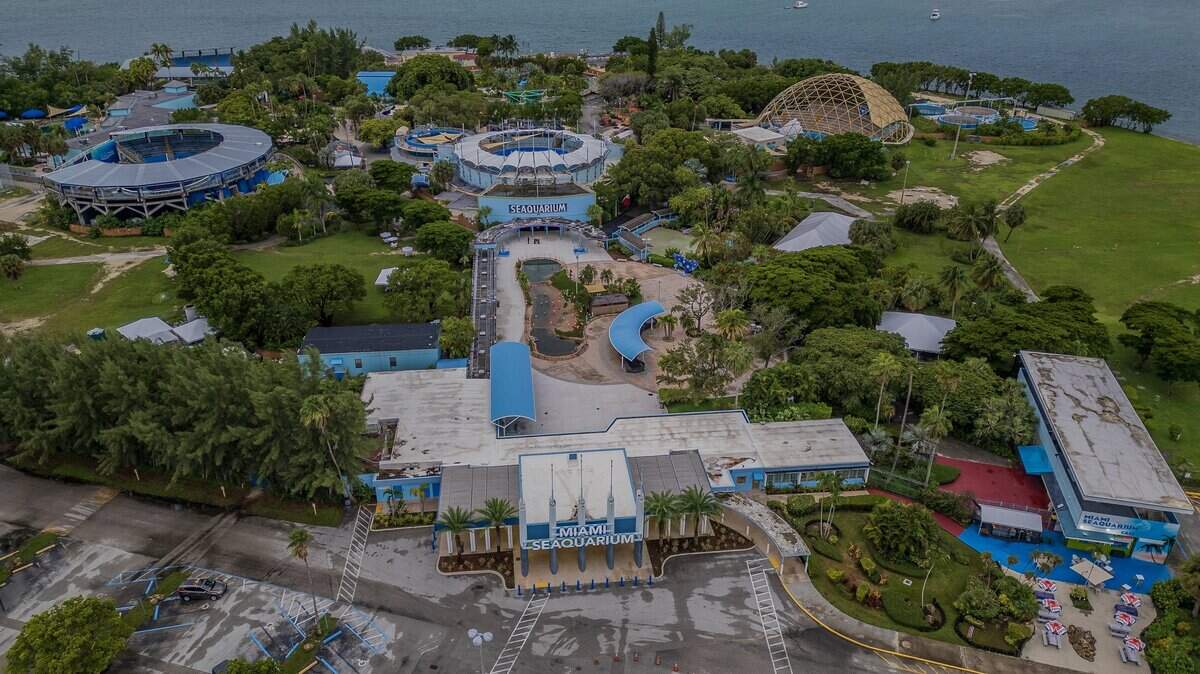
I spent much of my career working at the Miami Seaquarium and have been following news of the property’s future with deep concern. I do not oppose boating, marinas, or responsible development. However, this site is a unique piece of publicly owned land surrounded by the waters and wildlife of Biscayne Bay. It does not belong to a developer, it belongs to the citizens of Miami-Dade County.
Read more Miami mayor names herself commission chair, removes King. What it signals
Most troubling is how little opportunity the public has had to help shape the site’s future. The transition from the previous operator moved rapidly through bankruptcy court, shifting control before any open, competitive community process could occur. Now, a massive multi-million-square-foot master plan has been filed and residents are left reacting to decisions that apparently were largely settled without public discussion or input.
A site this vital deserves a transparent public process to compare alternative ideas, such as a dedicated marine science center, an open public park, educational facilities, boating amenities, or some combination of those uses. The future of one of our community’s most treasured waterfront locations should belong to the community.
Eric Eimstad,
Coconut Grove
Let us pray?
Re: the July 12 story, “Florida education leaders want more religion in schools. But survey shows limits.” I am not surprised, but concerned about a movement to reintroduce school prayer.
According to Pew’s Religious Landscape Study, 53% of Christians favor teacher-led prayers that refer to Jesus, while 62% of Floridians support teacher-led prayers that refer to God. The survey did not address prayers that refer to Judaism or Islam, or other religions. This skews the statistics.
If the survey isn’t inclusive of other religions, how can we begin to understand that all religions should be equally represented in daily prayer? And who would determine which religions would be included or excluded?
In public schools, religion is explained and compared in World History classes. Students learn religion’s impact on the world and are encouraged to better understand religious influence and cultural differences. Teacher-led prayer would open a Pandora’s box of issues.
How comfortable would students be if their teachers led a prayer from a religion other than their own? How comfortable would a Jewish, Muslim, Agnostic or teacher of another religion be if they are forced to lead a prayer that does not align with their personal beliefs?
Will Jewish or Muslim teachers be forced to lead a Christian prayer? Will parents of a Christian child be comfortable if the teacher reads a prayer from the Koran or Talmud? Can parents have their child opt out of daily prayer? Will teachers take a religion course to understand what they are reading to their students?
Public schools are meant to teach all children the educational foundations they will need to succeed professionally and socially. If a parent wants their child to begin their day with prayer, they can do so at home, before the child leaves for school. If a parent wants their child engaged in an education with strong religious undertones, they can use a voucher and send the child to a private, religious school.
Public schools should not become religious entities. A moment of silent reflection is fine, but mandatory religious readings in class? Never. We must prevent this religious forum in Florida’s public schools. We are not Texas.
Ruth Gordon,
Miami
Positive outlook
Reading Sunday newspapers was once an enjoyable, leisurely pursuit, but lately, the bleakness of the news on every front has made it more of a duty than a pleasure. However, the July 12 Miami Herald opinion pages featured a welcome bright spot: Isla Dua’s thoroughly researched, thoughtfully argued and well-written op-ed, “Citizenship is a muscle. I watched Americans flex it.”
This intelligent high school senior proposes that if people of opposite views take time to talk to each other, they might find common ground. I shared it with family members and friends who all agreed the concept and the young author give us hope for the future!
Read more Bicyclist dies in what Fort Lauderdale police believe to be a hit-and-run
Jane L. Dolkart,
Pinecrest
Stop dirty money
Recent reporting on the FBI’s investigation linking the Argentine Football Association with the movement of hundreds of millions of dollars through South Florida companies should concern more than just soccer fans. Anyone who wants to keep America’s financial system honest should also be concerned.
No charges have been filed. The investigation is still ongoing. Yet, this highlights why financial transparency remains an important public policy issue. When money moves through a maze of businesses, determining who is behind these financial transactions and whether the funds are legitimate becomes more difficult for regulators and law enforcement.
South Florida has long been a gateway for international business and investment. That’s a strength for the U.S. economy, but also makes the region a target for dirty money moving through legitimate businesses and financial institutions.
Cases like this show why we must do more than investigate after the fact. We need stronger safeguards, including greater transparency of company ownership and stronger oversight of high-risk financial transactions. Congress plays a key role in preserving and passing commonsense measures, helping law enforcement spot suspicious activity earlier and making it harder for bad actors to use American businesses to move dirty money around the world.
Whatever the outcome of this investigation, it should serve as a reminder that transparency matters. The United States should not be where hidden financial networks can thrive or where businesses can be used to move money tied to corruption abroad. As schemes grow more sophisticated, stronger anti-money laundering safeguards, meaningful due diligence and modernized transparency laws are more important than ever.
Erica Hanichak,
co-director,
FACT Coalition,
Washington, D.C.
Scheduling conflict
In a previous Miami Herald story, we learned there is little to no expectation transit can be expanded in Miami-Dade County. Then, in the July 16 story, “Miami-Dade leaders canceled trip, then attended Castro indictment. Cost: $32K,” we again learn that due to fiscal constraints, any transit expansion is pie in the sky.
However, an important trip to Washington, D.C. to lobby for transit funds and other projects, especially with all the financial short falls we are facing, was canceled due to some political thing at the Freedom Tower. I do not care how many Cubans live in Miami or how much they’ve contributed to its growth. Cuban Americans must realize they are part of Miami, not all of it. Addressing our transit and other needs are much more important.
Who would support cancellation of an important trip if it involved TPS for Haitians, Venezuelans and others, or if DACA was under attack?
Shame on the county mayor and commissioners for canceling this very important trip.
Paul E. Czekanski,
Cutler Bay
And the pretzels?
The July 13 Miami Herald story, “Can AI smart carts make shopping easier? One Miami grocer is trying them out,” shows us that another man with an MBA has developed an unnecessary screen technology to capture information about us — this time to assist with the “problem” that he and his friends don’t know how to navigate in a grocery store.
My family shops often at Milam’s and appreciate the staff’s good service and the quality of the products. Perhaps the store should not waste money on expensive gadgets that, for most of its shoppers, will only be an annoyance.
If Coupr’s founder doesn’t know where to find things in a store, he might want to think a bit more about chore equality in his relationship. Someone with a business degree from Columbia should be able to figure out that the nice people in the colorful aprons are happy to help him find mustard.
Read more New string of heat advisories began Monday in Miami. When will it end this time?
Betsy Goldin Ami,
Miami









Post Comment