‘Save your condo before it’s too late.’ How Miami condo turned into ‘Animal House’
Katherin Fernandez remembers what life used to be like at The Club at Brickell Bay, a condominium in Miami’s financial district where, after a sunrise swim, smartly dressed cosmopolitans greeted each other in the lobby on their way to jobs at nearby bank towers.
Read more To keep Miami-Dade transit afloat, budget drops bus routes, defunds future rail
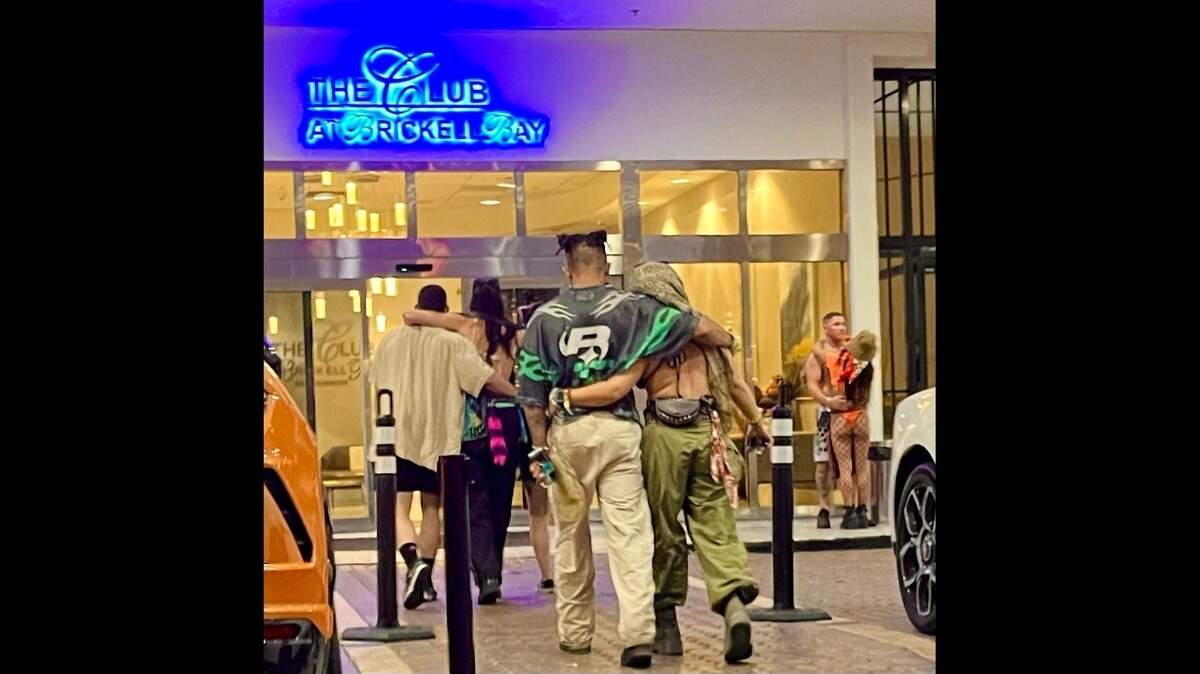
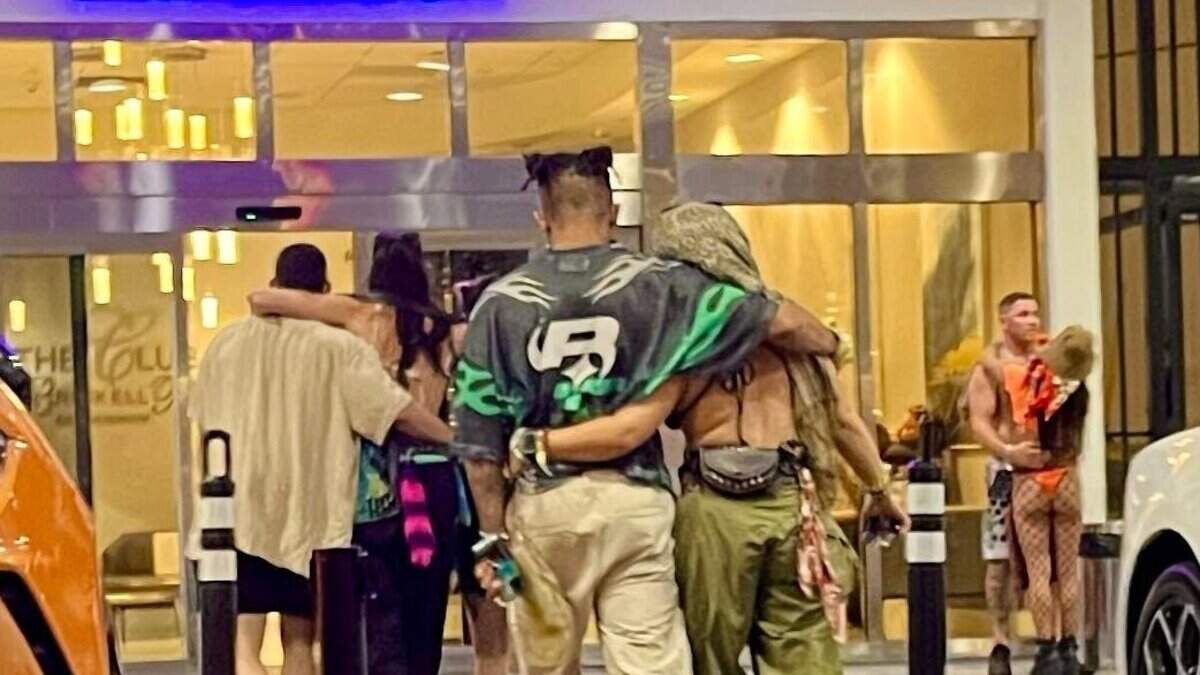
But the vibe at The Club has flipped. These days, noisy, drunk, barely dressed visitors holiday hard in condos that have been converted into vacation rentals.
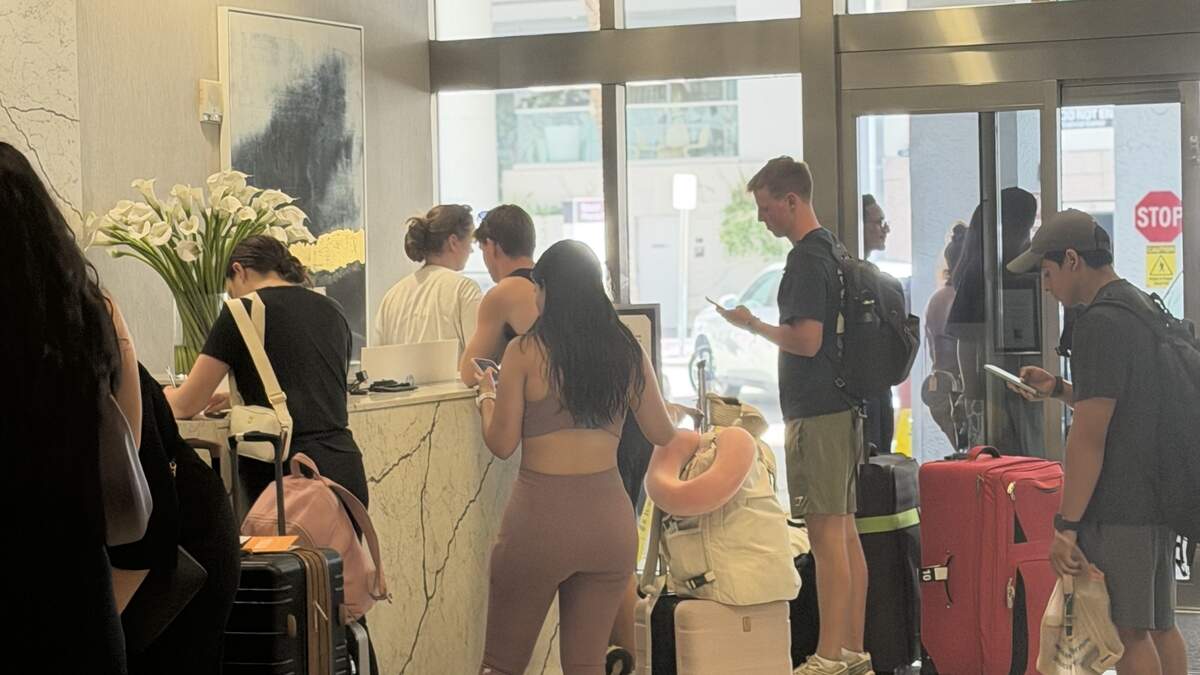
The lobby is jammed with rollaboard-toting tourists. There are wild parties. Loud music. Guests passed out on sofas by the front desk. Sex in the jacuzzi. Sex workers in the hallways. Porn shoots on balconies. Long waits for malfunctioning elevators. The pervasive aroma of weed. The daily presence of police. It’s all described by the people who live there, backed up by police reports.
Any intimations of exclusivity have gone out the window, just like the liquor bottles, condoms — and one TV — flung from balconies.
The Club has turned into ‘Animal House.’
“This is our home,” said Fernandez, among the dwindling 15 percent of full-time homeowners and tenants left at The Club. ”Our quality of life has been destroyed. Save your condo before it’s too late.”
The 43-story, 643-unit condo, one of Miami’s largest, is controlled by five Homeowners Association board officers who are hosts in the Airbnb business and don’t live in the building. They run the place like a hotel. They violate the city of Miami’s ban on short-term rentals in multi-family residential condos. Yet the city fails to enforce its own laws, the Miami Herald found.
Miami code inspectors seldom issue citations — or if they do, they are dismissed, a review of code-enforcement board records shows. Units are subdivided to create extra bedrooms — some listings hawk space for 14 guests — without building permits required to ensure safety.
City of Miami officials would not answer repeated questions about the legality of Airbnbs at The Club. Instead, they emailed a dubious document — a 19-year-old permit, covered with scribbled notes, that doesn’t authorize nightly lodging.
To complicate the puzzle, the Club submitted a forged application, a former officer of the condo said.
“We’re screwed by our board and our city,” said Fernandez, leader of a small group of residents fighting to reclaim their home.
They have complained about Airbnb chaos and delivered HOA financial and voting records to Miami officials and police, only to be silenced by cease-and-desist letters from their own HOA attorney. Last month’s board election was tainted by forged ballots and complaints alleging vote rigging in last year’s election are pending. And the former property manager is awaiting trial on charges of grand theft and running an organized scheme to defraud at The Club.
Residents’ nemesis: Karl de Borbon, ex-president of The Club who runs six Airbnbs at the condo under his host nickname, “Mr. Wonderful.”
Inside many of Miami’s multiplying condos, civil wars are raging between residents who live there and absentee owners who buy units for investment income. Residents want peace; investors want a piece of Miami’s storied real estate action. Residents want a return to sophistication; investors want a return on their investment.
“Greed has made our condo toxic,” Fernandez said. “We suffer. They don’t care.”
‘Airbnb Effect’
Miami’s popularity as an Airbnb destination, ranked near the top with Las Vegas, Orlando and Honolulu, has turned Brickell into Party Central. And Miami’s profitability as an investment destination has turned the metro area into one of the most expensive U.S markets to rent or buy a home.
Housing prices have doubled since an influx of affluent newcomers during the 2020 pandemic. Four of the world’s five wealthiest people now have homes in billionaire-magnet Miami. As rich outsiders move in, natives and locals who can’t afford their Miami are moving out. The surplus of short-term rentals worsens the shortage of affordable housing. Economists call it the Airbnb Effect.
Around the world, angry locals displaced from their neighborhoods by the high cost of living are revolting against the $135 billion short-term rental industry. Mayors are banning Airbnbs. In Barcelona, residents protest by squirt-gunning tourists. In New York, anti-Airbnb Law 18 is strictly enforced. In Miami Beach, where fines were as high as $20,000 before a court curtailed them, shutdowns of illegal Airbnbs are swift.
Not in Miami. The city is rated among the most “lenient” on Airbnb restrictions on Airbnb investor websites.
Club homeowners are not merely annoyed by tourist bonanzas like the World Cup — Airbnb is FIFA’s official lodging partner — or the Ultra music festival, Spring Break and Formula 1 weekend. They live in dread. Last June, a 17-year-old Miami high school student was stabbed to death in a Brickell Avenue Airbnb seven blocks away by a visitor from Arizona.
Residents don’t know the strangers checking into Airbnbs at The Club, where hosts often leave doors unlocked or ajar for arriving guests. They don’t know who is partying on the balcony above. They’ve seen guests wearing ankle monitors. They’ve seen squatters, fights, guns and their daughters accosted, residents and police say. Some don’t dare go out after 8 p.m.
“We are prisoners in our own homes,” said Fernandez, an original owner since 2004 and former board president.
Who wins the battle of Brickell could influence who wins similar cost-of-living battles in communities throughout South Florida where homes are being purchased with cash by investors. Neighbors are discovering they can’t borrow sugar from their next-door LLC.
“The selfish Miami attitude is ‘I’ll get away with whatever I can and make as much money as I can,’” said Brickell Homeowners Association President Ernesto Cuesta. “We are losing what’s left of our civil society.
“My greatest fear is that Brickell will become another South Beach.”
READ MORE: Having problems with HOA board over short-term rentals? We want to hear from you
A weekend at The Club
On a rocking Saturday night at The Club at Brickell Bay, you can feel the beat thumping through corridor walls. Behind closed doors, people are singing, dancing, arguing.
In the lobby, melodramas unfold into the blurry morning hours. One man exchanges crude jokes with the front-desk attendants and begs for a key fob to his rental, where he says a sex worker is waiting for him. The night shift manager, son of The Club’s property manager, pauses his online blackjack game to hand over a duplicate fob.
“I can relate, bro,” he said, giving a thumb’s up to a shirtless man in sweatpants loading cases of Corona onto a luggage cart.
The mayhem is music to de Borbon.
De Borbon, 72, lives in a 36th floor-unit with his wife and two kids. Before moving from Manhattan to Miami in 2016, he says he ran an international cargo company and was part-owner of three restaurants. He says he used to live in France.
De Borbon learned about the lucrative Airbnb business after buying a foreclosed condo in Miami for vacations. He moved into The Club, located at Southeast 12th Street and Brickell Bay Drive, because he saw its potential as an Airbnb goldmine. Short-term rentals, at $100 to $1,000 per night, bring in a lot more money for owners than long-term tenants.
By 2023, De Borbon — who shepherded the transformation of the building into an Airbnb hotspot — had bought seven condos at The Club for $2.3 million, property records show. A successful host can average net income upwards of $50,000 per year per unit, depending on size, occupancy rate and expenses, he says.
“I’m friends with the mayor of Miami Beach, and I complimented him for deciding they had too many champagne shootings, and for restricting Airbnbs, because we got our chance to bring that business to Brickell,” de Borbon said. “Now it’s like Ocean Drive around here, only safer. My wife and I love living with the tourists. It’s like we’re on vacation every day.”
Indeed, he tools around town in his mango yellow Corvette, dines at Sexy Fish and pilots his boat “Karlito’s Way” across the bay, his Instagram posts show.
City inspectors come knocking
De Borbon patrols the building from lobby to pool deck to 43rd floor, and tells everyone he carries a gun in case guests get violent. He is usually looking for troublemakers. But one night he was looking for city code compliance inspectors who were responding to a homeowner’s complaints about a dozen specific Airbnbs.
Two inspectors knocked on doors and spoke courteously to surprised visitors who displayed booking contracts on their phones, the inspectors’ bodycam footage showed.
Then inspectors went to 1609. No one answered. Suddenly, de Borbon appeared from around the corner.
“Hello, what can I do for you?” he said.
“Is this your unit?” asked one inspector.
“That’s my unit, yes,” de Borbon replied.
“We received a complaint.”
“Ah, that’s not my unit,” de Borbon said, correcting himself. “I’m a board member here.”
“We’ve got complaints about Airbnbs operating here, sir.”
“Airbnbs?” de Borbon said. “So what?”
“Short-term rentals are not allowed in the city,” the inspector said.
“You are mistaken, my friend,” de Borbon said. “I’m eight years the president of this building.”
“Short-term rentals are not allowed. That’s why we’re here,” the inspector said.
“I know everybody at the city,” de Borbon said. “You are hassling people. I will not allow you to do this. You better leave the building, please.”
“Your name, sir?”
“My name is Karl de Borbon. This is our building.”
“You told us we are trespassing,” one inspector said as they both walked to the elevator and pressed the down button. “We are leaving.”
“I know who called you. She’s a psychopath,” de Borbon said through the closing doors. “Please don’t come here again.”
Still, the inspectors managed to make it a productive night. Five citations for unlawful lodging were issued to owner hosts.
But the citations were abruptly dismissed, city records show. Without a hearing before the city’s Code Enforcement Board at City Hall, where inspectors would have presented evidence, called witnesses and sought a guilty ruling. Without fines, that can grow to $1,000 per day. Without liens.
A code compliance official marked “complied” on a city record because the five Airbnb owners had stopped advertising online and promised not to resume, he said in an email reviewed by the Herald.
Within days, the listings popped back up online.
The homeowners who called in the complaints were crushed. They were ready to testify. Why was the hearing canceled on the basis of temporarily removed listings? Their queries dead-ended with a Kafkaesque email from the city attorney’s office: “Each violation investigated is taken on its own merits and determinations are made based upon whatever facts are gleaned.”
Homeowners said they then called Miami Commissioner Damian Pardo’s office and were told de Borbon had also called, repeatedly, demanding the citations be thrown out, which a Pardo aide confirmed. Pardo said he never talked to de Borbon, who the commissioner said was referred to the code compliance department.
Frustrated, the homeowners pleaded with the city to take action and shut down Airbnbs. They said Pardo offered a suggestion: Call “Help Me, Howard,” WSVN-TV’s consumer assistance hotline.
In retaliation for their reporting of disruptive visitors, in prohibited Airbnbs, homeowners got cease-and-desist letters from HOA attorney Eduardo Valdes scolding them for “outrageous and malicious behavior” and “a serious breach of other residents’ rights to privacy, quiet enjoyment and security within their homes.” They were warned to stop being a “nuisance” or face “legal consequences,” including eviction.
Hodgepodge of city documents
De Borbon insists short-term rentals are legal at The Club, where about 545 of the 643 units are Airbnbs. So does the property manager and employees in the office. So do board members and investor owners. So do real estate agents who advertise the “Airbnb-ready” building as “an investor’s dream.”
They say they follow The Club’s bylaws, which contain no minimum time span on leasing or sub-leasing. Enterprising owners can do short-term rentals because “The Club was built to be a short-term rental building,” de Borbon tells everybody. They take his word for it, and repeat it.
“We have the zoning, we have the licenses, we have property rights,” he said. “It’s a free country.”
But city and state laws supersede condo bylaws. Airbnb informs hosts that local laws must be obeyed. Vacation rental websites warn investors to avoid cities like New York, Amsterdam or San Francisco where illegal Airbnbs are tracked – not just by complaints but by searches of listing data – and closed.
In Miami, the city’s Miami 21 zoning code prohibits lodging stays fewer than 30 days in multi-family residential buildings like The Club unless the building has a special Certificate of Use (CU) designating it a condo-hotel.
A condo-hotel, a hybrid dwelling that houses both permanent residents and tourists, must conform to stricter safety, security, environmental, engineering, occupancy and Americans with Disabilities Act standards than a condo. Operating an Airbnb also requires a city Business Tax Receipt, a state license and registration to pay state sales tax.
The Herald asked to see the CU — the key that unlocks The Club to guests. What it found was a hodgepodge of records.
The 2007 Certificate of Use is approved for a “condo shell” with 643 units. There’s no reference to any form of lodging or vacation rental. A checklist shows signatures next to inspections for code enforcement and fire prevention, but none for electrical, mechanical, plumbing, building or health/hotel/restaurant.
The CU on file with the building department, issued in 2007 and expiring Sept. 30, states The Club is approved for multi-family housing, not a condo-hotel. Requests to interview the city’s zoning, code compliance and building department directors about the discrepancies were declined.
The only business that does have a lodging CU at the Club is Executive Corporate Rentals. The city issued it in 2011 for 30 units. Executive lists only six units today, records show.
There is one more curiosity about the 2007 document. It bears the signature of Alex Fornet, who served on the grievance committee at The Club for years before he got fed up and moved out.
But Fornet didn’t recognize the document or the signature and never went to the city’s offices to apply for a CU, he said.
“It is a forgery,” said a bewildered Fornet after a Herald reporter forwarded it to him. “My signature isn’t even close, and I’ll file an affidavit to that effect.
Read more A $65,000-a-year AI school is opening in Miami Beach. Here’s what to know
“As far as I’m concerned the entire document is a fraud.”
Extra bedrooms, no permits
If you want to get into the Airbnb business, you can buy a unit today and open it for bookings tomorrow.
That’s the sales pitch of Suad Yidios, a real estate agent and CEO of My House Hospitality, who manages about three dozen Airbnbs at The Club under her host name, “Nani.” One of her listings is for a “Comfy Studio, 2 Queen Beds @Brickell,” a compact, bright unit for $355 per night.
During a showing of three 1-bedroom, 1-bathroom, 800-square-foot units, each selling for $535,000, Yidios told some prospective buyers about the lack of rental restrictions, repeating the same language de Borbon uses.
“Icon and The Club are the only condos that allow short-term rentals in Brickell,” she said. “It’s in the bylaws. The building was built to be a short-term rental building.”
How long would it take to get the Airbnb approved?
“Start tomorrow,” she said. “The owner doesn’t have to do anything. They are totally set up to rent.”
Each unit was generically furnished, with everything from dishes, linens, TV, and plastic plants to lounge chairs on the balcony.
And, magically, extra bedrooms.
Yidios, a board member who doesn’t live in the building, explained how the units had been subdivided with new walls to convert them into 2-bedroom units. More walls, more rooms, more guests. Four queen beds fit into what originated as a 1-bedroom.
“You can put a bunkbed in there,” she said, pointing to a walk-in closet. That would make room for 10.
Yidios has extra walls. De Borbon has extra walls. He advertises 4-bedroom units that were originally 2-bedroom units that can accommodate 12 to 14 guests – though no 4-bedroom units exist in the original floor plans.
Yidios was asked how she was able to install the walls – was it done with or without required city building permits?
“You get permits from the HOA. You don’t have to deal with the city at all,” Yidios said.
Then there are safety concerns. What if there’s a fire or hurricane and 14 guests have to evacuate from one unit?
Yidios said there’s never been a problem. She mentioned a bonus: You buy a 1-bedroom unit, which has been converted into a 2-bedroom unit, but you only pay the 1-bedroom HOA maintenance fee of $712 per month.
A listing by real estate agent Raul Alvarez is typical. For a 2-bedroom, 2-bath unit for sale for $830,000 with $950 per month HOA fee, “stunning ocean and city views, NO RENTAL RESTRICTION, fully furnished with curated art and designer pieces, full Airbnb flexibility.” Estimated Airbnb income: $6,645 per month.
When asked if Airbnbs are legal at The Club, Alvarez hesitated.
“I can’t answer you that,” he said. “It comes with the condo — the HOA bylaws allow it, and I know because the current owner rents it as an Airbnb.”
Their worst nightmare: A murder
Visitors drawn to Brickell have not only raised the cost of living but made it a more dangerous place to live, residents say.
The June 2025 fatal stabbing of 17-year-old Miami high school student Dominic Ferrell occurred in an Airbnb in Icon Residences Tower 3, a condo-hotel at 458 Brickell Ave. A mentally disturbed man from Arizona loitered in the lobby before tagging along with guests on an elevator to the upper floors, police said.
He jiggled doorknobs until he found one on the 34th floor unlocked, walked in, grabbed a kitchen knife and “repeatedly stabbed” Ferrell in the bed where he was sleeping while visiting his father, who had rented an Airbnb for the weekend.
The killing of Ferrell is exactly what homeowners sharing their hallways with Airbnb strangers fear most.
Police reports from the past year recount near-daily incidents at The Club. Callers report thefts of wallets, cars, phones, Amazon packages, jewelry, Rolex watches, $10,000 in cash. Calls about loud parties and loud fights. Calls about assaults, guns and drugs.
Police came to investigate why a 4-year-old boy was wandering in a hallway, and when they figured out which unit he was staying in, found a 9-year-old girl sleeping inside. “Unk where parent (sic) are,” the report said.
A host called to say he was hiding in a stairwell because he could not get a combative guest to check out. A man bleeding from the neck was lying in a hallway. People brandishing guns were observed by the elevators. Paramedics treated an “unresponsive” 19-year-old woman. Police found another woman splayed on the pavement “obstructing walkway.”
“Our lobby is like a train station,” said Club homeowner Alejandra Pelaez. “Homeless people come in and use the units to take a shower or sleep.”
Ex-property manager arrested
Criminal allegations even enveloped management at The Club.
Airbnbs flourish at The Club because board members are heavily invested in their businesses. So, too, was the former property manager, Yissely Herrouet, who was de Borbon’s lieutenant for the first five years of his presidency.
Not only did de Borbon encourage Herrouet’s promotion from package room clerk to manager, but, as board president, he approved the purchase by her and her spouse, mother, sister, cousin and brother-in-law of five units at The Club for $900,000 between 2020 and 2022, property records show.
Herrouet and a cousin founded A & Y Property Management. They rented the units as Airbnbs, and managed two dozen Airbnbs owned by others — charging those owners a 15-20 percent fee, as do most rental property managers. All approved by de Borbon, who says entry into The Club and the in-house computerized reservation system he installed is subject to his scrupulous screening process.
“My family lives here. If I see something I don’t like, I’m not letting you in,” he said. “Fair housing or not, sue me. No criminals allowed.”
Herrouet, fired by FirstService Residential in 2023, was arrested Nov. 12. State prosecutors charged her with four felonies. She is accused of paying relatives and “ghost employees” to do no-show work, doctoring expense reports and stealing more than $142,000 from the HOA.
The board hired her mother’s company Sunchine (sic) Cleaners in 2018 to clean the building. But Sunchine’s housekeepers spent their shifts at The Club cleaning hundreds of Airbnb units rather than common areas, according to homeowners.
“Chicken wings around and in the pools. Scratches, dents all over the walls from guests dragging their luggage,” Fornet said. “Trash in the hallways. But we watched our cleaning staff, paid with our maintenance fees, work like busy bees in the Airbnbs.”
De Borbon or his vice president signed off on Herrouet’s payroll and expense reports, court records show, including one that projected 176 overtime hours before employees had accrued them.
Herrouet, who pleaded not guilty and is awaiting trial, said she is fighting the charges.
De Borbon, who says his budgeting and negotiating skills are the reason The Club has a $6 million reserve fund, acknowledged working closely with Herrouet but never noticed anything suspicious, he said. He saw no conflict with Herrouet running her family’s Airbnb businesses out of her office.
“She was a good manager, and I authorized her to be an owner and host,” said de Borbon, who was not charged in the case. “I like my people to have a commitment to the building like I do and invest their money in it.”
Herrouet and her relatives’ five Airbnbs at The Club are still operating today. According to property records, two have homestead exemptions even though they are rentals, not primary residences.
Pay- to-play allegations
Running Airbnbs and winning contracts under de Borbon required pay-to-play fealty, said Victor Lozier and other owners at The Club. Lozier is a real estate broker from Paris who lives part-time in Miami and runs a property management company called VoilaRentals.
De Borbon arranged deals between owners and their property managers, with a cut to himself, they said. In exchange for de Borbon’s permission to buy two Airbnb units and manage 20 Airbnbs, Lozier said he had to pay him $200 to $500 per month per unit. When de Borbon raised those fees, Lozier refused and de Borbon tried to ban him from The Club.
De Borbon denied demanding payments other than broker fees. He said he acts as a consultant or matchmaker for owners and buyers, and recommends Airbnb managers he believes are superior.
Jessica Bechard, a real estate broker, said de Borbon and Herrouet drove her out of The Club, where she lived with her family. She was a highly rated host of 17 Airbnbs. De Borbon hated the competition, she said.
“Karl and Yissely targeted me and other agents to get rid of us so they could take over our business,” Bechard said. “The harassment was constant.”
De Borbon was a daily fixture behind closed doors in Herrouet’s office, where the pair controlled The Club’s booking software and Airbnb operators’ logins. They bad-mouthed Airbnb managers to their clients. They planted bad reviews. They deactivated guests’ key fobs so they couldn’t get in, according to managers, homeowners and their lawyer.
“You cannot have a rating below 5 stars or you will lose your bookings and have to lower your rates,” Bechard said.
De Borbon instructed employees to shadow Bechard and issue her a series of $100 violations, she said. She was evicted. She tried to appeal. But The Club no longer had a Grievance Committee. Herrouet dissolved it.
“A lot of HOAs in Miami operate like this. It’s a power trip. It’s a game,” said Bechard, who moved to Icon Residences. “If you actually live in these buildings and pay attention, it’s impossible not to notice. If you’re an investor in Colombia or Europe, the president knows you’re not paying attention.”
De Borbon said he’s done nothing wrong. He cares deeply about The Club — attending to broken elevators in the middle of the night, arranging the buffet and belly dancer for the annual holiday party. He does not sabotage anybody’s Airbnb business – that would damage the building’s reputation. Bechard was kicked out because she insulted employees, he said.
Lozier has pledged a thorough probe of The Club’s financial and voting records. Homeowners recently went back to the state attorney’s office and Miami police and asked them to reopen a stalled 2024 investigation into The Club’s finances. Complaints have been filed with the state agency that regulates condos.
“It was a racket,” said Miami attorney Javier Zayas-Bazan, a former property manager who specializes in condo law and is representing Club owners. “Many people from the community have come to me for help, including vendors. Government institutions are failing their constituents, but we will get to the bottom of this rabbit hole.”
Ballot forgeries
De Borbon spent May vigorously campaigning for his ninth term on the board. He spotlighted “the lowest maintenance fees in a fancy neighborhood.” He emphasized how investors’ trust in him was paying off with thriving Airbnbs. He worked tirelessly as a volunteer leader in a job that would pay a comparable CEO at least $200,000, he said.
“This boom of people investing and spending money in Miami — thank Airbnbs,” he said. “If the city said no more Airbnbs, the economy would collapse.”
But de Borbon lost the June 22 election after a voting fraud scandal tore through the tower. His opponents accused him of manipulating last year’s election and a June 8 vote for a pool deck project with no price tag. A state monitor detected more forged ballots for de Borbon during last month’s ballot count.
De Borbon and the HOA attorney say they adhered to airtight voting procedures.
READ MORE: Voter-fraud accusations roil one of Miami’s largest condos
Lozier led the rebellion against de Borbon. Lozier, two other new officers and two incumbents — Airbnb operators who live elsewhere — will now run the board.
Their vision: Harmonious co-existence among residents, investors and guests through strict management. Airbnb registration fees will be spent transparently on safety, security and amenity upgrades, and questionable contracts will be canceled. The board plans to explore how to obtain a proper CU for short-term rentals.
The new board quickly confirmed and intends to fix unpermitted construction problems and code and health violations in the parking garage, pool area and laundry room that homeowners had previously reported to the city and HOA.
“Owners were getting ripped off,” Lozier said. “It’s time to clean it up.”
Surrounded by strangers
Christina Lardon, homeowner since 2008, lives on the same floor where former board member Anna Jesic rents an Airbnb. “The reason we don’t live there,” Jesic says, “is because it’s a hotel.”
Lardon also lives next door to one of Herrouet’s relative’s Airbnbs. She lives three doors down from one of de Borbon’s Airbnbs. She’s surrounded. She took a trip to Antarctica this year during Ultra, to escape as far away as possible.
One time she was awakened at 4 a.m. by screams. She put on her robe, poked her head out her door and asked the group to disperse.
“Oh, shit, we got ourselves a Karen,” they giggled.
Lardon didn’t bother to call the front desk. The night supervisor is the manager’s son. The day supervisor is de Borbon’s son. She’s given up writing and calling city officials about the “open secret” of Airbnbs taking over The Club. She didn’t bother to call code compliance, either. She’d just receive another nasty cease-and-desist letter from the HOA attorney threatening her with a lawsuit. Besides, inspectors haven’t been back since last May.
Instead, it was Lardon who received a complaint. She got a terse notice from the office. A neighbor griped about her cat Brandy taking a walk in the hallway.
Read more Inside Miami federal lockup: Advocates use immigrant detainee accounts to demand change
“Seriously?” Lardon said. “What neighbor? I have no neighbors.”
This story was originally published July 16, 2026 at 5:00 AM.









Post Comment