No lists, no answers: Venezuelan families’ agonizing search for missing deportees on Flight 164
Ángel Jesús Romero Audivet’s family has spent days wandering among the injured and the dead left behind by the earthquakes in Venezuela. They have searched for him in hospitals and morgues across La Guaira and Caracas, only to run into the same wall time and again: nobody knows anything, and nobody has any answers.
Read more A South Florida Publix and a gas station sold Wednesday lottery winners
Romero Audivet, 31, is one of the 146 Venezuelans deported from the United States on Flight 164, which landed in Venezuela just hours before two earthquakes devastated the country’s north-central region on June 24.
After arriving at Maiquetía International Airport, he called his family to say he had landed and would be transferred to the Santuario La Llanada hotel in La Guaira, the state that was later hit by the earthquakes.
That was the last time they heard from him.
Romero Audivet, who holds dual Venezuelan and Colombian citizenship, lived in Atlanta before being deported.
“We never heard from him again. We don’t know if he’s alive and, if he is, where he is. Or if he died, because his body hasn’t been found either. This is very painful, very horrible,” his sister, Glina Melissa Ospino Audivet, told el Nuevo Herald.
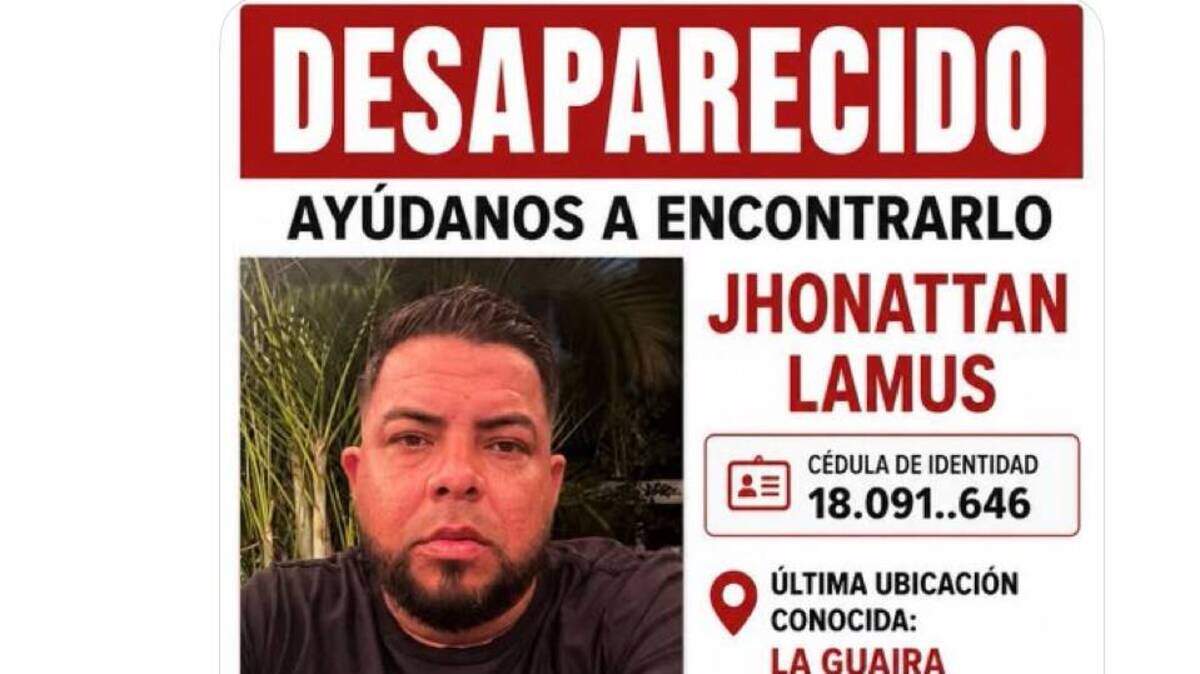
Adela Yelitza Osuna is also searching for her cousin, Jhonattan Lamus, 40, who was born in San Cristóbal, western Venezuela, and lived in New Jersey before being deported.
The last time the family spoke with him was on the afternoon of June 24, between 4 and 4:10 p.m. He called to say he had arrived at the hotel. They have not heard from him since.
“There are no lists anywhere. The United States doesn’t provide a list of the people they sent here. There’s no list of those who arrived at the hotel, those who were rescued or those who were injured. There’s nothing,” she told el Nuevo Herald.
The relatives tried to reach the hotel, but say they encountered a “total blockade” by Venezuela’s Bolivarian National Intelligence Service, known as SEBIN, the agency responsible for transporting and guarding the newly arrived deportees.
According to Osuna, the officers never explained why they were preventing them from entering the area after the earthquakes.
“At other collapsed buildings, families have been allowed to get close, take part in the search efforts or at least receive information. Here, they won’t even let us in,” she said.
The family has also searched hospitals and morgues without finding any trace of Lamus.
“We have nowhere else to look. We believe he’s still beneath the rubble,” she said.
READ MORE: He survived one of Venezuela’s deadliest disasters. Years later, he was deported into another
Mystery at the Santuario hotel
The cases of Romero Audivet and Lamus are part of the mystery surrounding the passengers on Flight 164 after the hotel, where Venezuelan authorities housed the deportees for administrative processing and medical examinations, collapsed during the earthquakes.
More than two weeks after the disaster, it remains unclear how many passengers on that flight died, survived or remain missing.
The official death toll from the earthquakes, updated as of July 8, exceeds 3,000 people, with more than 16,000 injured.
Yet the Venezuelan regime has still not disclosed how many people remain missing or released a separate accounting of the deportees.
One survivor of Flight 164 told el Nuevo Herald that he remains in contact with some of the passengers and estimates that between 35 and 42 people survived. That figure, however, has not been independently verified.
Hotel sealed off
Activists and relatives say the authorities responsible for receiving the deportees have kept all information related to the flight under wraps and turned the hotel into a restricted zone.
Carolina Jiménez Sandoval, president of the Washington Office on Latin America, traveled to the areas devastated by the earthquakes to document the humanitarian situation.
Yet the only place she was unable to access was the Santuario La Llanada hotel.
“We knew there was a great deal of secrecy surrounding what happened to the deportees on Flight 164, and we wanted to verify the situation,” she told el Nuevo Herald.
She said that when she and others tried to approach the hotel, they encountered a cordon of officers dressed in black, identified as SEBIN agents and armed with rifles, who prevented them from entering.
When she asked why the site remained off limits despite her having been allowed into other disaster areas, the officers said they were acting under orders and that the restriction was a security measure.
Jiménez argued that the explanation did not justify treating the site differently from the other collapsed buildings in La Guaira.
Read more Marcello Hernandez trades his ‘SNL’ gig to work at a Miami ventanita. Check it out
Instead, the officers ordered her to leave and also barred her from taking photographs.
Osuna said that, more than two weeks after the earthquakes, SEBIN officials justified the secrecy by revealing that 33 of the agency’s officers had been trapped in the collapse, prompting the agency to take full control of the rescue operation.
Jiménez said the deployment of Venezuela’s political police raises serious questions.
“Why does a deportation flight have to be received by the political police?” she asked.
She noted that, in other Latin American countries, deportation flights are typically received by civilian authorities, with support from the United Nations’ International Organization for Migration and civil society organizations, particularly when families and children are among the passengers.
“It remains unclear why the political police are responsible for receiving and guarding these flights, particularly when this is an agency that has been internationally accused of serious human rights violations. That is a question the government should answer,” she said.
Jiménez also questioned why authorities have yet to release an accounting of the passengers.
“The lack of transparency is serious. Families have the right to know who died and who survived. That uncertainty creates a terrible level of anxiety that the State has an obligation to alleviate by providing information,” she said.
El Nuevo Herald requested interviews with SEBIN Director Maj. Gen. Alexis Rodríguez Cabello and Mervin Maldonado, head of the Gran Vuelta a la Patria mission — the Great Return to the Homeland — to obtain the government’s account of what happened to the deportees, but received no response.
Families demand the list of missing deportees
Faced with the lack of official information and growing desperation, Patricia Andrade, director of the Venezuelan Awareness Foundation, tried to contact the Gran Vuelta a la Patria mission directly, the government program responsible for receiving deportees and transferring them to the hotel.
Unable to find an email address or phone number for the program or its director, she turned to Maldonado’s social media accounts to demand the release of a list identifying those who died, survived or remain missing.
Her effort drew a response — but not the one she had hoped for.
A program official contacted the organization only to deny access to the information, arguing that they were not relatives of the victims.
Although the official provided several phone numbers for relatives seeking information, Andrade said the calls went unanswered and that some family members reported being blocked after repeatedly asking about the deportees’ whereabouts.
Andrade said the absence of an official passenger manifest deepened the anguish of dozens of families awaiting the arrival of Flight 164.
“The relatives were anxious because they knew that week their brother, their son, or another loved one was going to be deported. The first thing they wanted to know was who was on that flight,” she said.
According to the activist, the uncertainty was even greater because the flight had been postponed twice.
For Andrade, the combination of repeated delays and the lack of an official passenger manifest left many families uncertain whether their loved ones had ultimately been deported, whether they were on the flight or whether they were among the victims of the hotel collapse.
Eventually, SEBIN showed relatives of the missing a list of the people it said had been rescued from the hotel.
“We went to SEBIN headquarters in La Guaira, and they informed us that they had already removed everyone from the hotel, that there was no one else there. They have a list of every person they pulled out, and my cousin is not on that list. They informed us that approximately 40 people ran out of the hotel injured and traumatized at the time of the earthquake,” she said.
‘Help us find him’
As authorities remain silent, the families feel that time is running out and are pleading for answers about the missing.
“We have the right to give them a dignified burial or, at the very least, to know where they are. All we ask is that they tell us what happened to them,” Osuna said.
Ospino Audivet also made a direct appeal to the Venezuelan authorities.
“Too many days have already passed, and we still have no idea what happened to our relatives. They were not dogs or cats; they were human beings who could have been rescued from the very first day,” she said.
“Please, I beg you, speed up the search. Help us find my brother, alive or dead. The only thing we need is to know the truth. This pain is destroying our entire family.”
Read more Hialeah is now ranked as a top city to start a business. Here’s why






Post Comment