Parents, teachers ask Miami-Dade Schools to stop with all the fake grass
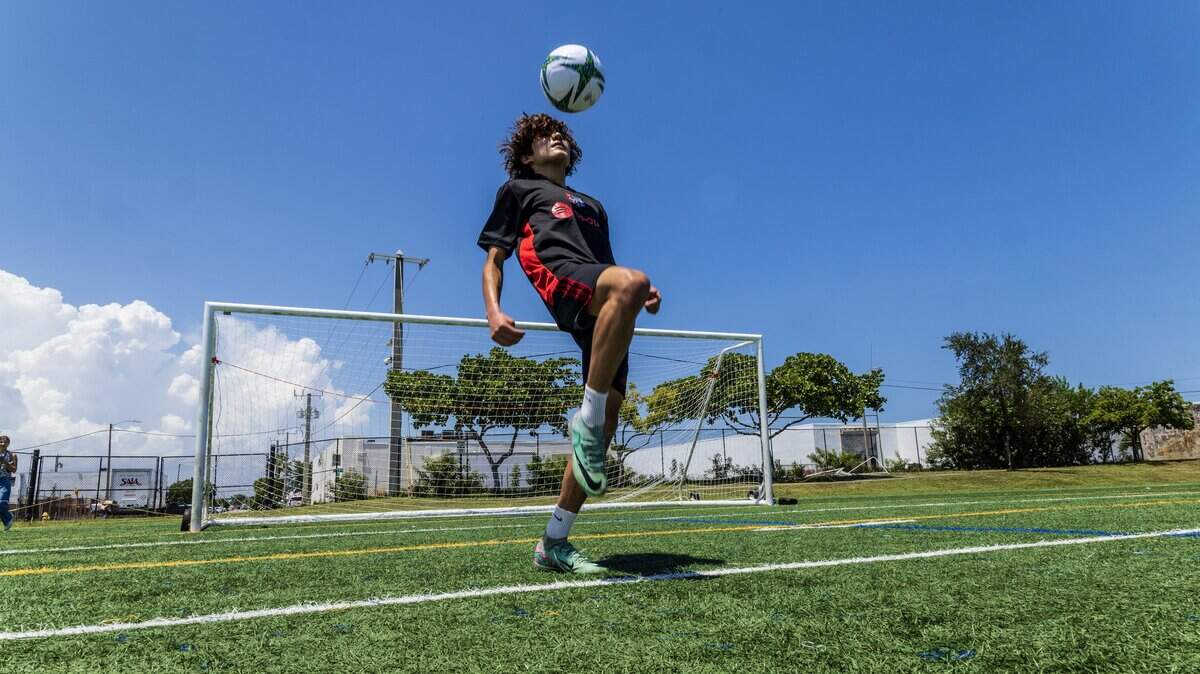
More than a hundred students, parents and teachers are calling on the Miami-Dade School Board to say enough is enough with laying down burning hot plastic turf in schools.
Read more A divisive new complex with apartments and live-work units is coming to the Gables
They’re worried that the fake grass poses a health and environmental risk to students as temperatures continue to rise in South Florida.
“Particularly concerning is the documented heat impact, with synthetic turf surfaces reaching temperatures 48–90°F higher than natural grass fields, posing significant risks to student safety in our already hot climate,” said the letter, sent by Michele Drucker, the president of Florida Green Schools.
Instead, they are asking the school district to expand food forests, native plants and plant more real grass.
Three School Board members — Joseph Geller of District 3, Luisa Santos of District 9 and Mari Tere Rojas of District 6 — acknowledged receiving the letter.
Geller’s office told the Herald it is considering drafting a policy in the coming months. The first step would be asking the district to pause new artificial turf installations while officials assess their impacts. Because of budget constraints, the proposal would not include funding for the natural alternatives the group recommended.
The school board is on break for the month of August.
Paola de Carolis, a parent in the District, she said her daughter suffered burns after falling on artificial turf at a park when she was in fourth grade. She wasn’t at school, but played on fake grass at school, too.
Read more Will Miami Beach condo tower cast a shadow on a nearby hotel? There’s a showdown
“It looked horrible,” de Carolis said.
De Carolis, an architect and chair of the garden committee at her kids’ elementary school at the time, said concerns about artificial turf were one reason she decided to pull her children from the school.
She had helped create a butterfly and edible garden on campus, but said it eventually became overgrown with weeds as she tried to manage it without pesticides. She said school officials later told her the plants were a safety concern because they grew along a fence, and the garden was later replaced with artificial turf.
Marco Schiavon, an assistant professor at the University of Florida’s Fort Lauderdale Research and Education Center, said that fake grass contributes to the “urban heat island” effects that make our dense cities hotter than rural areas.
“Plant presence has multiple benefits including improved biodiversity, temperature abatement, carbon fixation, reduced energy costs, etc,” Schiavon said. “These ecosystem services are not provided by artificial turfgrass.”
Ashley Miznazi is a climate change reporter for the Miami Herald funded by the Lynn and Louis Wolfson II Family Foundation and MSC Cruises in partnership with Journalism Funding Partners.
Read more He survived one of Venezuela’s deadliest disasters. Years later, he was deported into another








Post Comment