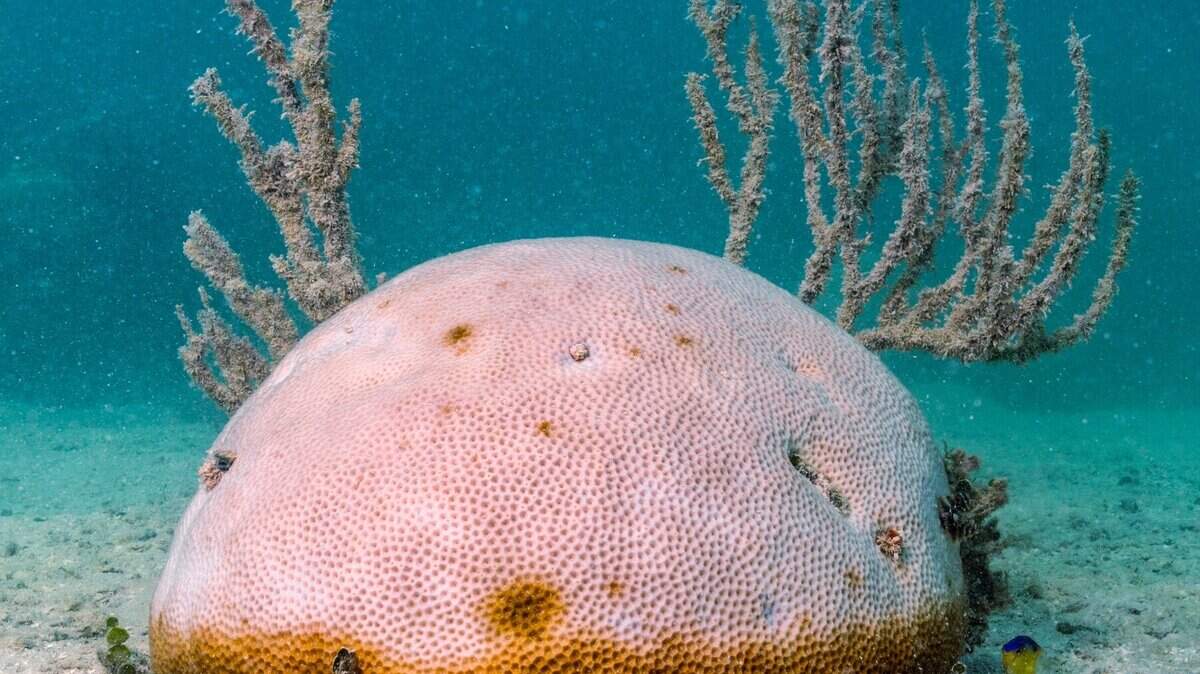
As sea temperatures rise in the Florida Keys, coral evacuation has begun
The warning bells are ringing for another potentially killer season for Florida’s beleaguered coral reefs, sending reef restoration companies scrambling to protect their brood.
Read more This South Florida city offers free course to encourage residents to learn AI
While the atmospheric phenomena of El Niño is linked to a quieter hurricane season this year, it’s also cranking the thermostat on Florida’s waters. That’s bad news for corals, which get sick and even die when water temperatures stay too hot for too long.
And as of this week, they’re officially too hot. On Tuesday, the National Oceanic and Atmospheric Administration marked the Keys at “Alert Level 1” for coral bleaching. It’s now expected that at least some of the bumpy, rock-like organisms that make up Florida’s reef will sicken and spit out the algae living within them that provide food and shade.
Corals can survive, sunburned and starving, a few weeks without the algae and recover if temperatures cool down. But if temperatures rise too high, other corals simply die.
In 2023, the waters near Florida were hotter than they’d ever been in modern recorded history. It was devastating to Florida’s reefs. It turned coral nurseries into graveyards and may have been the tipping point for two species of coral now considered “functionally extinct.”
READ MORE: Two more Florida corals are ‘functionally extinct’ after 2023 heat wave
Data collected by NOAA suggest that offshore water temperatures on the Florida reef are already matching 2023’s record pace — or surpassing it.
“Alert level 1 really doesn’t capture it. It’s scary. It’s extreme,” said Ken Nedimyer, technical director for coral restoration group Reef Renewal USA. “I think we’re on track to be hotter than 2023.”
Tuesday’s alert sent reef restoration groups scrambling. The Coral Reef Foundation, another restoration group, moved 246 corals — all elkhorn and staghorn — to facilities on land.
“We have additional response tiers — including deeper-water and alternate holding locations — staged and ready to deploy if conditions require it,” CRF Program Manager Phanor Montoya-Maya wrote in an email to the Miami Herald.
Read more U.S. search-and-rescue teams leave Venezuela as aid efforts continue
On Tuesday, Nedimyer’s team set out via boat to their nursery, where they raise baby corals, to move 400 elkhorn and staghorn corals to safety. Some of the corals will be moved to their deep water nursery and others will travel to land-based facilities in West Palm Beach and Tampa.
Next week, Nedimyer said, they’ll go back for another hundred or so of the bigger corals.
But the plan is to leave the biggest ones — up to 45 inches across — in the water. That’s because researchers expect them to spawn, or make babies, in the first week of August. If they can hold out that long. These corals are the same species researchers have declared “functionally extinct” in Florida.
“They’re in the most trouble,” he said. “They’re right on the brink of extinction. They’re hanging on by a thread.”
Reef Restoration plans to scoop up the coral spawn and bring it into the cooler, safer waters of their lab tanks, where they’ll ideally grow into full-fledged corals that can then be replanted along the reef.
Nedimyer said he saw fully bleached corals continue to spawn in 2023, which gives scientists hope that they could get at least one more generation from these corals — even if the waters get hot tub hot.
“This could be the last gasp. No matter what we do we could end up losing a lot of them,” he said. “We’re doing everything we can. We’re trying to hedge our bets as much as we can.”
Montoya-Maya, with Coral Reef Foundation, said the 2023 bleaching event taught restoration groups hard lessons, but it helped them prepare for heat waves like this one.
“Despite significant losses, CRF’s 17 years of restoration experience allowed us to save more than 17,000 coral colonies across 23 species,” he wrote. “We’re watching conditions closely, and we’re better positioned this year because of what 2023 taught us.”
Read more Florida AG rejects baseball’s apology over Pride Night caps. Here’s what to know









Post Comment