Federal court deals blow to Florida’s ‘Stop WOKE’ education law on race, gender
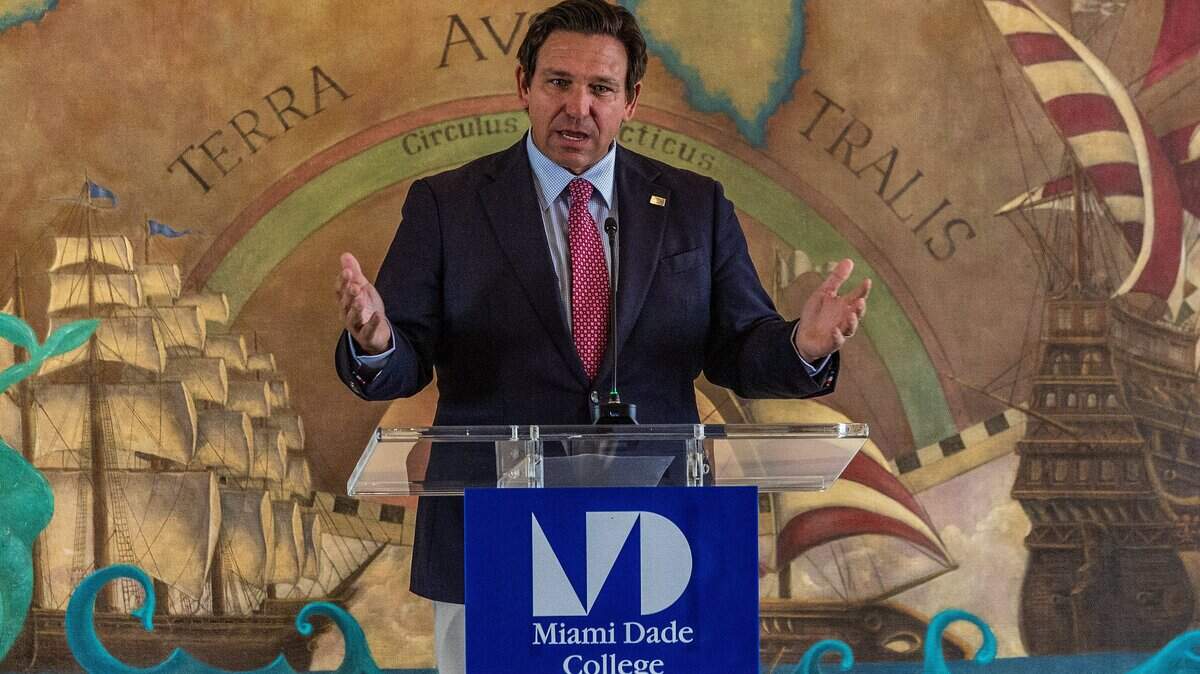
A federal court on Tuesday blocked part of a controversial Florida law restricting how public university and college professors can teach students.
Read more Fort Lauderdale man set fire to car with him and his ex inside, BSO says
A from a three-judge panel of the U.S. Court of Appeals for the 11th Circuit upheld a lower court ruling that blocked the law from restricting how professors and instructors can teach about certain topics.
The law targeted promotion of eight concepts related to race, gender and identity. The concepts included the idea that one “race, color, national origin, or sex” is superior to another, the idea that someone “bears responsibility, or should be treated worse” because of past acts by people in their identity group, and that a person should be treated worse “to achieve diversity, equity, or inclusion,” among others.
The opinion is limited to the application of the law as it relates to postsecondary institutions, though the law also applies more broadly to other educational institutions and businesses.
The law was initially dubbed the “Stop WOKE Act,” adopting language often used to deride left-of-center ideas seen as too extreme or out of touch with the mainstream. It was later named the Individual Freedom Act.
The state argued that it allowed discussion of the targeted concepts, but could restrict promotion of them because professors are paid by the state.
Read more Charity grants spared in Miami-Dade mayor’s 2027 budget. Transit fares flat, too
Judge Britt Grant, joined by Judge Charles Wilson, wrote the law amounted to “improper viewpoint discrimination.”
“Florida seeks to strip public university professors—and by extension their students—of the ability to fully engage with ideas that are, for better or for worse, very popular in some academic circles. The State asks us to consider its rules a means of targeting discrimination. But hearing an idea you disagree with is not discrimination; it is an opportunity to come up with a better idea, or maybe even change your mind,” Grant wrote.
Judge Barbara Lagoa, in her dissent, agreed with the state’s argument.
“The First Amendment protects all viewpoints in the public square, whether they are conventional or controversial. But it does not compel all viewpoints to be worthy of state-sponsored endorsement,” Lagoa wrote.
The judges were not cleanly divided along political lines. Grant and Lagoa were both appointed to the bench by President Donald Trump in his first term; Wilson was appointed by former Democratic President Bill Clinton.
Read more Can Miami Marine Stadium make a comeback? Voters will decide in August










Post Comment