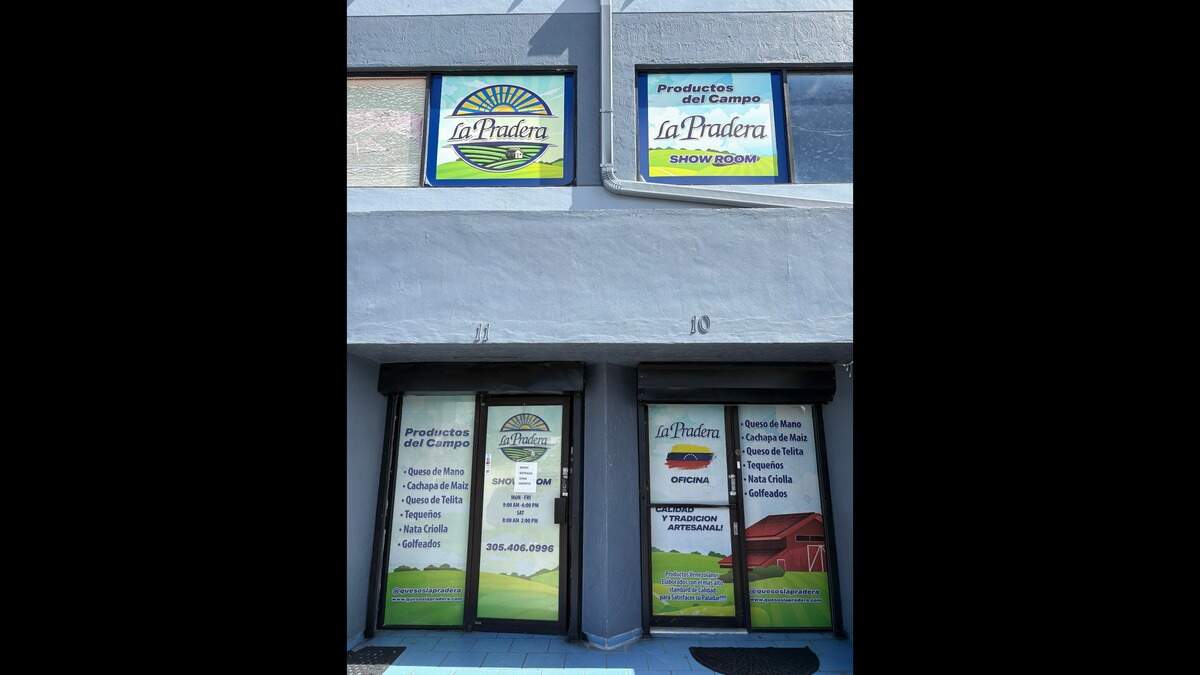
Roaches, other issues in FDA warning letter were handled, Doral cheese maker says
Myriad inspection problems detailed in an FDA warning letter, including running roaches and dirty equipment, have been addressed, said the operations manager of a Venezuelan cheese products maker in Doral.
Read more Clinton helps Jolly raise millions then sings his praises at South Florida church
The FDA letter to La Pradera, 1375 NW 97th Ave., was posted to the agency website on Oct. 13 but sent to the cheese maker on Aug. 28. It addressed inspections that took place April 20 through April 27. La Pradera’s been in business for 24 years overall, 20 at the current location.
“Based on FDA’s inspectional findings, we have determined that your (ready-to-eat) cheese products are adulterated … in that they were prepared, packed, or held under insanitary conditions whereby they may have become contaminated with filth, or whereby they may have been rendered injurious to health,” the letter said.
On Monday, La Pradera operations manager Humberto Belisario acknowledged the biggest problems detailed in the letter and described how the company took care of them.
READ MORE: FDA, CDC updates about a salmonella outbreak and oysters recalled from Publix
Old cheese even after new cleaning
The warning letter said La Pradera “did not clean and sanitize your utensils or equipment in a manner that protects against contamination.”
At the start of the April 21 workday, the letter said, La Pradera told the FDA investigator the screws on the cheese molding machine had been cleaned and sanitized.
“Upon inspection of the machine, the investigator observed cheese residue on the blades of the screw that are direct food-contact surfaces and come into contact with the (ready-to-eat) cheese,” the letter said. “Also, on April 20 and April 21, the FDA investigator observed that the molds used for the (ready-to-eat) cheese had white residue on the food contact surface after they were cleaned and sanitized.”
Belisario said the worn-out, aging Teflon on the equipment created crevices that captured food residue. He showed a Miami Herald reporter photos of the machine with food residue, then photos of the machine thoroughly cleaned and re-coated with a new coating of Teflon.
READ MORE: More seafood that went to Florida, other states recalled after listeria is found
Read more South Florida is feeling the 60s. How long will the cool last?
Proper washing and gloving of hands
“Your existing practices to control biological hazards due to employee handling are not adequate,” the FDA letter said.
Hands are to be washed before donning single-use gloves, and “single-use” is descriptive, not just a suggestion.
On two days, “employees were observed putting on gloves when entering the (ready-to-eat) cheese processing area without first washing or sanitizing their hands,” the warning letter said. “Employees were then observed touching soiled surfaces such as the soiled handle of a cart used to transfer the cheese … with their gloved hands, then proceeding to handle (ready-to-eat) cheese.”
Also, “employees were observed touching their faces and soiled aprons with gloved hands before proceeding to handle the (ready-to-eat) cheese,” the letter continued. “In addition, employees were observed wearing multiple layers of gloves on their hands and then simply removing the outermost layer before putting on a new layer of gloves without washing or sanitizing their hands, then proceeding to handle (ready-to-eat) cheese.”
Belisario said, “We had them do a training, complete a course for proper food handling.”
Flies, roaches and food contact surfaces
“While observing the processing for (ready-to-eat) queso de mano, several live apparent flies were observed inside the processing room, landing on food contact surfaces, non-food contact surfaces, and ready-to-eat food products,” the warning letter said.
Among the roaches spotted inside the ready-to-eat cheese processing room were seven “crawling on the box holding the plastic bags of cheese curds,” two “crawling on the floor between cheese machines,” one “crawling on the tray holding the clean metal mold rings used for the (ready-to-eat) cheese” and one “crawling on the cheese molding machine.”
Belisario said La Pradera “uses Access Pest Control. We changed the frequency we have them come in, from once a month to once a week.”
Read more At this FIU lab, engineers blow homes apart to learn how to save them











Post Comment