Race for Coral Gables’ open seat: longtime resident vs. a millennial with clout
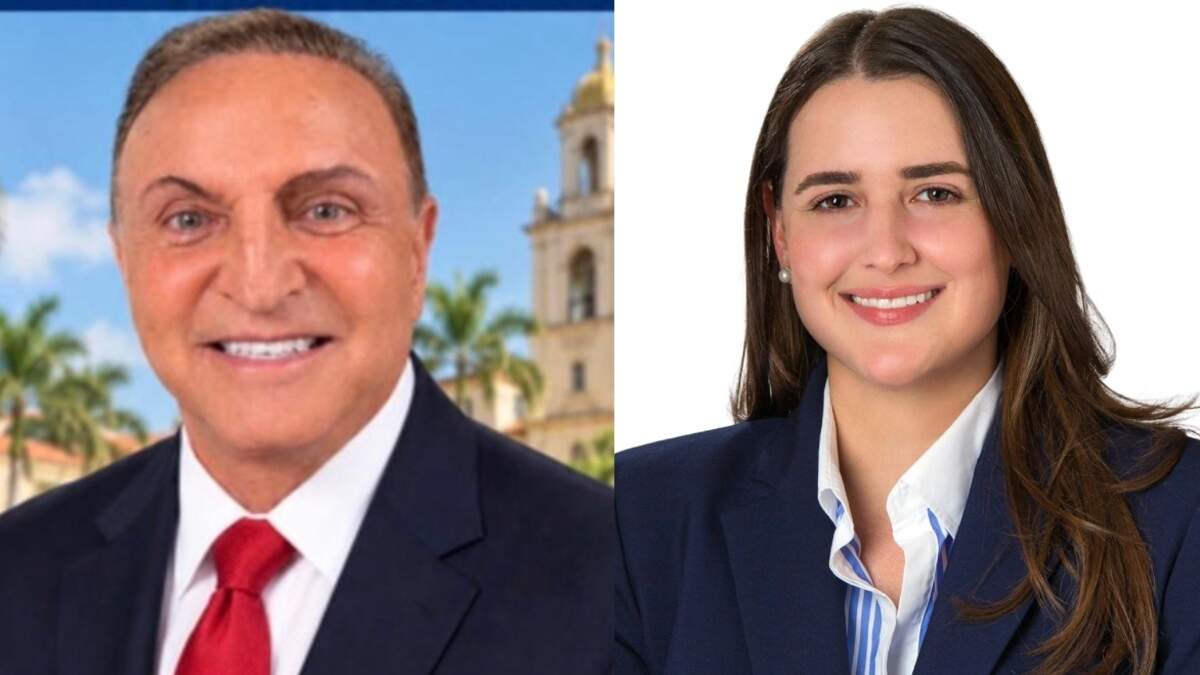
A real estate investor with decades in the Gables community will face off against a millennial who has worked with the “who’s who” of Florida politics in Coral Gables’ upcoming November election.
Longtime Gables resident Gonzalo Sanabria, 78, who has previously run for the City Commission and sat on advisory boards at the county and city level, will go head-to-head with heavily endorsed Gables political newcomer and Florida International University fundraiser Dominique “Nikki” Whiting, 33, for the soon-to-be vacated Group V seat of Commissioner Ariel Fernandez. He’s decided not to run for reelection.
Both Sanabria and Whiting say they want to bring civility — and shorter commission meetings — back to the City Beautiful. Commission meetings have become daylong telenovelas in recent years, with fiery disputes, flying accusations and “political theater” the norm.
Both candidates said they’re still bothered by a since-revoked salary raise a previous City Commission gave themselves. The two also said they signed up to run for the Group V seat, in part, because they relished the thought of facing off against Fernandez, and were disappointed to learn that particular political battle won’t happen. Although commissioners serve in a nonpartisan role, both candidates are registered Republicans.
But while they have some similarities, they offer different viewpoints on what it will take to improve life in the Gables.
Background
Sanabria fled Cuba and came to South Florida at 11 with his family. They lived in Key Biscayne. His first job was as a paperboy for the Miami Herald before his family moved to Philadelphia. A job offer, and a longing for Miami’s sunny weather, drew him back after college.
Sanabria, who studied economics at Windham College in Vermont, went on to become a commercial real estate investor. Eventually, he bought a Gables waterfront property and has now lived in the city for over 25 years.
“No elected official in the Gables is supporting Gonzalo Sanabria, and the reason why is because I am an independent thinker,” said Sanabria, president of Real Estate Works, Inc. “I think what’s best for the Gables first, not what’s best for your agenda.”
Sanabria, who previously served on the Coral Gables Waterfront Communities Homeowners’ Association Board, previously ran for Group IV commissioner in 2011 and Group III commissioner in 2009. He’s been involved with many organizations across South Florida, formerly serving as vice chair of the Miami-Dade Expressway Authority and on the board of Doctors Hospital and the Baptist Foundation. He was appointed by City Manager Peter Iglesias to the Gables’ planning and zoning board and previously served for nearly two decades on the county’s planning and zoning board.
Whiting, 33, was appointed by Commissioner Richard Lara to serve on the city’s property advisory board and previously served on the city’s communications committee.
Born in South Florida, the La Salle High School grad moved away to the University of Florida to study English and history before returning to get her master’s of public administration at the University of Miami. Many in South Florida know her late uncle Pedro Roig, former director of Radio and TV Martí and a veteran of the Bay of Pigs. Her grandmother was Cuban singer Vicky Roig.
Whiting got her start in politics early. Meeting Congresswoman Ileana Ros-Lehtinen at 17 is what first got her interested in government. Whiting also interned with the campaign of a Parliament candidate while studying abroad in London. Back in the states, she eventually found her way to intern and work for Ros-Lehtinen and has since built an extensive political resume.
She previously held senior positions in the executive office of Florida Gov. Ron DeSantis, the Florida Department of Health, and with former lieutenant governor and current FIU president Jeanette Nuñez. She also worked for Ros-Lehtinen and for Esteban “Steve” Bovo when he was a Miami-Dade County commissioner.
She first moved to the Gables in 2017 and briefly lived in D.C. and Tallahassee for work before returning to the city in 2024. She currently raises money for FIU in D.C., a program that gives students the opportunity do a semester in D.C. while participating in paid internship opportunities on Capitol Hill, and for the Adam Smith Center for Economic Freedom, a nonpartisan think tank at FIU. Mayor Vince Lago is already her colleague — he recently became a senior leadership fellow of the Adam Smith Center.
“You have a friend in me, you have an advocate in me,” is Whiting’s message to voters. “I want to be their champion. I want to do right by the people. … I’m in the business of enhancing their quality of life and making their lives easier for their families and for the next generation.”
Why are they running?
Sanabria describes himself as an independent, free thinker who wants to help improve the City Beautiful and stay true to its character. He said that means voting for what he believes is right for the Gables, even if that might put him at odds with others on the commission.
He’s not afraid of conflict, he said, but wants to get rid of the “monologues” and bickering that have become common on the City Commission. He’s proposed a three-minute time limit for commissioners during discussions, similar to the time limit residents get for public comment, to help shorten meetings.
He also touts his finance skills and believes his experience can help the city navigate a future with rising costs and possibly less revenue.
“I’ve handled budgets. I’ve handled revenues of $250 million already with Miami-Dade Expressway Authority,” said Sanabria, adding that he also understands zoning.
Sanabria has criticized Fernandez’s previous decisions, including voting to fire and replace Iglesias, and later voting to raise commissioners’ salaries. The current commission has since voted to roll back the salary increases and rehire Iglesias, whom Sanabria considers to be a good friend and a strong city manager.
Sanabria, who filed an ethics complaint against Fernandez in 2024 that was later dismissed, said he recently made amends with Fernandez but is still disappointed he won’t be facing off against him.
Whiting said her decision to run comes from a belief that the city needs new voices on the dais that “don’t abuse the public purse.”
“I don’t like politicians that seek public office to enrich themselves in government, and I don’t like politicians that want to be social media influencers,” Whiting said. “And I promise, my goal is to be none of that. I want to be a public servant. I want to prioritize the taxpayer.”
“I want to make politics boring again,” she quipped.
Whiting believes the relationships she’s built in Tallahassee can help the city navigate the ever-growing pressures coming from the state, including laws such as the Live Local Act that have wrestled away some local power over future development projects.
And she wants to make sure tax dollars are being used for things like improving city infrastructure.
“I think if we prioritize police, fire, water, sewer, waterways, infrastructure, I think we get to advance the city to what it should be, which is the City Beautiful, not the City Ugly,” she said.
What are their platforms?
RTZ, Live Local and other development
Two looming problems for the Gables, known for its stringent building codes and love of Mediterranean-style architecture, are the Live Local Act and RTZ — rapid transit zones.
Live Local is a state law, while RTZ is a county-created zoning designation along the U.S. 1 corridor near the Metrorail. Both reduce the authority the Gables has long had over new developments.
Those aren’t the only types of developments that can become controversial.
Sanabria, who had harsh words about Live Local, pointed to his voting record on the city’s planning and zoning board, particularly how he voted against the controversial Crystal Residences project. The project was recently approved by the City Commission.
Whiting said she would want to advocate in Tallahassee for changes to Live Local to ensure the law doesn’t change the city’s character.
“I think Live Local works for certain areas, but in places like Coral Gables and Miami Beach, it could hurt the character, the look of the city,” she said.
Conflicts of interest
Sanabria said he’s never done business in the Gables. He promises to not do business in the Gables if elected.
Read more Jolly defends new Donalds attack ad that critics say plays angry Black man trope
Whiting said she doesn’t believe her fundraising job will impact her ability to serve the city because her donors for the Adam Smith Center are mainly from Latin American countries and her FIU fundraising is meant for students and programs. She said her job is not related to Lago’s work as an Adam Smith Center fellow.
Her campaign has received donations from some known lobbyists and developers, including Century’s Tatiana Pino, lobbyist Jorge Navarro and even Lago’s brother. She said she made clear to supporters that donating will not sway her vote or decisions or impact her judgment.
Campaign fundraising and endorsements
Sanabria’s political campaign has raised $28,950 so far, with many donations coming from people in the real estate sector. Some of his donors include attorney and former Gables Vice Mayor Frank Quesada, real estate developer Christopher Kallivokas, the founder and CEO of Miami-based real estate firm RER Ventures, and Jose M. Canero, vice president of real estate firm The Canero Group.
The most unusual donation? $500 from David Draiman, the lead singer of metal band Disturbed, who has a home in the Gables. Sanabria knows him from the neighborhood.
Sanabria likes to point out that no one currently sitting on the City Commission has endorsed him. Neither has his close friend Iglesias, who is stepping down as city manager at the end of the year.
As for Whiting, her campaign has raised $96,055 so far.
Whiting has also garnered a lengthy list of endorsements. A recent post on social media site X shows that Whiting has received endorsements from local and state officials, including Lago, former Gables Mayor Mike Mena, Vice Mayor Rhonda Anderson, and Miami-Dade County Commissioners Raquel Regalado and Natalie Milian Orbis, who each represent a portion of the Gables.
Her endorsement list also includes former bosses Ros-Lehtinen and Bovo, both of whom have donated to her campaign, and her current boss, FIU president Nuñez.
She’s rallied the endorsements of state reps, neighboring city mayors, school board members and Gables resident David Lawrence Jr., the chairman of the Children’s Movement of Florida and former Miami Herald publisher, plus Miami Realtors and the South Florida Police Benevolent Association.
Revitalizing city businesses
Revitalizing city businesses is also top of mind.
For Sanabria, part of that effort means getting rid of Miracle Mile’s parallel parking — it’s a “nuisance,” he says — and bringing back angular parking to the strip. He wants the Gables that people see during Art Basel — with sculptures, art galleries and pop-ups spread out around the city — to become common year-round.
He wants more music, too, “on the streets” and “at the parks,” and would like to explore developing a stronger partnership with the University of Miami, particularly its orchestra.
He believes the investment would help attract more business to Gables restaurants and shops.
For Whiting, the solution comes from bringing more diverse businesses to the Gables, not just restaurants and bridal shops. She wants to see more apartment complexes that are “low density development” rise near, not on, Miracle Mile to make it easier for people to dine and shop near home.
Whiting worries the rising cost of living is pricing many, including young families, out of South Florida. She wants to find ways to “encourage younger people to set roots here because at the end of the day, that’s the next century.”
The city is currently exploring ways to help speed up the permit process. If elected, Whiting wants to dive right in to figure out other ways to expedite permitting, including through the use of AI and other tech.
“I’ve met with business owners in the city that getting a permit for — to open a patio — took them four years,” said Whiting, noting that her parents had to wait a year to get a permit to install a home pantry. “That stifles business. That stifles quality of life.”
Property tax cuts
The candidates, who are both property owners, each support Florida’s Amendment 3, though they also recognize that slashing property taxes could bring financial challenges to the city.
Amendment 3, touted as a big tax break for Florida property owners, would increase the property tax exemption on primary homes, but many local government officials are warning that the proposal would leave cities and counties with less money to pay for essential services.
For Sanabria and Whiting, that means the city needs to be smart with its money.
Sanabria said the city will need to make difficult decisions when deciding which expenses are absolutely necessary.
If the city’s short on revenue, “What are you going to do? Cut staff? Cut services?” he said.
Sanabria is not sold on the city’s pricey plans to build a new garage, known as the Mobility Hub, a pet project of Lago and Iglesias, and worries businesses will be hurt during the construction process. He’s questioned the city’s plan to give more money to the Underline.
He also floated the city’s sea-level rise fund as another area to look at, noting that the city puts $5 million into the fund every year. Although Sanabria said he believes in sea-level rise and climate change, he said a “one time” reallocation of the fund could close any funding gap left from Amendment 3 for the first year, which city officials estimate will be about $6 million, with the gap widening in future years. He describes it as just one of many options the city could look at.
Even if the tax relief measure passes, it’s possible that real estate values go up, leading to more property tax revenue, he said.
“So right there is another offset. You never know. We may not need to do anything other than just sit there and wait,” he said.
For Whiting, Amendment 3, if it passes, is “an opportunity to go back to the drawing board” and force governments to tighten their belts and “show residents and taxpayers where exactly the dollars are going.”
Whiting said she would be interested in looking at the “return in investment” of “certain community-based organizations, maybe even some green initiatives,” perhaps some art installations, and even city-sponsored events, to figure out what’s worthwhile for residents and businesses.
What she won’t touch: public safety.
She believes state funding will become more important in the years ahead, and that’s where Whiting says she can shine.
Every year, the city goes to Tallahassee to ask for money it can use, typically to fund pricey and lengthy projects. This year, the city’s lobbying task force secured $1.5 million in state funding for three projects.
“What one does in the commission, it does have ramifications in Tallahassee,” said Whiting, referencing how the city didn’t get any funding from Tallahassee the year that commissioners raised their own salaries.
Whiting said her experience has shown her “how the sausage is made” and prepared her to advocate for the Gables, noting that as a lobbyist for Miami Dade College, she helped snag $30 million for the school.
When can you vote, and who else is running?
Besides Fernandez’s Group V seat, voters will also weigh in on whether they want to reelect Lago and Group IV Commissioner Melissa Castro for another term.
Read more Jolly defends new Donalds attack ad that critics say plays angry Black man trope
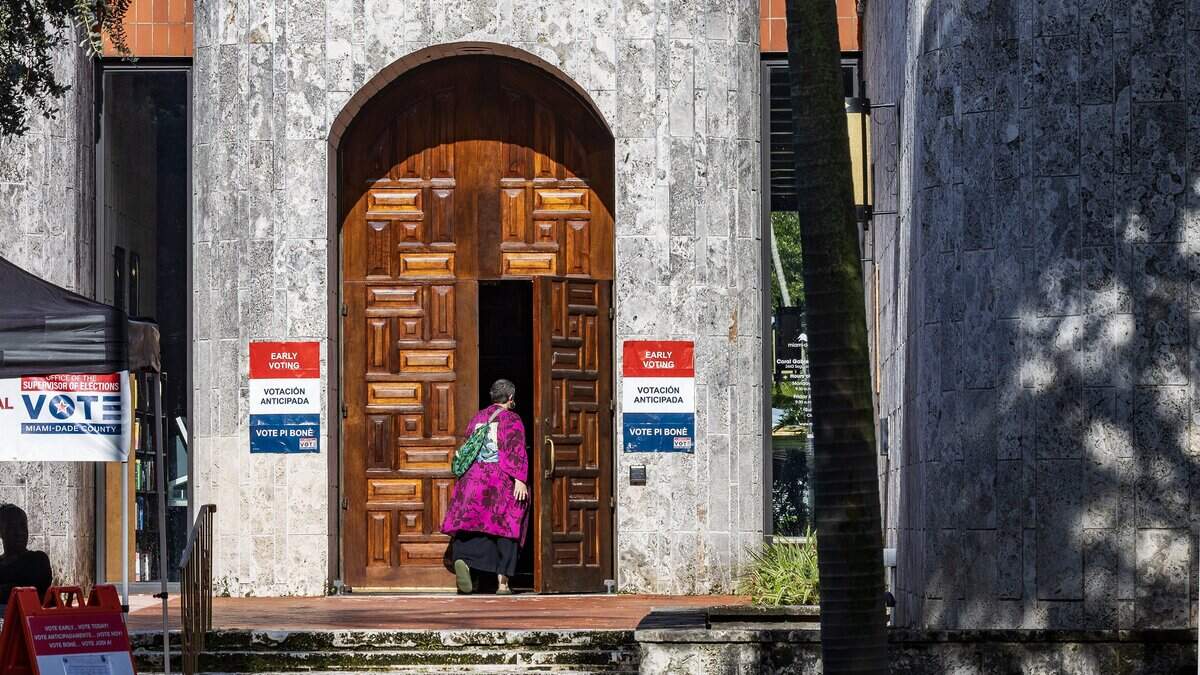
Election Day is Nov. 3. Early voting starts Oct. 19.









Post Comment