Young people can’t afford to live in Miami. What are we doing about it? | Opinion
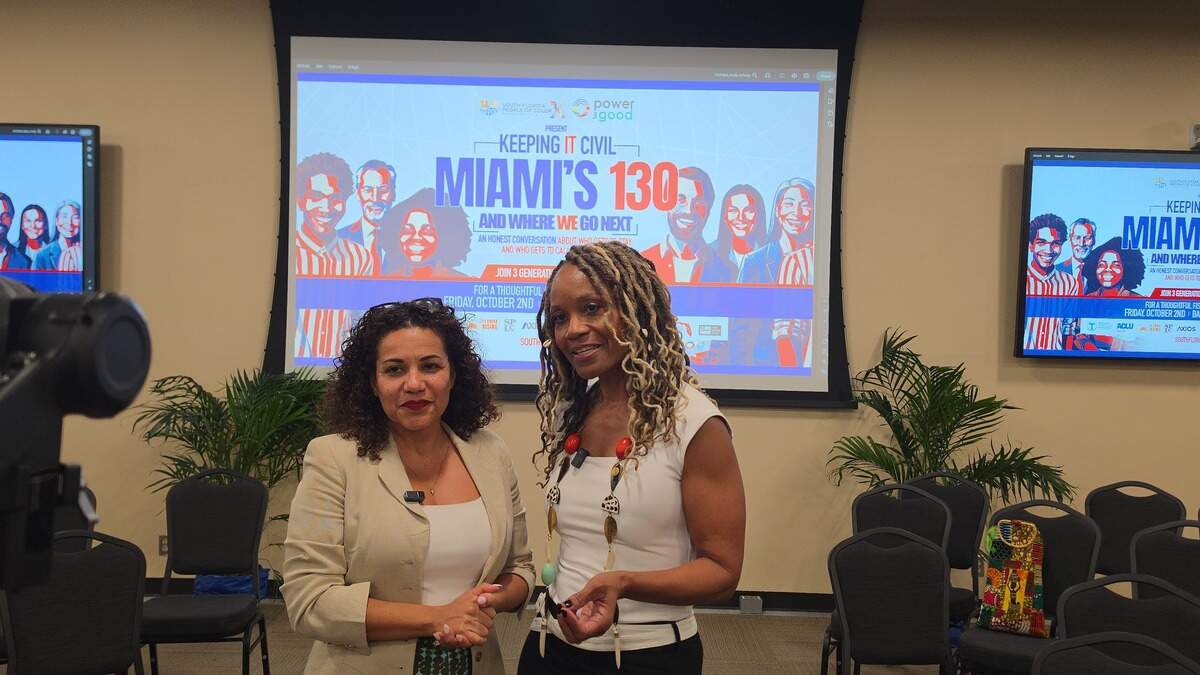
I recently had the incredible experience of sitting with people of all ages, religions and races from throughout Miami-Dade at a “fishbowl” dialogue at Barry University. The event was called “Keeping it Civil: Miami’s 130th – And Where We Go Next”.
Read more Hialeah orders senior center out for second time; former mayor accuses Calvo of ‘harassment’
Roni Bennett, executive director of South Florida People of Color, and Aurora Colindres, founder of Power for Good Consulting, organized the event, which was a celebration of Miami’s 130th birthday. More than that, it was a celebration of the people of our diverse community. And of the very land, the soil, that we live on and depend on for survival.
While the evening was a celebration, it also asked the questions, “… Who Gets to Stay? Who Gets to Call Miami Home?”
They were two critical questions. A ride downtown on I-95 shows just how much Miami has changed in the past two decades. The steel and glass high-rises that dot the horizon looks like somebody planted some high-rise seeds.
Miami’s new skyline is both beautiful and scary. Beautiful because only the rich can afford to live in the new high-rises, and scary because our young folks are being pushed out, causing many of them to leave Miami and find their home elsewhere.
If this is the kind of progress we want for Miami, it is scary. We need our young people to know there is a place for them right here in the Magic City.
I listened to people young enough to be my grandchildren talk about being displaced in Miami, the only home they know.
They spoke about being priced out leasing a decent apartment because of the high cost of living in the city. They spoke about how so-called affordable housing does not mean that they will be able to afford a decent home. Affordable homes are for those who can afford them; many of our young professionals cannot.
Affordable housing wasn’t the only topic of interest that evening.
William Osceola, secretary of the Miccosukee Business Council, spoke of how we need to learn about and respect the land we live on — how what comes from the land can heal our illnesses, and how we must cherish it.
A young Haitian woman joined the group via Zoom because she is in hiding, fearful of being snatched by ICE and departed to God-only-knows where. Still, she’s fighting for the thousands of Haitians who are facing deportation from the only home they have ever known — America.
The discussion, moderated by Dwight Bullard, a former state senator, caused us to think about the world we older residents are leaving our younger generation.
Bennett and Colindres created “Keeping it Civil” because they wanted something different from other panel discussions where a few people got to speak, while everyone else listened.
“We wanted a space where people could bring their lived experiences, learn from one another, and recognize their own power to help shape their community,” Bennett said. “For us, Miami’s anniversary was an opportunity to look beyond celebration and ask, ‘Who built this city? Whose stories are remembered, and who has a meaningful voice in its future?’
“Housing, the environment, immigration, voting and belonging are not separate from daily lives. They shape whether we can build a life here and whether we feel that we matter.
Read more Family of killer who suffocated wife, her girls, testify hoping to save his life
“That is why dialogues like the fishbowl matters,” Bennett added. “The conversation does not belong to only the people with titles or microphones. There is room to enter the circle, contribute and listen. Bringing generations together makes space for historical memory, present-day experience and young people’s visions for what comes next.”
Dr. Dorothy Jenkins Fields and I shared the last portion of the program. She told the story of the 161 Black men who, while they did not have the right to vote, their signatures were needed on the charter to help Miami become a city 130 years ago. (Julia Tuttle founded Miami in 1896.)
Dorothy and I both shared our stories of growing up in Overtown during the post-World War II era, and how our families met in the close-knit community where we lived. Our childhood friendships seemed more like family and have spanned more than 80 years.
The young people in our audience found it hard to believe that as late as 78 years ago, Black children in Miami had only one playground, in Liberty City at the Liberty Square Housing Project.
I told them how, as a child, it was a treat for us to travel on bus No. 21 to Liberty City just for a swing on the swings. There were so many children in the playground on Sunday afternoons that we stood in line just for the opportunity to soar in the air for a few minutes on the rickety swings.
But life got better for Blacks in the housing department. Post-World War II homes were built for Black veterans returning from the war. The GI Bill helped many of them return to school and even graduate from college.
Dixie Park — later named Gibson Park — was built. In addition to swings, the new park also had a swimming pool. Before it was built, the only public swimming pool for Blacks was at Northwest 71st Street and 17th Avenue in Liberty City.
On Saturdays and Sundays, there was no swimming in the pool – it was too crowded. People just bobbed up and down in the cool, refreshing water.
By the early 1970s, shotgun shacks in Overtown were torn down and clean, single-family homes replaced them.
Telling our stories mattered, Bennett said. “At South Florida People of Color, our work brings people together through education, dialogue and advocacy to unlearn bias, build relationships and advance equity.”
She said her partnership with Colindres feels “natural” because they share a belief that connection should lead somewhere.
“We wanted people to leave the event not only understanding an issue differently, but knowing someone they can learn from, stand beside or work with.”
If the dialogue did nothing else, it brought people together for a few hours to share their stories, to get to know each other a little better. To me, that’s a good start.
Read more DeSantis cancels execution of Death Row inmate from Miami amid dementia concerns










Post Comment