Another man arrives at Miami Airport with birds smuggled in his pants, feds say
For the second time in three days, U.S. Customs agents have caught a man smuggling live birds hidden in his clothing from Cuba into Miami International Airport, according to court records.
Read more Hurricane Isaias is barreling toward Florida. So, where’s Jim Cantore?
In both instances, the birds were hidden in taped plastic tubes with breathing mesh on the ends that were concealed in garments beneath the men’s clothing, according to two criminal complaints.
READ MORE: Man smuggled live birds in his underpants from Cuba to Miami, feds say
On Tuesday, Roberto Perez Quincosa arrived at MIA on an Eastern Air Express flight from Havana. When going through Customs, he told agents he had nothing to declare. However, an agent patted him down and found a “belt-like concealment garment” under his clothing containing the tubes, according to a U.S. Fish and Wildlife Service complaint.
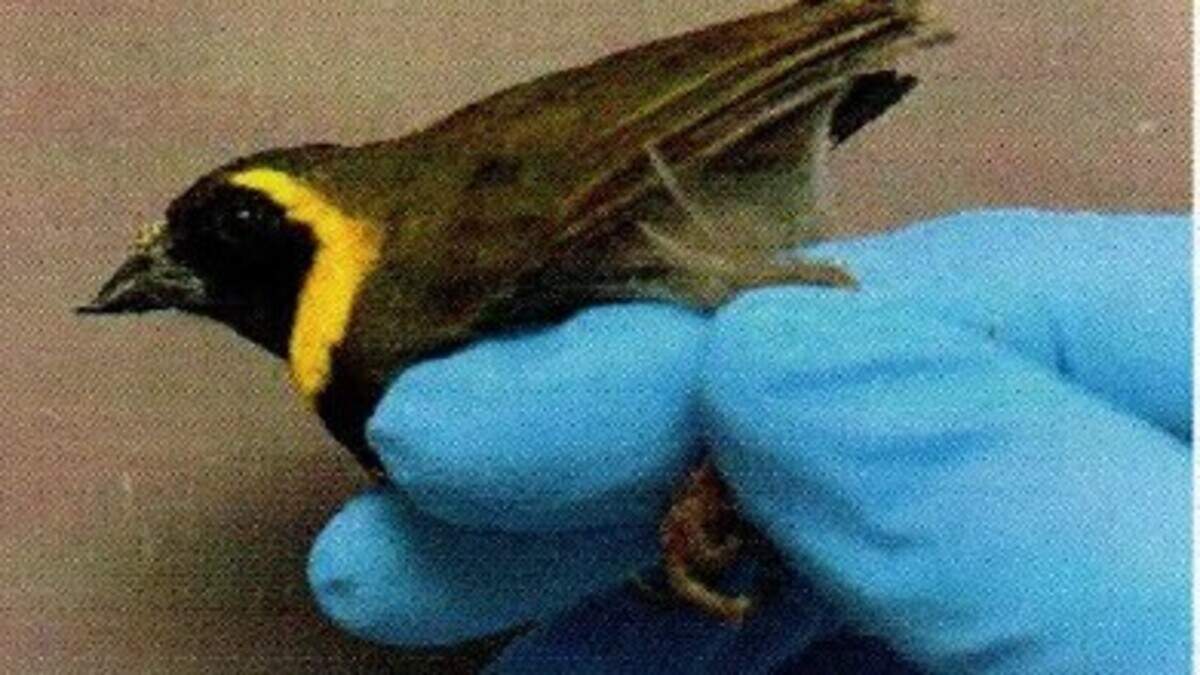
Each tube contained live birds — five Cuban bullfinches and six Cuban melodious finches, agents said.
According to the complaint, Quincosa agreed to speak with agents without a lawyer present and told them he planned to breed the birds and sell them in the U.S. for between $100 and $120 each.
On Sunday, 40-year-old Alberto Hernandez Castillo arrived at MIA on a World Atlantic flight from Havana and, like Quincosa, went through Customs saying he had nothing to declare. And, like with Quincosa, a Customs agent patted Castillo down and found multiple plastic tubes covered in tape concealed under his pants.
In Castillo’s case, the six tubes were hidden in pockets that were sewn into his underwear, Homeland Security Investigations agents said. And, the tubes also contained live birds. In total, he had eight yellow-faced grassquits and two blue grosbeaks in his pants, agents said.
Yellow-faced grassquit is another name for the Cuban melodious finch, according to the ornithology website Birds of the World.
Castillo invoked his right to an attorney rather than speak to agents. He was released Monday after posting a $25,000 bond, court records show.
Read more Trump wants to add official presidential retreat to his South Florida golf club
Both men are Cuban nationals with lawful permanent residences in the United States, according to their complaints. As of Wednesday, Quincosa’s docket did not say if he was in custody or have information about his legal representation. Castillo is represented by federal public defenders, who did not return a request for comment on his case.
Illegal bird trade
While the cases may seem bizarre, both men were likely couriers in the illegal wildlife bird trade, which is pervasive and profitable, said Paul Reillo, a Florida International University research professor and director of the Tropical Conservation Institute.
“Almost all couriers are sacrificial mules and part of a much bigger picture. They are not the kingpins or coordinators,” Reillo said. And, although these men were caught, many others get through undetected.
“For every confiscated animal, the question is, how many did you miss,” Reillo said.
In Miami, the market may be simply people from Cuba who want a caged bird as a reminder of home, or people interested in captive breeding to sell hatchlings to other buyers, said Reillo, who is also president of the Rare Species Conservatory Institute.
According to FIU, the illegal wildlife trade is the fourth largest transnational crime globally.
Almost all songbirds smuggled from Cuba are captured in the wild using nets or traps positioned around common feeding areas or known habitats, Reillo said. Often, a bird raised in captivity is used as bait.
Smugglers use different methods to get them through Customs, the tubing the men used this week a common one. But the coordinators change tactics, particularly when their couriers get caught.
“The syndicated crime networks know all the loopholes and weaknesses,” Reillo said. “They always seem to be one step ahead.”
Read more More migrants flee Haiti for Turks and Caicos amid surge in dangerous sea voyages
This story was originally published October 7, 2026 at 6:44 PM.











Post Comment