In heated Gables election, scrutiny over Castro’s Tallahassee trip, Lago’s UM ties
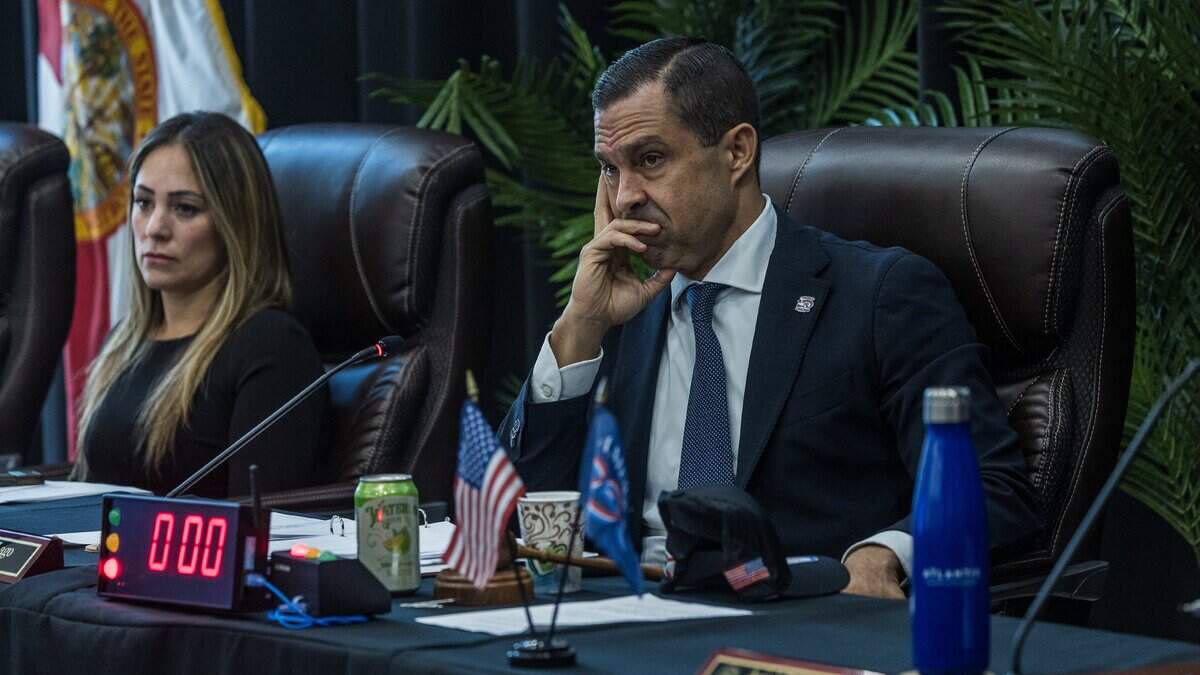
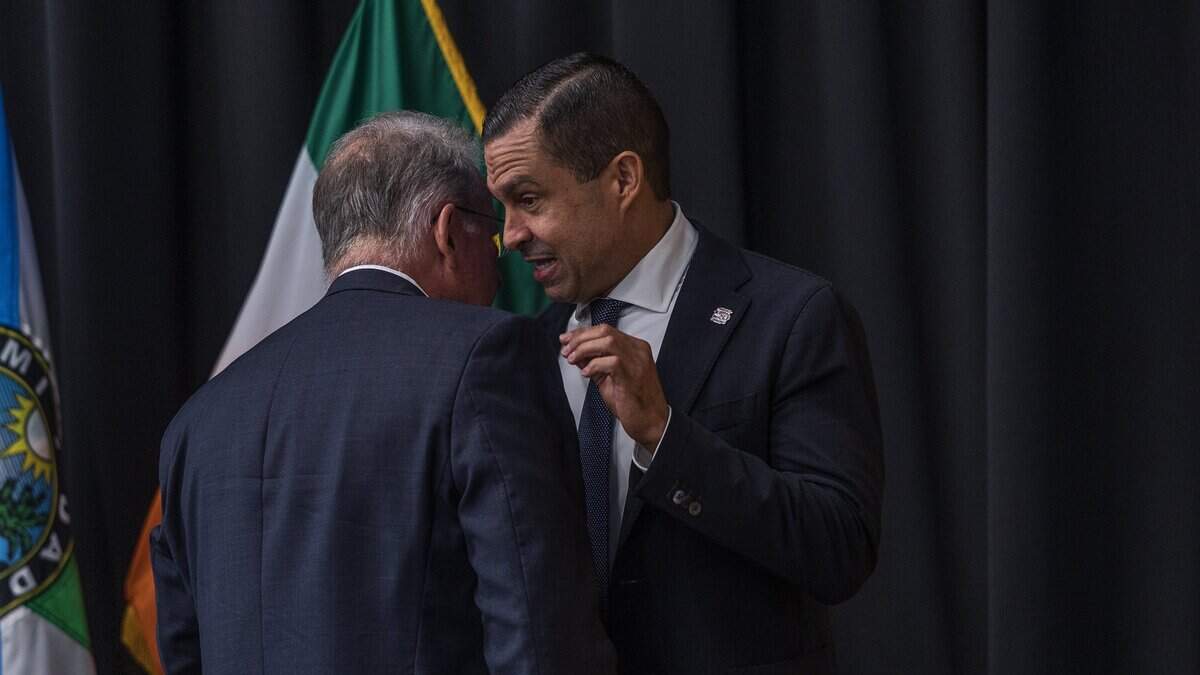
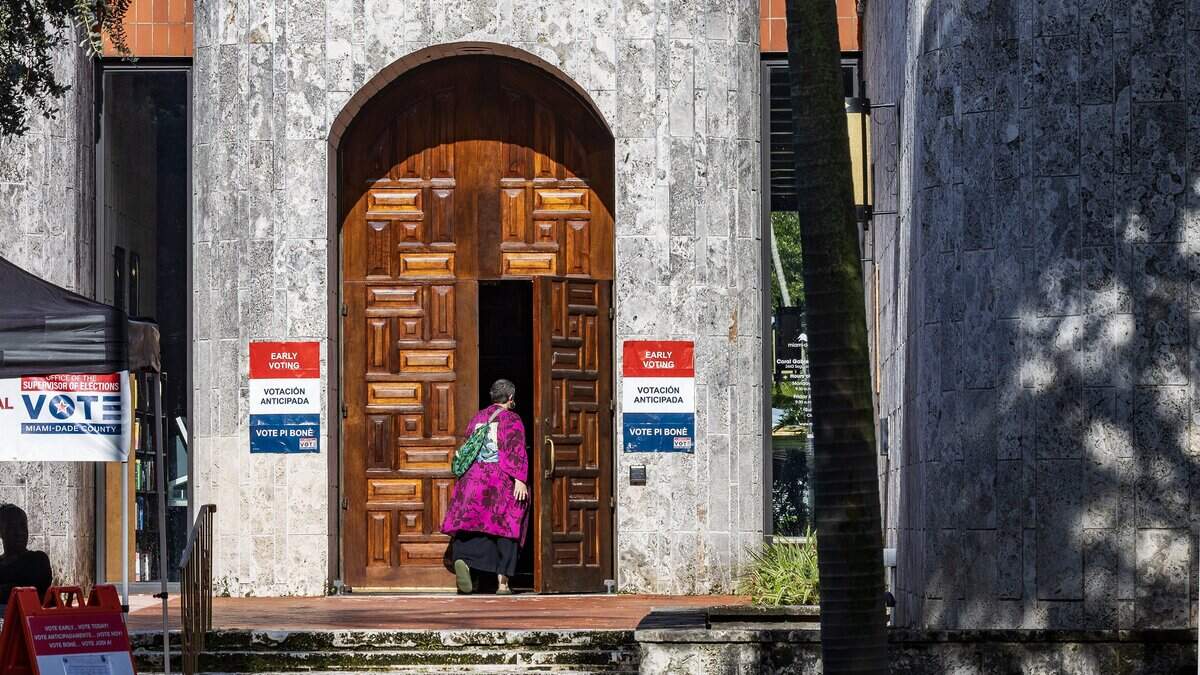
Accusations are flying in Coral Gables ahead of the city’s November election, adding fuel to the already fiery disputes on the dais between Mayor Vince Lago and Commissioner Melissa Castro, political rivals who are both running for reelection.
Read more Miami’s elite want to hire Jack Nicklaus to transform this public golf course
Castro was grilled by fellow commissioners at a marathon City Commission meeting Tuesday on whether she used a taxpayer-funded trip to Tallahassee meant for city business as cover for her visit to the capital to attend a hearing of the Florida Commission on Ethics. The commission is investigating Castro, who owns a permit-expediting business, over potential violations of state ethics laws.
At the same meeting, Castro questioned Lago over his own business dealings, suggesting there should be an investigation into whether the mayor has a conflict of interest when it comes to voting on University of Miami-related matters since he’s affiliated with a construction company that does business with UM.
Both Castro and Lago denied the allegations made against them and accused the other of mudslinging ahead of the election.
Castro said at the meeting that she “partly” paid for the Tallahassee trip and had not charged the city for personal expenses. She said the allegations were a political attack to try and hurt her reelection campaign.
“Once again we’re in this political environment, and you want to point fingers, when I’m a pretty honest person, especially when it comes to money,” Castro said. “I’m pretty transparent.”
The allegations against Castro were first reported around 12:45 p.m. Tuesday by the anonymous Aesop’s Gables blog that has become a popular read with Lago and other commissioners. Shortly after a lunch break, in the early afternoon, Vice Mayor Rhonda Anderson brought up the topic during the meeting, stating that she became aware during lunch that Castro had “overcharged” the city for her January Tallahassee visit.
Anderson and Lago chastised Castro, accusing her of using city funds to help cover personal expenses to attend her ethics hearing.
Lago told her to pay the city back for her flight to rectify the situation and “show good faith as an elected official.”
“If these records are accurate, I am outraged. Taxpayer dollars exist to serve the residents of Coral Gables — not to subsidize the personal legal or ethics matters of any elected official,” Lago said in a statement sent through Coral Gables First, his political action committee. “Commissioner Castro owes our residents a complete explanation of why she traveled to Tallahassee days before the official city business she cited, what expenses taxpayers ultimately paid, and whether any of those expenses were connected to her personal appearance before the Commission on Ethics.”
The Miami Herald has since obtained copies of Castro’s travel documents from the city through a public records request.
The scrutiny over Castro’s Tallahassee trip came just before the commissioner questioned whether the mayor had or would financially benefit from a newly approved 30-year agreement the city made with the University of Miami.
The deal, which Lago and City Manager Peter Iglesias worked on for years, is a renewal of a previous agreement with the private university and was unanimously approved by commissioners, including Castro, earlier in the day on Tuesday. Her item to seek an opinion or guidance from an outside body, such as the county or state ethics commissions, on whether Lago had a conflict of interest negotiating the deal and what type of business Lago can do in the Gables or with UM now that the agreement exists did not get enough support from the other four commissioners to even go to a vote.
Lago, who’s spent much of his career building educational facilities across South Florida, including for UM and other schools, described Castro’s allegations as political theater as he runs for a final term as mayor.
Commissioner Ariel Fernandez, who’s had his own rocky relationship with the mayor, said that, while he understands the concerns, “I don’t think that this commission should become an investigative body.”
“I think the commission in the past has taken votes based on anonymous blogs, and the commission has ended up with egg in the face. … What we’ve seen here in this commission in the last 30 minutes is exactly what people don’t want to see us continue to be,” he added.
Commissioner Richard Lara, who has tried to take on the role of peacemaker in meetings, agreed with Fernandez, saying that commissioners “should be focused more on the business of the residents of Coral Gables” and “need to act more like statesmen and a heck of a lot less like political punchlines.”
The accusations — and bickering between Castro and Lago — sent temperatures skyrocketing during a long meeting day that stretched from 9 a.m. to nearly 10:30 p.m., where commissioners held a City Commission meeting and later finalized the budget for the new fiscal year. They chose to keep the same property tax rate, lower garbage fees by $75 and grant a one-year funding agreement to help with operational and maintenance costs of The Underline, the 10-mile linear park that runs underneath the Metrorail.
Here’s what to know about the allegations:
Castro’s Tallahassee trip
Castro was given the OK to fly to Tallahassee to attend a three-day event — from Monday, Jan. 26, to Wednesday, Jan. 28 — hosted by the Florida League of Cities, a statewide nonpartisan association that lobbies in Tallahassee for cities. Castro, at the time, was vice chair of the group’s development, code compliance and redevelopment committee, and was recently appointed as the committee’s 2026-27 chair.
City travel records show Castro flew in to Tallahassee three days earlier, on Friday, Jan. 23. That’s the same day she had a hearing scheduled with the Florida Commission on Ethics, which she attended.
State investigators, in that January hearing, found probable cause that Castro violated state ethics laws while conducting business in the Gables. The probable cause finding means investigators gathered enough evidence during their preliminary investigation to determine there could potentially be an ethical violation of state statutes. But the investigation is ongoing, and no final determination has been made. The case will now need to go before a judge, though no hearing date has been set yet.
Castro, who is running for a second term, has denied any wrongdoing in that matter and believes she will eventually be cleared.
Read more Zumba, free mammograms, Susan Komen walk highlight breast cancer awareness
On Tuesday, Castro addressed the travel allegations, saying that she saved the city “a substantial amount of money” by flying into Tallahassee on Friday instead of over the weekend or on Monday. Instead, Castro said she arrived to Tallahassee earlier “for personal matters” and that “was not charged to the city.”
Castro told the Herald she went to the hearing and then rented a car and drove to Destin, where she stayed until Sunday.
While Castro flew in to Tallahassee on Friday, travel records submitted to the city show Castro did not charge the city for her hotel stays until Sunday, the day before the Florida League of Cities event, when she checked in to a Four Points hotel in Tallahassee. It was a different, and pricier, hotel than the Residence Inn the city initially reserved for her trip.
Castro, when asked about the hotel change, told the Herald the city switched hotels to get her closer to the Florida Capitol and other event locations where she would mainly be spending her time, since the hotel with the League’s group rate was sold out and the originally booked Residence Inn was too far.
The commissioner reiterated that she did attend the Florida League of Cities events but ended up leaving on Tuesday night, a day earlier than planned, because she got “really sick” and changed her flight to go home.
In the end, she spent $2,226 during the January trip, nearly double what the city had initially approved, documents show. The city only reimbursed her for about half of the expenses — $1,178 — because the trip, combined with a December trip Castro took for another Florida League of Cities event, exceeded the maximum travel allowance allowed for city commissioners, which is $3,000.
Castro said she will do a presentation at the next commission meeting on Oct. 13, including sharing receipts, to explain what she did, where she was and what she paid for during the Tallahassee trip, even though she “hate[s] to put my private life in a commission meeting.”
“I feel that this is a political stunt,” Castro added.
Lago’s UM deal
Castro’s own scrutiny of Lago is based on the new deal the city made with UM, the mayor’s current employment and his working history with the university. Castro, during a Coral Gables Good Government Committee candidate forum in September, asked Lago if he was being “directly or indirectly compensated in any way or form from the University of Miami.”
The mayor, in an audio recording of the forum that Castro played during Tuesday’s meeting, responded that he’s done work for UM for over 20 years and has done work throughout his career for other educational institutions, including Florida International University, Miami Dade College, and other private and public schools.
Lago left a leadership position at BDI Construction earlier this year and is now principal at the recently established Hammer Commercial Construction. It’s an affiliate company of Hammer Construction Corporation, a South Florida-based general contracting firm established in 1966 that is “an approved University of Miami contractor,” according to its website.
Lago’s friend Norman Newell, whose family owns Hammer, is listed as both principal and the registered agent for both companies in state business records. Lago, at Tuesday’s commission meeting, said Hammer Commercial is a new company “that was created this year to build workforce housing outside of Coral Gables because there is no workforce housing.”
In the recording from the candidate forum, Lago referred to himself as an owner of “Hammer” but later told Florida Politics, and then the Herald, that he’s a Hammer employee with no stock, equity or ownership interest in either company.
Castro, on Tuesday, said she wasn’t accusing him of wrongdoing but believed there was a possible conflict of interest. She suggested commissioners should ask the city attorney to seek guidance, including from Miami-Dade or Florida’s ethics commissions, on whether Lago had a conflict of interest in the UM negotiations, if it was appropriate for Lago to negotiate the UM deal, and if there should be any safeguards in place for Lago’s work with his current employer, similar to a from then-City Attorney Miriam Soler Ramos on Lago’s work with BDI Construction.
Ramos’ 2018 opinion concluded that Lago, who was a commissioner at the time, was not prohibited from working for BDI, even though it sometimes does UM work, but Ramos recommended he avoid voting on any BDI projects for the university that may appear before the commission. Lago said he’s followed that guidance ever since.
To Castro, Lago’s involvement in the new UM negotiations should be seen as “a big conflict.”
“You cannot wear two hats at the same time,” Castro told the Herald. “That’s not acting in good faith of the city.”
The mayor, during the meeting, said he welcomed any inquiry but did not agree to Castro’s ask to promise that he — and any companies he owns or works for — would not be hired by, or attempt to work with, UM in the future.
Castro’s resolution is “a political stunt,” Lago said at the meeting.
“The facts are simple. I repeat, again: I hold no stock, no equity and no ownership interest in Hammer Construction,” Lago said, noting that the company had a business relationship with UM years before his employment and election. He also told the Herald he has no stock, equity or ownership interest in its affiliate Hammer Commercial and will be working on workforce housing projects that are outside the Gables.
“To claim that Hammer might somehow benefit from a 30-year agreement covering buildings that have not been designed, funded or bid is pure speculation and, under Florida law, is speculative benefit. It’s not a conflict. Independent ethics counsel has reviewed this and confirmed I have no obligations to recuse myself,” Lago said Tuesday. The mayor later told the Herald he was referring to discussions he had with his private attorney.
The Herald has made a public records request with the city for recent Hammer and UM-related permits.
The deal, which Lago and the city manager worked on for years, is a renewal of a previous agreement and gives UM the ability to plan for more students, new housing and other buildings on its growing campus, including potentially a new hospital. In return, UM will give the city nearly 6 acres of grassy land — a property Lago has tried to bring into the city for over a decade and estimates it to be worth about $50 million — to turn into a new park.
Read more Miami-Dade Democrats call for Elections Supervisor to recuse herself









Post Comment