Martine Moïse: A lot of people wanted to replace late husband as Haiti’s president
Haitian President Jovenel Moïse was supposed to hold the first elections of his presidency in October 2017, when voters were due to renew one-third of the 30-member Senate.
Read more Fresh off bye, Arizona State braces for Baylor
Two years later, Haitians were supposed to return to the polls to elect another tier of the staggered chamber along with lawmakers in the 119-member Lower Chamber of Deputies.
Neither vote took place. On July 7, 2021, Moïse was assassinated inside his second-floor bedroom. His death left Haiti without a functioning legislature after he had allowed the terms of all but 10 senators to lapse, and mired in a deepening political and security crisis.
On Wednesday, former first lady Martine Moïse blamed opposition forces inside the Caribbean nation for her late husband’s failure to hold elections, singling out Antonio “Don Kato” Chéramy, a singer-turned-senator who became one of the president’s most ardent political opponents during his turbulent presidency.
In May 2019, Chéramy gained notoriety after he and three other senators in the Moïse-controlled Senate dragged furniture out of the chamber and into the courtyard in an effort a block the nomination of Moïse’s third prime minister amid accusations of corruption in his government.
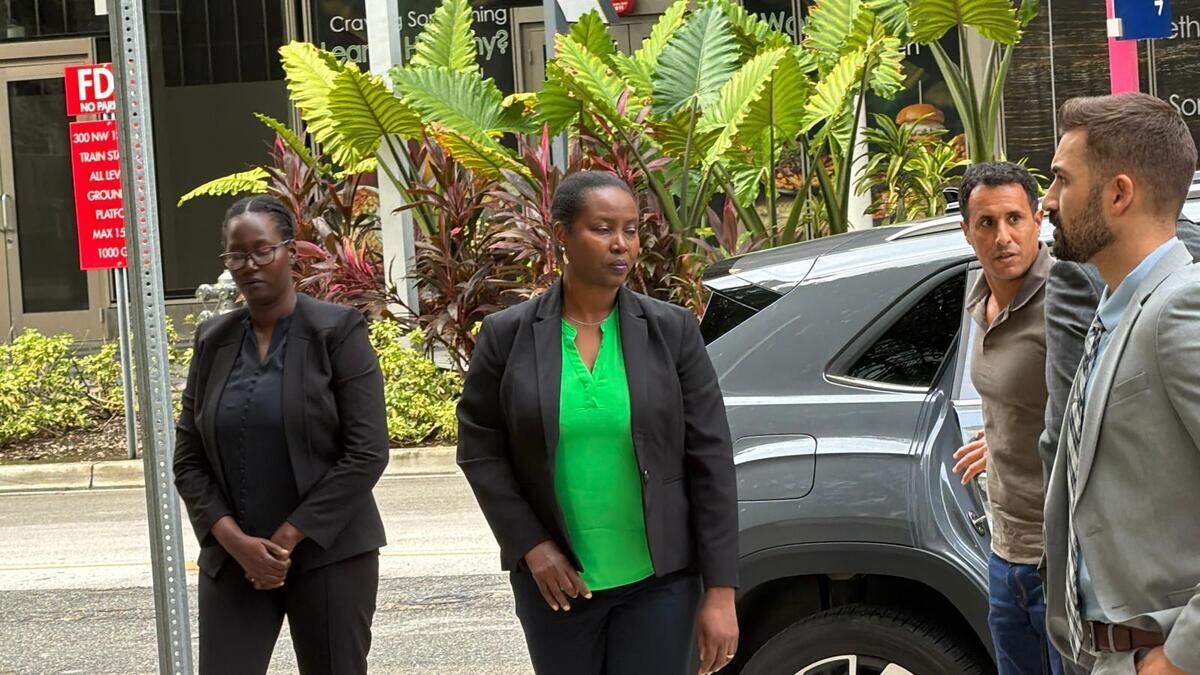
Martine Moïse, taking the stand for the second day in the Miami federal trial of a South Florida pastor accused in the plot that led to her husband’s shocking assassination, accused Chéramy of going on “a rampage inside the Parliament to prevent elections from taking place.”
She also testified that she later went on social media and saw “many, many pictures” of Chéramy with the accused man, South Florida pastor Christian Emmanuel Sanon, who turned toward one his lawyers with an expression of bewilderment as she spoke while being cross-examined by his defense.
“I saw his picture, many, many pictures with him and also with the accused,” she said through an interpreter, breaking down in tears as she continued to point at Chéramy. “And they stated once my husband is dead, he would be replacing my husband.”
Moïse also blamed Chéramy for contributing to the political unrest that paralyzed Haiti in 2019 that became known as “peyi lok,” or country on lockdown. The paralysis, she said, made elections impossible.
“How do you expect people to go and vote without security?” she testified. “They had gang members walking around killing people.”
Chéramy, in an interview with the Miami Herald, rejected the accusations and accused the former first lady of injecting politics into the federal conspiracy case. He noted that Martine Moïse is fielding a candidate against him in Haiti’s scheduled Dec. 13 general elections in which he plans to run again for the Senate.
“I don’t understand why she would play politics in a process that is so important to the country,” he said, accusing the late president of controlling the armed gangs. “The entire country is paying attention to this process, hoping it provides answers.”
Chéramy also disputed the former first lady’s assertions that he prevented the president from holding elections, saying the president never submitted an electoral law to Parliament to be voted on.
“He wasn’t interested in elections, and we never blocked him from doing elections,” he said. “I wasn’t at war with the president. I was doing the job the population sent me to do, which was to defend the Constitution and their interests.”
He cited two of his most contentious confrontations with the Moïse administration. In one, he said, he opposed a national budget “because it did not reflect the reality the population was living,” arguing more money was allocated to the National Palace, prime minister’s office and Parliament than health spending for the entire country.
The other incident involved the May 2019 ransacking in the Senate chamber.
Chéramy said he and others dragged the furniture after allies of the president removed their microphones in the middle of the night to prevent them from debating during the vote to put in place unqualified individuals in the new government. “Why didn’t she call their name, but it’s only mine?” he said.
As for photos with Sanon, Chéramy said he’s been an artist since the age of 19 and has been photographed with countless people. “If she saw me, she would ask for a photo,” he quipped.
His confrontations with the president were political and centered on his respecting the Haitian Constitution, including the debate over when Moïse’s presidential term was supposed to end.
“I was elected for six years and got into office late,” Chéramy said. “But four years later, I left power.”
Failure to hold elections
The dispute over Haiti’s failure to hold timely elections, a delay that has helped fuel the country’s ongoing crisis, has found its way into the Sanon trial as his defense tries to show their client had nothing to do with Moïse’s killing, and that the slain Haitian president had amassed a list of enemies.
Sanon, who as far back as 2019 spoke of working on putting Haiti on the right path and seeking U.S. support, is accused of conspiring to kidnap or kill Moïse and providing material support for the operation, including money, a squad of former Colombian soldiers and ballistic vests.
Read more Who is the new Miami Heat PA announcer? ‘I got the best seat in the house’
Originally charged alongside four other South Florida residents who were convicted in May, Sanon had his trial delayed because of health problems. In the run-up to his trial, federal prosecutors dramatically expanded the case, charging 29 additional defendants, including 16 Colombians accused of storming the president’s residence and a former Haitian government functionary who had been fired from his post.
Imprisoned in Haiti where they were indicted in a separate investigation, the men were transferred to the United States on Sept. 20 and are currently awaiting trial in Miami.
Sanon’s lawyers argue instead that their client, whom prosecutors portray as a deeply indebted man hoping to replace Moïse through a violent overthrow of his government, had nothing to do with the assassination.
Through their cross-examination of Martine Moïse, which began Tuesday and ended Wednesday before noon, the defense sought to establish that her husband, who was ruling by decree at the time of his death, had amassed numerous political enemies during his four years in office.
“On July 7, someone was able to get 30 to 50 people to stand down and not offer protection for you or your family?” Zeljka Bozanic, one of Sanon’s lawyers, asked Martine Moïse. She testified that no member of the presidential security detail had been killed or wounded during the middle-of-the-night attack.
“I believe that was not the work of one person,” Martine Moïse replied, “but rather the work of a group of people.”
Seriously injured during the attack, Martine Moïse was prosecutors’ first witness in the trial that’s expected to last six to eight weeks before U.S. District Judge Jacqueline Becerra, who presided over the earlier trial.
In that earlier case, Moïse pointed a finger at several prominent political figures, including some who had once been close to her husband. This week, as Haitians continue to register for the country’s first presidential elections in more than a decade, she largely steered clear of naming political figures, with the notable exception of Chéramy.
“There were a lot of people standing in line to replace him,” she said about her husband.
Turbulent presidency
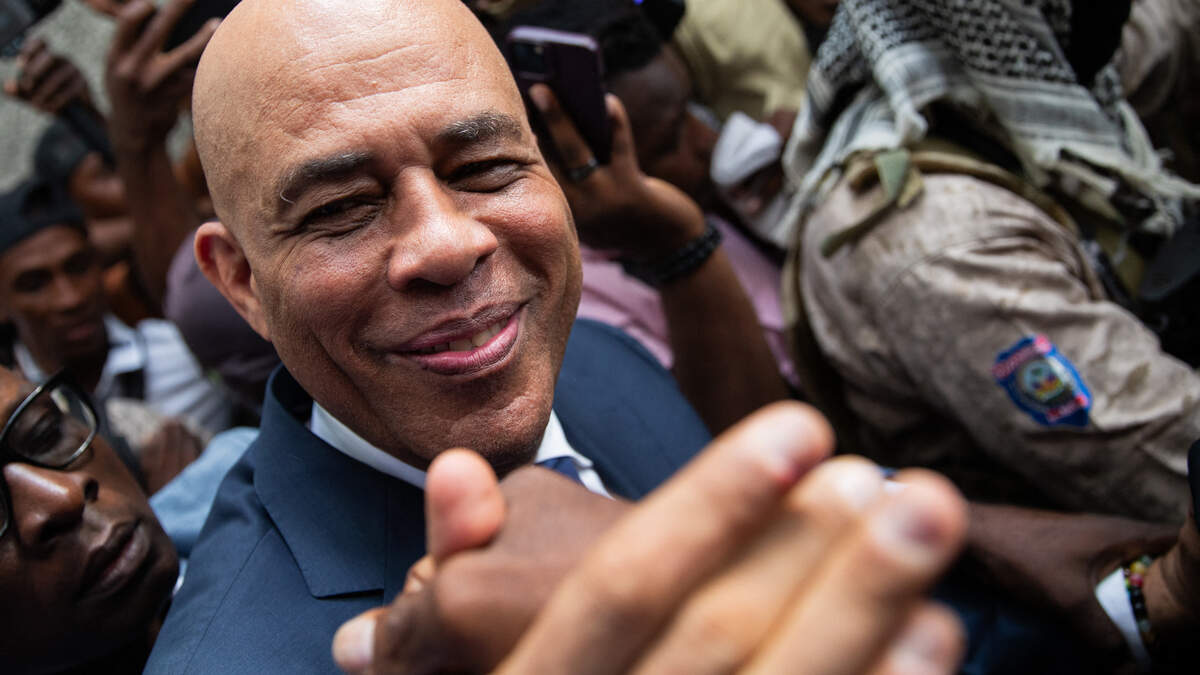
Jovenel Moïse had been a relative unknown from Haiti’s northern region when then-President Michel Martelly handpicked him to run for president under his PHTK party.
Martelly himself had come to power after a disputed 2010 election, and five years later he left office without an elected successor after the 2015 presidential election was marred by allegations of widespread fraud.
A new presidential election was ordered while the legislative results stood, leading to the staggered Senate seats under which one-third of Haiti’s 30 member Senate was to be renewed every two years.
Following a deal reached 22 hours before Martelly left office, it was agreed that a provisional president would be selected. An indirect election took place among those who had been elected to Parliament and Jocelerme Privert, a former Senate president, was selected as interim president after two rounds of voting during nearly 12 hours. He was sworn in on Feb. 14, 2016.
In November, Privert oversaw partial legislative elections, and the rerun presidential vote. Moïse was declared the winner. While Moïse’s administration was dogged almost from the onset by allegations of fraud, there was also debate about when his term would end, Feb. 7, 2021, or Feb. 7, 2022.
As Haitians debated the end of Moïse’s term, the electoral timetable required for the first Senate elections to be held in October 2017, eight months after Moïse’s swearing in. Another 10 seats were due to be contested in October 2019, along with all the 119 seats in the Chamber of Deputies.
Instead of planning for an election, Moïse found himself embroiled in a succession of protests as anger grew over a 2018 fuel hike and the alleged misuse of billions of dollars associated with PetroCaribe, the Venezuelan oil program whose savings were supposed to help rebuild Haiti after the massive 2010 earthquake.
The PetroCaribe movement soon converged into broader anger over high inflation, kidnappings and the growing reach of armed gangs.
By 2019 the country was experiencing prolonged periods of paralysis that became known as “peyi lòk.”
The upheaval continued into 2020 when the terms of the entire Chamber of Deputies ended along with two-thirds of the Senate in January. With Moïse ruling by decree, seeking to change the Constitution without a Parliament and insisting his term ended on Feb. 7, 2022 and not 2021, the country became a hotbed of protests.
Read more Who is the new Miami Heat PA announcer? ‘I got the best seat in the house’
Eighteen months later, Moïse was dead.
This story was originally published September 30, 2026 at 10:34 PM.










Post Comment