How Wynwood has reinvented itself: Factories to art to tech — and now a university
Wynwood has been a neighborhood of reinvention for more than a century.
Farmland became factories. Factories became a garment district. Puerto Rican immigrants turned it into Little San Juan.
Read more Who is the new Miami Heat PA announcer? ‘I got the best seat in the house’
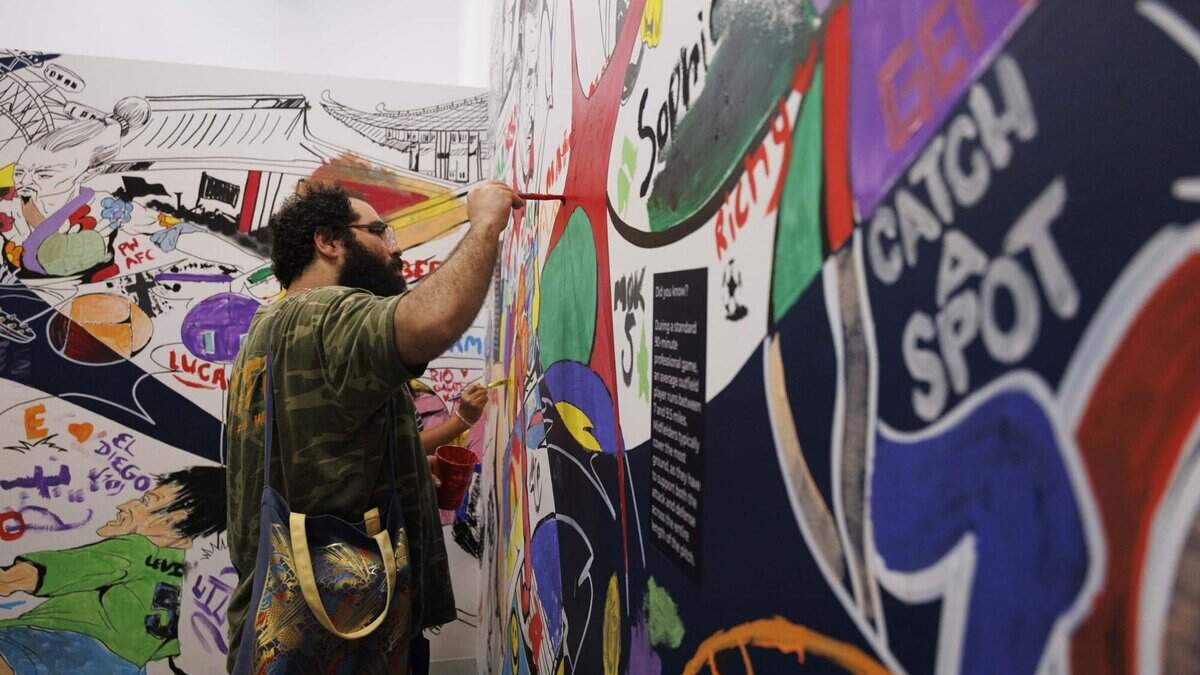
When the factories closed and the neighborhood fell into poverty and crime, artists moved into abandoned warehouses and transformed the neighborhood walls into canvases.
Now Wynwood is about to reinvent itself again.
Carnegie Mellon University, one of America’s leading research universities, has announced plans for a 35-acre campus in Wynwood, thanks to Miami billionaire Ken Griffin, who is supplying the land and playing an instrumental role in bringing the Pittsburgh institution to South Florida.
The campus will be financed with a gift from the Miami financial executive and philanthropist — $3 billion.
MORE: Major college coming to Miami with $3B boost from billionaire Griffin
It may be Wynwood’s most improbable transformation yet.
A place that was once one of Miami’s poorest and most troubled neighborhoods will be home to a prestigious university where researchers work on artificial intelligence, robotics and the technologies shaping the future.
From farmland to Carnegie Mellon
Wynwood’s journey from farmland to Carnegie Mellon campus is another chapter in one of Miami’s great stories of neighborhood reinvention.
Wynwood began as farmland, then became an industrial hub and, eventually, a bustling garment district. New waves of people transformed it into Little San Juan, home to thousands of Puerto Ricans.
A neighborhood later battered by poverty, riots and crime then changed again, becoming an artists’ enclave and, eventually, one of Miami’s most internationally recognized art destinations.
Now Carnegie Mellon could give Wynwood yet another identity: a place known not just for murals, galleries and nightlife, but for artificial intelligence, robotics, engineering and advanced research — bringing with it a billion-dollar influx of investment and activity.
The university also brings an extraordinary historical connection.
Industrialist and philanthropist Andrew Carnegie built his fortune in steel and used it to establish the institution that eventually became Carnegie Mellon. More than a century later, Ken Griffin, who made his fortune in finance and now calls Miami home, is helping bring Carnegie’s name to a neighborhood whose own history is deeply rooted in industry.
Carnegie Mellon University Miami faculty and students will find themselves in a neighborhood that has already begun embracing technology alongside art.
Two of billionaire PayPal co-founder Peter Thiel’s firms, the venture capital firm Founders Fund and the investment firm Thiel Capital, have opened Wynwood offices in recent years. Last year, Amazon reportedly signed a lease for more than 75,000 square feet of office space in a Wynwood office building. The financial exchange MIAX and cryptocurrency exchange Gemini also have offices at 545 Wyn, the building recently acquired by Griffin and Goldman Properties for $181 million.
Now, Griffin’s Carnegie Mellon Miami gift will bring another powerful force into the neighborhood: higher education and advanced research.
The latest transformation is no longer just about art. Wynwood is becoming a place where technology, finance, luxury housing and higher education are converging.
And that brings Wynwood to its next chapter.
Architect Kobi Karp, who has worked in the neighborhood, has described Wynwood’s transformation as “watching a flower bloom.”
Developer Diego Ojeda of Rilea Group sees the neighborhood as “the next frontier.”
History of Wynwood
Miami historian Paul George has long viewed Wynwood as the little engine that could. George admits he never had much hope for the neighborhood’s revival after its decline in the 1980s.
“It’s the surprise of my life how Wynwood continues to survive and thrive,” he said. “I did not believe that it could, but it has and continues to do so.”
Unlike South Beach, George said, landlocked Wynwood, wedged between U.S. 1 and I-95, didn’t have much in the way of architecture — just boxy two-story buildings with wrought-iron decorations.
But George recalled giving writer Tom Wolfe a ride through the neighborhood in a limousine as research for his book on Miami, “Back to Blood” in 2012. “Wolfe was impressed with the look of Wynwood, he really was,” George said.
First developed in the 1900s as farmland near downtown Miami, the area was known as Wyndwood, with an extra “d” in the middle. During the 1920s land boom, the area became a residential community for middle-class residents before the post-World War II suburban exodus helped transform it into an industrial district that attracted Puerto Ricans.
By the 1980s, Wynwood had fallen into what George describes as “all the elements of inner-city malaise of that era.”
By the middle of the 20th century, Wynwood had become one of Miami’s major manufacturing centers. The southern end of the neighborhood became known as Miami’s Garment District.
Wholesale clothing companies, shoe manufacturers and small businesses filled its streets and warehouses. Thousands of people made their living from the industry.
Little San Juan
The jobs in manufacturing and apparel attracted Puerto Ricans not only from the island but from cities in the Northeast.
By the late 1940s after World War II, then the 1950s and 1960s, Puerto Ricans established a powerful presence in Wynwood. The neighborhood became known as Little San Juan, or simply El Barrio.
Read more A lottery draw ticket bought at a Fort Lauderdale Publix is worth $800,000
Family-owned bodegas lined the streets. Restaurants served Puerto Rican food. Churches and community organizations became gathering places.
In the late 1960s, newly arrived Cuban exiles in another part of Miami were building Little Havana but also spilling into Wynwood. Haitian refugees to the north were building Little Haiti.
Wynwood occupied a crucial place in that geography — a gateway between neighborhoods including Overtown, Allapattah, Liberty City, Little Haiti and Edgewater.
When the factories disappeared
The neighborhood’s economic foundation eventually began to crumble in the 1980s, when the garment industry moved overseas.
Hardest hit were Wynwood and Hialeah, another major factory hub. Factories closed. Warehouses emptied. The jobs that had brought generations of Puerto Rican families to Wynwood began to disappear.
By the late 1970s and through the 1980s, poverty and unemployment deepened. Buildings deteriorated. Crime and drug trafficking spiked.
Wynwood became a neighborhood people wanted to quickly drive past.
One of Wynwood’s darkest periods came in 1988, when Leonardo Mercado, a well-known local drug dealer, died after being beaten by Miami police officers from an undercover narcotics unit. Two years later, a federal jury acquitted the officers in the case.
The verdict ignited the 1990 Wynwood riots. Businesses burned. Police in riot gear filled the streets. Cars were overturned. In addition to the damage, the riots became a symbol of how far Wynwood had fallen.
Artists arrive
What investors saw as blight, struggling artists saw as opportunity.
The vacant warehouses that had once symbolized Wynwood’s decline started transfoming into art studios and galleries. Neighborhood walls became canvases.
Down-and-out Wynwood suddenly was bursting with color.
Artists moved into Wynwood for the cheap rent. One of the first popular artist hubs was the Bakehouse Art Complex, which opened in 1985, renting work space to dozens of artists who sold their creations from cubicles.
Another important arrival was the Rubell family. Don and Mera Rubell had spent decades assembling one of the world’s most important private collections of contemporary art. In 1993, they purchased a former Drug Enforcement Administration warehouse in Wynwood and transformed it into exhibition space for their collection.
Other artists and galleries followed, along with a bohemian atmosphere that attracted people from throughout Miami-Dade, much like SoHo in New York. Then came the Second Saturday Art Walk, which helped bring people into the neighborhood to see exhibitions and galleries.
Then, when Art Basel arrived in Miami Beach in 2002, Wynwood’s art galleries quickly became a satellite destination for the worldwide event. “I think that’s what really made the area explode,” George said.
And Wynwood began to reinvent itself again.
Then came the murals. Then Wynwood Walls. Then trendy restaurants and bars and new condo development attracted crowds.
The neighborhood that had spent decades struggling to attract investment suddenly became one of Miami’s hottest destinations.
And now, one of the venues that helped contribute to Wynwood’s emergence as a hub for arts and culture will soon be taken over by Carnegie Mellon’s new campus.
Businessman Moishe Mana confirmed in a news release that he sold Mana Wynwood, a venue that hosts music festivals, art shows, expos and other events, to Griffin. He sold around 30 acres of his Wynwood portfolio to Griffin for approximately $1.1 billion, which he said was the largest land assemblage deal in Florida history.
In 2010, Mana bought an abandoned warehouse in Wynwood. It was one of the first major purchases in the area by the man who would become Wynwood’s largest private landowner. He developed the property — which the county had years before tried to turn into a free-trade zone — into a convention center and event venue.
Success changes Wynwood
But success brought its own gentrification problems.
The inexpensive warehouses that had attracted artists became valuable real estate. Rents rose. New residential and commercial projects replaced older buildings thanks to a flexible mixed-use city zoning.
The people who helped create Wynwood’s identity increasingly faced the possibility that they could no longer afford to remain there.
And the community that had survived decades of poverty and neglect confronted a different threat: being priced out of the success it had helped create.
That tension remains at the heart of Wynwood today.
Father Jose Luis Menendez of the Catholic Mission San Juan Bautista, once one of the neighborhood’s spiritual centers, has served the community for 38 years and sees the change first hand.
“Nowadays, my parishioners are the remaining elderly Puerto Rican residents from Wynwood Norte, or the younger people from neighboring Edgewater east of us,” he said. “We try to accommodate them by offering a 6 p.m. Mass on Sundays that is more fitting to their lifestyle. But it doesn’t feel like the old Wynwood anymore. It feels like something else, and I can’t tell you if that’s good or bad.”
For Father Menendez, the transformation is impossible to miss. And more change is coming with the arrival of a Carnegie Mellon campus.
Historian George is still amazed at the resilience of the neighborhood.
“Wynwood’s success is an unlikely story,” he said, “but it continues to play out.”
Read more How Wynwood has reinvented itself: Factories to art to tech — and now a university
This story was originally published September 30, 2026 at 7:43 AM.





Post Comment